

What Is Posture Correction? Complete Guide for Ottawa Desk Workers

Most people rarely achieve perfect posture, with research showing only a small percentage maintain ideal balance. For Canadian individuals spending hours in front of screens, at desks for long hours, poor posture is more than a cosmetic issue. It can lead to discomfort and chronic health problems over time. Understanding posture correction opens the door to improved well-being and practical solutions that target the root of daily aches, muscle fatigue, and mobility challenges.
Table of Contents
Key Takeaways
Point | Details |
Posture correction improves health | It enhances structural alignment, reduces strain, and prevents musculoskeletal injuries. |
Common postural issues vary by individual | Problems like forward head posture and anterior pelvic tilt can arise from lifestyle factors and require tailored strategies. |
Holistic approach is crucial | Effective correction involves comprehensive assessment and integration of exercises, ergonomics, and lifestyle modifications. |
Caution with correction devices | Reliance on passive support can lead to muscle dependency and imbalances; focusing on active engagement is recommended. |
Defining Posture Correction and Core Concepts
Posture correction is a targeted approach to improving the body’s structural alignment and reducing musculoskeletal strain. At its core, posture represents the ideal balanced position our body assumes to counteract gravitational forces, which impacts our overall physical health and functionality.
Understanding posture involves recognizing how our body positions itself during various activities like sitting, standing, and moving. When we maintain proper postural alignment, we minimize stress on joints, muscles, and soft tissues. Research indicates that correct posture allows for optimal articular positioning, which significantly decreases potential strain and overuse injuries. This means fewer instances of muscle fatigue and reduced risk of developing chronic musculoskeletal problems.
Key aspects of posture correction include:
Identifying and addressing muscular imbalances
Implementing targeted stretching and strengthening exercises
Developing body awareness and ergonomic strategies
Reducing prolonged static positioning
Postural challenges are particularly prevalent in modern work environments, where extended periods of computer use can lead to misalignment. Ergonomic considerations play a crucial role in preventing postural strain, emphasizing the importance of workstation design and body mechanics. Professionals in physiotherapy and chiropractic care can provide personalized assessments and intervention strategies to help individuals achieve and maintain optimal postural health.
Types of Posture Problems and Common Misconceptions
Posture problems manifest in various forms, with each presenting unique challenges to an individual’s musculoskeletal health. Research on postural alignment deficits reveals that ideal body positioning is surprisingly rare, with only a small percentage of individuals maintaining optimal structural balance.
Common posture problems include:
Forward Head Posture: Neck and shoulders protruding ahead of the body’s centre line
Rounded Shoulders: Shoulders rolled forward, often associated with prolonged computer use
Anterior Pelvic Tilt: Excessive curvature in the lower back, creating an exaggerated arch
Kyphosis: Excessive upper back curvature, creating a hunched appearance
Misconceptions about posture can significantly impede individuals’ understanding and correction efforts. Many people believe that posture problems are purely cosmetic or can be instantly corrected through short-term interventions. However, postural misalignments often develop gradually and require consistent, targeted approaches. Why Posture Matters: Complete Guide highlights that postural issues are not just about appearance, but directly impact overall physical function and long-term health.
Interestingly, postural challenges are not uniform across populations. The referenced study demonstrated that factors like fitness levels, body weight, and gender can influence postural alignment. Younger individuals, particularly those with lower fitness levels, are more prone to significant postural deviations. Understanding these nuances is crucial for developing personalized strategies that address individual postural challenges effectively.
How Posture Correction Works in Practice
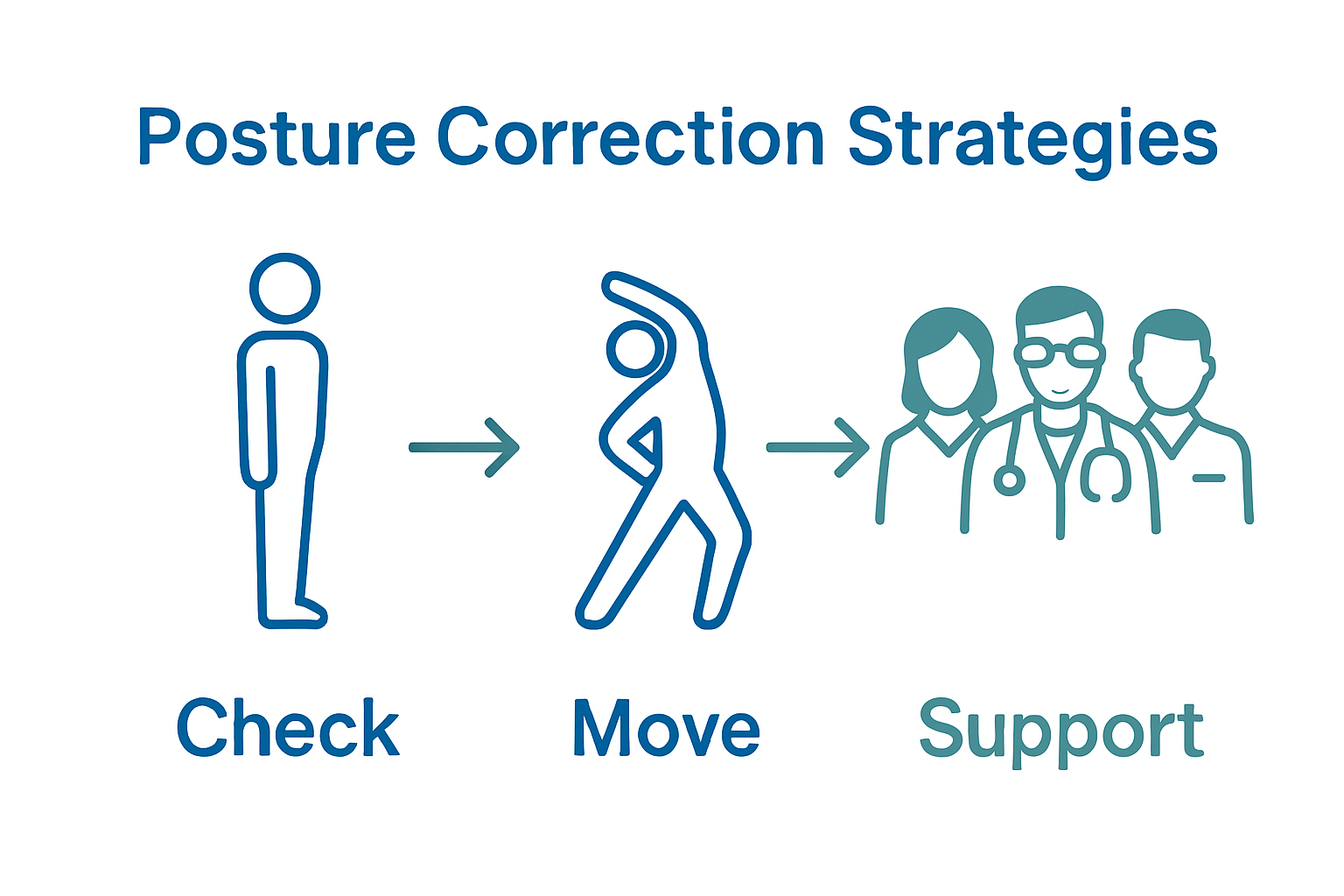
Posture correction is a comprehensive, multi-step process that requires a strategic approach to realigning the body’s musculoskeletal system. Unlike quick fixes, it demands a holistic methodology involving assessment, targeted interventions, and ongoing maintenance. Chiropractic care for pain relief plays a crucial role in identifying and addressing the root causes of postural misalignments.
Key stages of posture correction include:
Comprehensive biomechanical assessment
Identifying muscle imbalances and compensatory patterns
Developing personalized therapeutic strategies
Implementing targeted rehabilitation exercises
Monitoring and adjusting treatment protocols
Practical implementation begins with a detailed physical evaluation, where healthcare professionals conduct comprehensive screenings to understand an individual’s unique postural challenges. This typically involves advanced movement analysis, digital postural assessments, and a thorough review of the patient’s lifestyle, occupation, and movement patterns. Strategic shoulder-specific exercises can be instrumental in addressing muscular imbalances that contribute to poor postural alignment.

Successful posture correction is not a linear journey but a dynamic process of continuous adaptation and improvement. Patients must actively participate in their rehabilitation, incorporating recommended exercises, ergonomic adjustments, and lifestyle modifications. Regular follow-up assessments ensure that interventions remain effective and are adjusted based on the individual’s progress, ultimately supporting long-term musculoskeletal health and functional mobility.
Evidence-Based Methods and Treatment Options
Postural restoration represents a sophisticated approach to addressing musculoskeletal misalignments through targeted therapeutic interventions. Postural restoration techniques aim to maximize bodily neutrality by utilizing manual and non-manual exercise strategies designed to reposition and retrain asymmetrical movement patterns.
Key evidence-based treatment methods include:
Manual therapy and joint mobilization
Targeted muscle strengthening exercises
Neuromuscular re-education techniques
Biomechanical assessment and correction
Ergonomic and lifestyle modification strategies
Understanding the profound impact of posture on overall health is crucial. The Alexander Technique highlights how prolonged poor posture can significantly impair fundamental bodily functions, including breathing, digestion, and movement efficiency. Practitioners recognize that postural challenges often stem from a complex interplay of physical and emotional stressors, requiring a holistic and nuanced approach to treatment.
Multidisciplinary treatment strategies are essential for comprehensive posture correction. This involves collaboration between physiotherapists, chiropractors, and other healthcare professionals who can provide integrated assessments and personalized intervention plans. While research continues to evolve, the primary goal remains consistent: developing sustainable strategies that restore natural body alignment, reduce pain, and improve overall functional mobility.
Risks, Limitations, and Alternatives to Correction
Posture correction approaches are not without potential challenges and limitations. Posture corrector devices have been available for decades, yet scientific evidence regarding their effectiveness remains limited and potentially biased, with some manufacturers funding their own research investigations.
Key risks and limitations include:
Potential muscle dependency on external support
Limited long-term effectiveness of passive correction tools
Risk of creating muscular imbalances
Potential overcorrection or inappropriate intervention
Psychological dependency on correction devices
Different types of back braces demonstrate the complexity of postural intervention strategies. These range from rigid braces that restrict spinal motion by up to 65%, to soft elastic supports designed to provide temporary structural assistance. Healthcare professionals recommend comprehensive approaches that address underlying muscular and skeletal issues rather than relying solely on mechanical interventions.
Alternative strategies focus on holistic rehabilitation techniques that empower individuals to develop intrinsic postural awareness and strength. These methods prioritize active engagement through targeted exercises, ergonomic education, and lifestyle modifications. By understanding that posture is a dynamic process influenced by multiple factors, patients can develop sustainable strategies that promote natural alignment and long-term musculoskeletal health, reducing reliance on external correction devices.
Take Control of Your Posture Health with Expert Care in Ottawa
Struggling with forward head posture or chronic back pain from poor alignment Can targeted posture correction strategies make a real difference for you At Integrate Ottawa, our team-based approach combines physiotherapy, chiropractic care, and specialized rehabilitation to address muscular imbalances and ergonomic challenges effectively. We understand that lasting improvements require more than quick fixes which is why we emphasise personalized assessments and tailored exercise programs to restore your natural balance and reduce discomfort.

Don’t let postural problems limit your daily life or lead to chronic issues Start your journey toward better musculoskeletal health today Book a consultation at Integrate Ottawa to receive professional guidance grounded in evidence and compassionate care. Learn how our collaborative treatments can empower you to achieve sustained posture correction and long-term wellness.
Frequently Asked Questions
What is posture correction?
Posture correction is a focused approach aimed at improving the body’s alignment and reducing musculoskeletal strain, helping individuals maintain proper postural alignment during various activities.
What are common posture problems?
Common posture problems include forward head posture, rounded shoulders, anterior pelvic tilt, and kyphosis, all of which can negatively impact musculoskeletal health and overall functionality.
How does posture correction work in practice?
Posture correction involves a multi-step process that includes a biomechanical assessment, identifying muscle imbalances, developing personalized therapeutic strategies, implementing rehabilitation exercises, and monitoring progress for effective outcomes.
What are some evidence-based treatment methods for posture correction?
Evidence-based treatment methods for posture correction include manual therapy, targeted muscle strengthening exercises, neuromuscular re-education techniques, biomechanical assessment, and ergonomic lifestyle modifications.
Recommended
Comments