

Complete Guide to Trigger Point Therapy in Canada
- Nov 26, 2025
- 7 min read

Chronic muscle pain can disrupt daily routines for many Canadian adults, yet up to 85 percent of all musculoskeletal complaints are linked to trigger points. These sensitive knots often hide deep within muscle bands, making relief feel out of reach. Understanding what causes myofascial pain and how targeted trigger point therapy works can open the door to practical solutions for lasting comfort and better movement.
Table of Contents
Key Takeaways
Point | Details |
Understanding Trigger Points | Myofascial trigger points are hypersensitive areas in muscle tissue that can lead to pain and dysfunction. Identifying these points is essential for effective treatment. |
Therapeutic Techniques | Trigger point therapy involves targeted manual techniques such as deep tissue massage and dry needling to alleviate muscle tension and restore function. |
Conditions Treated | This therapy is beneficial for a range of conditions including chronic pain, sports injuries, and postural dysfunctions, helping diverse individuals enhance their physical wellness. |
Evidence of Effectiveness | Research supports the efficacy of trigger point therapy in managing musculoskeletal pain, highlighting its advantages over traditional methods through precision and tailored interventions. |
Defining Trigger Point Therapy and Myofascial Pain
Trigger point therapy is a specialized treatment approach targeting myofascial trigger points—those hypersensitive spots within muscle tissue that can cause significant pain and dysfunction. According to McGill University, myofascial pain syndromes are common disorders characterized by specific muscular trigger points that generate both localized and referred pain sensations.
These trigger points are not random muscle knots, but rather precise hyperirritable spots within taut muscle bands. As MultiProfECC explains, they present as palpable nodules that can create complex pain patterns affecting muscles, nerves, and surrounding soft tissue. When activated, these points can produce sharp, intense discomfort that might radiate to seemingly unrelated areas of the body.
Understanding the mechanics of trigger points is crucial for effective treatment. These hypersensitive areas develop through various mechanisms including muscle overuse, trauma, poor posture, or chronic stress. They can create a cycle of pain and tension where the muscle remains contracted, reducing blood flow and potentially causing additional inflammation. Integrate Healthcare Ottawa’s guide on trigger point therapies offers deeper insights into how these complex muscular phenomena impact overall physical wellness.
Trigger points typically manifest with several distinctive characteristics:
Localized muscle tenderness
Referred pain patterns
Reduced range of motion
Muscle weakness
Potential autonomic responses like sweating or goosebumps
Professional assessment and targeted therapeutic interventions can help break the pain cycle and restore muscular function, providing relief and promoting healing.
How Trigger Point Therapy Works in Practice
Trigger point therapy is a sophisticated manual treatment approach that targets specific areas of muscular tension and dysfunction. According to TriggerPoint Canada, comprehensive trigger point therapy involves a meticulous assessment and targeted treatment strategy designed to inactivate problematic muscle points and restore optimal muscular function.
The practical application of trigger point therapy typically involves several key steps. A skilled healthcare practitioner will first conduct a detailed physical examination, identifying active trigger points through palpation and patient feedback. These hyperirritable spots are carefully mapped, with practitioners looking for characteristic signs like local muscle twitches, referred pain patterns, and areas of increased muscle tension. Dry needling techniques may be employed to release these muscular knots, helping to break the cycle of pain and muscle contraction.
During a typical trigger point therapy session, practitioners use a range of manual techniques to address muscular dysfunction. These might include:
Deep tissue massage
Sustained pressure on specific muscle points
Stretching and movement techniques
Myofascial release methods
Gentle muscle energy techniques
The ultimate goal of trigger point therapy is not just temporary pain relief, but comprehensive muscle rehabilitation.

By addressing the root causes of muscular tension and dysfunction, practitioners help patients restore muscle elasticity, improve range of motion, and prevent future pain cycles. Follow-up treatments and patient education about posture, ergonomics, and muscle maintenance play crucial roles in long-term recovery and muscular health.
Typical Conditions and Who Can Benefit
Trigger point therapy offers remarkable potential for addressing a wide range of muscular and chronic pain conditions. While traditionally associated with athletes and individuals with physical injuries, this therapeutic approach can benefit people from diverse backgrounds experiencing persistent muscular discomfort. Integrate Healthcare Ottawa’s guide to massage therapy highlights the comprehensive nature of manual therapies in managing complex musculoskeletal challenges.
Individuals most likely to benefit from trigger point therapy include those experiencing:
Chronic neck and shoulder tension
Lower back pain
Repetitive strain injuries
Sports-related muscular injuries
Postural dysfunction
Fibromyalgia symptoms
Tension headaches
Temporomandibular joint (TMJ) disorders
Chronic stress-related muscle tightness
Professionals who frequently encounter physical strain are particularly good candidates for trigger point therapy. Office workers dealing with prolonged sitting, computer professionals experiencing repetitive strain, athletes undergoing intense training, and manual labourers with physically demanding jobs can significantly benefit from targeted muscular interventions. The therapy helps prevent long-term muscular compensation patterns and addresses underlying biomechanical issues before they develop into more serious chronic conditions.
Moreover, trigger point therapy extends beyond pain management to support overall physical wellness. By improving muscular flexibility, reducing tension, and enhancing body awareness, this approach helps individuals develop more balanced and efficient movement patterns.
Complete Guide to Why Choose Massage Therapy emphasizes that proactive muscle care can prevent future injuries and contribute to a more resilient, pain-free lifestyle.
Safety, Effectiveness, and Evidence in Canada
Research into trigger point therapy continues to demonstrate promising clinical outcomes across various musculoskeletal conditions. McMaster University experts conducted a systematic review in Pain Medicine that evaluated electric stimulation techniques on myofascial trigger points, revealing significant potential for pain management interventions. These findings underscore the scientific legitimacy of trigger point therapies in addressing chronic muscular discomfort.
Canadian research has been particularly instrumental in advancing our understanding of these therapeutic approaches. University of British Columbia researchers have extensively reviewed myofascial pain syndrome and trigger point dry needling, highlighting its remarkable therapeutic potential, especially for complex muscle conditions like trapezius muscle pain. The research suggests that when performed by trained healthcare professionals, trigger point therapy can be both safe and remarkably effective.
Key safety considerations for trigger point therapy include:
Comprehensive patient medical history assessment
Careful screening for contraindications
Gentle, controlled therapeutic techniques
Practitioner’s advanced training and certification
Ongoing patient monitoring and feedback
Individualized treatment protocols
Professional regulatory bodies in Canada maintain strict guidelines to ensure patient safety and therapeutic efficacy. Integrate Healthcare Ottawa’s guide to massage therapy emphasizes the importance of evidence-based practices and professional standards in delivering these specialized muscular interventions. While no medical treatment is without potential risks, trigger point therapy—when performed by qualified professionals—offers a low-risk, high-reward approach to managing complex muscular pain conditions.
Comparing Trigger Point Therapy to Other Approaches
McMaster University experts highlight the critical importance of understanding different treatment modalities for myofascial pain syndrome. Their research in Muscle & Nerve emphasizes the need for standardized protocols when comparing various therapeutic approaches, revealing that trigger point therapy offers unique advantages over traditional pain management techniques.
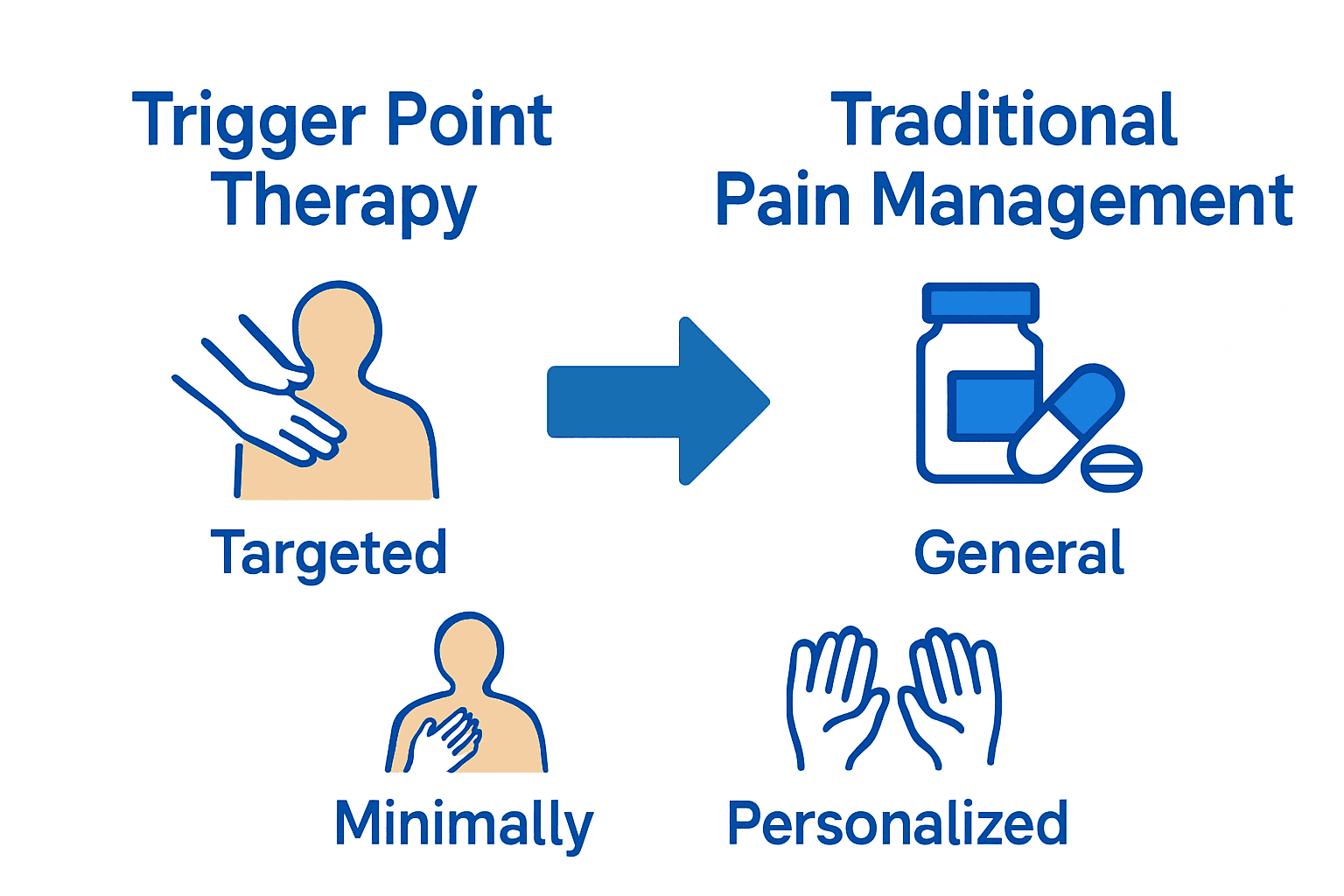
Compared to conventional treatments, trigger point therapy distinguishes itself through several key characteristics:
More targeted muscle intervention
Direct addressing of specific muscular tension points
Minimal invasive techniques
Personalized treatment strategies
Holistic approach to muscular dysfunction
Lower reliance on pharmaceutical interventions
While traditional methods like medication and general massage provide broad pain relief, trigger point therapy offers a precision-based approach. Massage therapy for neck pain techniques, for instance, often provide generalized relief, whereas trigger point therapy pinpoints and releases specific muscular knots. Emerging research from McMaster University in Ultrasound in Medicine & Biology is exploring advanced diagnostic techniques like texture analysis and neural network approaches to further refine trigger point identification and treatment.
Unlike more generic interventions, trigger point therapy requires advanced practitioner training and a deep understanding of muscular anatomy. The approach goes beyond surface-level treatment, addressing underlying biomechanical issues that contribute to chronic pain and muscular dysfunction. By focusing on the root causes of muscular tension, this method offers a more comprehensive and sustainable path to pain management and physical rehabilitation.
Take Control of Your Muscle Pain with Expert Trigger Point Therapy
Millions of Canadians suffer daily from persistent muscle pain caused by active trigger points that restrict movement and disrupt daily life. If you are struggling with chronic neck tension, lower back pain, or headaches linked to muscular knots, you need effective solutions that go beyond temporary relief. The challenge lies in breaking the cycle of pain, tightness, and muscle weakness with precise, evidence-based care tailored to your unique needs.
At Integrate Healthcare Ottawa, our team-based approach offers specialized treatments including skilled trigger point therapy combined with physiotherapy and massage therapy. Our experienced clinicians focus on identifying and releasing those hyperirritable muscle spots using advanced manual techniques and dry needling to restore function and ease discomfort. We understand how crucial timely, targeted interventions are to restore your quality of life and prevent recurring injury.

Discover how our comprehensive care can help you regain freedom from pain and improve your muscular health. Learn more about our massage therapy services and explore personalized treatment plans designed to address your specific condition. Don’t wait for pain to control your life. Visit Integrate Healthcare Ottawa today to book your consultation and start your journey toward lasting relief and better movement.
Frequently Asked Questions
What is trigger point therapy?
Trigger point therapy is a specialized treatment that targets myofascial trigger points, which are hypersensitive spots in muscle tissue that can cause pain and dysfunction. This therapy aims to relieve localized pain and improve muscle function through manual techniques.
Who can benefit from trigger point therapy?
Trigger point therapy can benefit a wide range of individuals, including those suffering from chronic neck and shoulder tension, lower back pain, repetitive strain injuries, sports-related injuries, postural dysfunction, fibromyalgia, tension headaches, and TMJ disorders.
How does trigger point therapy work in practice?
Practitioners assess the muscles for active trigger points using palpation and patient feedback. Treatment may involve deep tissue massage, sustained pressure on specific points, stretching, and dry needling to deactivate problematic muscle points and restore function.
Is trigger point therapy safe and effective?
Yes, research has shown that trigger point therapy can be safe and effective for managing musculoskeletal pain when performed by trained professionals. Safety measures include thorough patient assessments, careful treatment techniques, and individualized protocols.
Recommended


Comments