

Pain Management – Improving Life with Evidence-Based Care

Persistent pain can turn everyday tasks in Ottawa into steep hurdles, especially when discomfort lingers beyond its expected course. For those living with chronic musculoskeletal aches, finding relief goes far beyond treating injuries. Modern pain management acknowledges pain as a deeply personal experience shaped by physical, psychological, and social factors. This article explores how evidence-based approaches like physiotherapy and chiropractic care provide tailored strategies that address your unique needs while aiming to restore function and quality of life.
Table of Contents
Key Takeaways
Point | Details |
Comprehensive Approach | Pain management is a patient-centred process that addresses the multidimensional nature of pain, incorporating biological, psychological, and social factors. |
Types of Pain | Understanding the different types of pain—nociceptive, neuropathic, inflammatory, and psychogenic—is crucial for creating effective treatment plans tailored to each patient’s experience. |
Collaborative Care | Engaging a multidisciplinary team of healthcare professionals enhances pain management by integrating diverse expertise in treatment strategies. |
Risks and Costs | Awareness of potential risks and financial implications in pain management is essential for ensuring patient safety and making informed treatment decisions. |
Defining Pain Management and Core Concepts
Pain management is a comprehensive, patient-centered approach to understanding, assessing, and treating discomfort that impacts an individual’s quality of life. Pain’s complex sensory experience involves more than just physical symptoms, encompassing emotional and psychological dimensions that require nuanced, holistic treatment strategies.
At its core, pain management recognizes that each person’s experience is unique and multifaceted. The International Association for the Study of Pain emphasizes that pain is not simply a direct result of tissue damage, but a deeply personal experience influenced by biological, psychological, and social factors. This understanding shifts healthcare from a purely mechanical approach to a more empathetic, individualized model of care.
Key components of effective pain management include:
Comprehensive patient assessment
Identifying underlying causes
Developing personalized treatment plans
Monitoring and adjusting interventions
Integrating multiple therapeutic approaches
Holistic pain management considers multiple treatment modalities, which might include:
Physical therapies
Medication management
Psychological support
Lifestyle modifications
Alternative therapeutic interventions
Professional pain specialists play a critical role in navigating these complex treatment landscapes, helping patients understand their specific conditions and develop targeted strategies for relief and improved functionality.
Pro tip: Work closely with your healthcare provider to develop a comprehensive, personalized pain management strategy that addresses your unique physiological and emotional needs.
Types of Pain and Their Key Differences
Pain classification is essential for understanding how different types of discomfort manifest and impact an individual’s health. Types of pain vary significantly based on duration, origin, and physiological mechanisms, requiring targeted approaches for effective management and treatment.

Primary pain categories can be distinguished by their fundamental characteristics. Acute and chronic pain differ in their duration, underlying mechanisms, and treatment strategies. Acute pain is typically short-term and directly related to specific injury or illness, serving as a protective biological response. Conversely, chronic pain persists beyond the expected healing period and can exist independently of identifiable tissue damage.
The main types of pain include:
Nociceptive pain: Resulting from actual or potential tissue damage
Neuropathic pain: Caused by nerve system dysfunction
Inflammatory pain: Associated with inflammatory processes
Psychogenic pain: Influenced by psychological factors
Physiological pain mechanisms can be further categorized based on their specific characteristics:
Here’s a summary of the key differences between pain types to support more tailored management:
Pain Type | Main Cause | Typical Duration | Common Management Focus |
Nociceptive | Tissue injury or damage | Usually short-term | Treat underlying cause |
Neuropathic | Nerve dysfunction or injury | Often chronic | Address neural pathways |
Inflammatory | Immune response inflammation | Acute or chronic | Control inflammation |
Psychogenic | Psychological and emotional | Variable | Psychological interventions |
Location-based pain (localized vs. widespread)
Duration-based pain (acute, episodic, chronic)
Intensity-based pain (mild, moderate, severe)
Origin-based pain (musculoskeletal, neurological, visceral)
Understanding pain’s nuanced nature is crucial for developing targeted, effective treatment strategies that address the root cause and individual experience.
Healthcare professionals use these classifications to design personalized interventions that address the specific type and underlying mechanisms of a patient’s pain, ensuring more precise and effective management approaches.
Pro tip: Document your pain experiences in detail, including duration, intensity, and triggers, to help healthcare providers develop a more accurate treatment plan.
Evidence-Based Pain Management Approaches
Evidence-based pain management represents a comprehensive, scientifically grounded strategy for addressing pain through systematic clinical guidelines that prioritize patient outcomes and safety. This approach integrates multiple therapeutic modalities, recognizing that effective pain treatment requires a nuanced, personalized approach tailored to individual patient needs.
Multimodal pain management approaches combine various treatment strategies to maximize effectiveness and minimize potential risks. Comprehensive treatment principles emphasize the importance of addressing pain through interdisciplinary interventions that go beyond singular treatment methods.
Key evidence-based pain management strategies include:
Comprehensive patient assessment
Individualized treatment planning
Integrating multiple therapeutic approaches
Continuous monitoring and adaptation
Minimizing potential treatment risks
Treatment modalities typically encompass:
Pharmacological interventions
Physical therapy techniques
Psychological support strategies
Interventional procedures
Lifestyle and rehabilitative approaches
Effective pain management requires a holistic approach that considers the complex interplay between physical, psychological, and social factors affecting an individual’s pain experience.
Healthcare professionals utilize these evidence-based approaches to develop personalized pain management strategies that address the root causes of pain while improving overall patient functionality and quality of life.
Pro tip: Maintain open communication with your healthcare provider, documenting pain experiences in detail to support the development of the most effective, personalized treatment plan.
Roles of Health Professionals in Collaborative Care
Collaborative healthcare represents a comprehensive approach to patient treatment that brings together multiple health professionals to provide integrated, patient-centered care. Collaborative healthcare strategies recognize that complex pain management requires coordinated expertise from various medical disciplines.
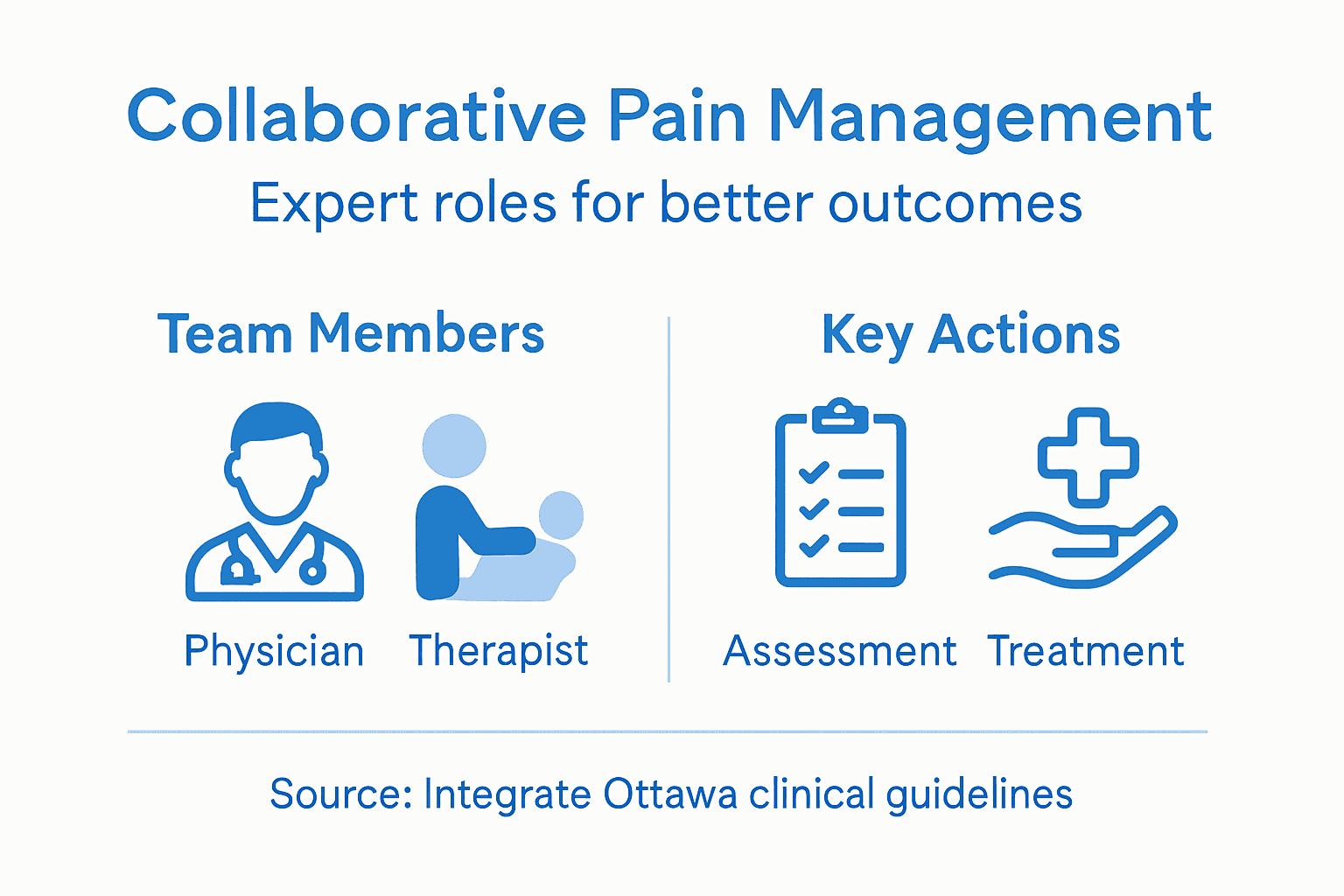
Each health professional plays a unique and critical role in developing comprehensive pain management strategies. Physiotherapists focus on physical rehabilitation and movement strategies, chiropractors address musculoskeletal alignments, massage therapists work on soft tissue interventions, and physicians oversee overall medical management and potential pharmacological treatments.
Key roles of health professionals in collaborative pain care include:
Physiotherapists: Designing targeted movement and rehabilitation protocols
Chiropractors: Assessing and correcting musculoskeletal alignments
Registered Massage Therapists: Addressing soft tissue dysfunction and tension
Pain Management Specialists: Developing comprehensive treatment strategies
Psychologists: Supporting mental health and pain coping mechanisms
Interdisciplinary collaboration involves multiple professional contributions:
Below is an overview of how various health professionals contribute to collaborative pain care:
Professional | Primary Role in Pain Care | Example Intervention |
Physiotherapist | Physical rehabilitation guidance | Prescribes movement therapy |
Chiropractor | Spinal/musculoskeletal alignment | Performs manual adjustments |
Massage Therapist | Soft tissue management | Relieves muscle tension |
Pain Specialist | Integrated treatment planning | Designs personalized plan |
Psychologist | Emotional support and coping | Offers cognitive therapy |
Comprehensive patient assessment
Shared treatment planning
Regular communication and progress tracking
Coordinated intervention strategies
Holistic patient support
Effective collaborative care transforms pain management from a fragmented approach to a unified, patient-centered strategy that addresses physical, psychological, and functional dimensions of pain.
Healthcare professionals work together to develop rehabilitative care strategies that maximize patient outcomes, ensuring a comprehensive and personalized approach to pain management.
Pro tip: Request a comprehensive care plan that outlines the specific roles and contributions of each healthcare professional involved in your treatment.
Risks, Costs, and Common Pitfalls to Avoid
Pain management requires careful navigation of potential risks and challenges that can significantly impact treatment effectiveness and patient outcomes. Comprehensive risk assessment is crucial to developing safe, sustainable treatment strategies that minimize potential negative consequences.
Understanding the potential risks associated with pain management is essential for patients and healthcare providers. Pain treatment risks extend beyond immediate medical concerns to include long-term physiological, psychological, and financial implications that require thoughtful, proactive management.
Common risks and potential pitfalls include:
Medication dependency
Inadequate treatment personalization
Overlooking psychological aspects of pain
Insufficient monitoring of treatment effectiveness
Neglecting underlying health conditions
Financial considerations in pain management involve multiple dimensions:
Direct medical treatment costs
Therapy and rehabilitation expenses
Potential lost productivity
Long-term healthcare interventions
Indirect personal and professional impacts
Effective pain management requires a balanced approach that carefully weighs potential risks against therapeutic benefits, prioritizing patient safety and comprehensive care.
Healthcare professionals must develop strategies that address both immediate symptoms and long-term health outcomes, avoiding simplistic or short-sighted treatment approaches.
Pro tip: Maintain detailed records of your pain experiences, treatment responses, and associated costs to support more informed and personalized healthcare decisions.
Take Control of Your Pain with Expert Collaborative Care
Managing complex pain requires more than quick fixes it demands a personalized, evidence-based approach that understands your unique experience. At Integrate Ottawa, we specialize in delivering comprehensive pain management solutions that combine physiotherapy, chiropractic care, massage therapy, and pain medicine to address all dimensions of your discomfort. By collaborating with skilled health professionals, we develop targeted treatment plans that tackle underlying causes and help you regain control over your life.
Discover how our team-based strategies can transform your pain management journey. Visit Integrate Ottawa today to explore our services and book your assessment. It is time to move beyond persistent pain with compassionate care tailored just for you. Start improving your quality of life now with proven, individualized treatments designed to last.
Frequently Asked Questions
What is pain management?
Pain management is a patient-centered approach that involves understanding, assessing, and treating pain to improve an individual’s quality of life. It encompasses both physical and emotional dimensions and requires comprehensive strategies tailored to each person’s unique experience.
What are the types of pain and how do they differ?
Pain can be classified into several types, including nociceptive pain (from tissue damage), neuropathic pain (due to nerve dysfunction), inflammatory pain (related to immune responses), and psychogenic pain (influenced by psychological factors). Each type requires specific management approaches based on its underlying causes and characteristics.
What are some evidence-based approaches to pain management?
Evidence-based pain management integrates multiple therapeutic modalities to tailor treatment to the individual. Key strategies include comprehensive patient assessments, individualized treatment planning, multimodal approaches combining different therapies, and continuous monitoring of treatment effectiveness.
How do healthcare professionals collaborate in pain management?
Healthcare professionals collaborate in pain management by combining their expertise to create comprehensive treatment plans. Each professional, such as physiotherapists, chiropractors, and pain specialists, contributes to the assessment, intervention, and management of pain, ensuring an integrated and holistic approach to patient care.
Recommended
Comments