

Collaborative Healthcare: Why It Matters for Ottawa Pain Care

Nearly half of Canadian adults with chronic pain say their symptoms interfere with daily life. If you are in Ottawa struggling to recover from musculoskeletal injuries, finding effective support can feel isolating. Collaborative healthcare delivers true multidisciplinary care by uniting physiotherapists, chiropractors, massage therapists, and physicians in Canadian team-based models. Discover how coordinated approaches address your physical, emotional, and functional needs while streamlining your journey to lasting recovery.
Table of Contents
Key Takeaways
Point | Details |
Collaborative Healthcare Enhances Patient Care | Healthcare professionals from diverse disciplines work together to develop integrated treatment strategies, leading to improved health outcomes. |
Interprofessional Teams are Essential | Effective collaboration among various healthcare providers is critical for addressing complex patient needs and ensuring holistic support. |
Patient Involvement is Key | Engaging patients as active partners in their own care fosters better alignment of treatment plans with individual health goals. |
Understanding Risks and Costs | Collaborative models introduce legal and financial complexities, making it important for patients to inquire about costs and liability considerations. |
Defining Collaborative Healthcare in Canada
Collaborative healthcare represents a transformative approach to medical treatment in Canada, where healthcare professionals from diverse disciplines work together seamlessly to provide comprehensive patient care. Interdisciplinary collaboration has become increasingly critical in addressing complex health challenges and delivering patient-centred services across the country.
At its core, collaborative healthcare involves medical practitioners combining their unique expertise to develop holistic treatment strategies. This approach goes beyond traditional siloed medical practice, recognizing that patients benefit most when professionals like physiotherapists, chiropractors, massage therapists, and physicians communicate and coordinate their interventions. Team-based care models enable more comprehensive patient assessments, integrated treatment plans, and improved health outcomes.
In the Ottawa healthcare context, collaborative care means breaking down professional barriers and creating integrated networks of support. Patients receive coordinated care that addresses their physical, emotional, and functional needs simultaneously. This approach is particularly powerful for managing complex musculoskeletal conditions, where multiple treatment modalities can contribute to recovery and long-term wellness.
Pro tip: When seeking healthcare services, always inquire about the collaborative approach and ask how different professionals will work together to support your specific health goals.
Models and Types of Team-Based Care
Team-based healthcare models in Canada represent sophisticated approaches to patient care that prioritize integrated, comprehensive treatment strategies. Interprofessional care frameworks have evolved to address complex healthcare challenges by bringing together professionals with diverse expertise and complementary skills. These models go beyond traditional medical practice by creating dynamic networks of healthcare providers who collaborate to deliver holistic patient support.
Canadian provinces have developed multiple collaborative care models tailored to regional healthcare needs. Primary Care Networks in regions like Ontario and Alberta showcase different organizational structures that integrate various health professionals. Typical team compositions might include physicians, nurse practitioners, physiotherapists, chiropractors, registered nurses, and mental health specialists who work together to provide comprehensive patient care. These teams often feature core anchor roles with flexible additional professionals who can be added based on specific patient requirements.
The effectiveness of team-based care models depends on several critical factors: strong leadership, clear role definitions, mutual trust, and effective communication protocols. Healthcare teams must develop robust systems for sharing patient information, coordinating treatment plans, and maintaining consistent professional dialogue. In musculoskeletal health contexts, this means physiotherapists might collaborate directly with chiropractors and physicians to develop integrated rehabilitation strategies that address a patient’s complete functional recovery.
Pro tip: When exploring healthcare options, ask potential clinics about their team composition and how different professionals coordinate to provide comprehensive care.
Key Principles and Competencies for Teams
Collaborative healthcare requires a sophisticated set of interprofessional competencies that go beyond traditional professional boundaries. Interprofessional competency frameworks in Canada outline six critical domains that healthcare teams must master to deliver exceptional patient care. These domains represent a comprehensive approach to team-based healthcare that prioritizes patient needs, effective communication, and collaborative problem-solving.
The six key competency domains include relationship-focused care, team communication, role clarification, team functioning, managing team differences, and collaborative leadership. Collaborative practice standards emphasize the importance of developing skills that allow healthcare professionals to work seamlessly across disciplinary lines. In musculoskeletal health, this might mean a physiotherapist, chiropractor, and physician collaboratively developing a comprehensive treatment plan that addresses a patient’s complex rehabilitation needs.

Effective interprofessional teams must cultivate specific attitudes and behaviours that support collaborative practice. This includes developing strong communication skills, maintaining mutual respect, understanding each professional’s unique role, and creating flexible approaches to patient care. Teams must also develop mechanisms for constructive conflict resolution, ensuring that diverse perspectives are valued and integrated into treatment strategies rather than becoming sources of professional tension.
Pro tip: Develop active listening skills and cultivate genuine curiosity about your colleagues’ professional perspectives to enhance team collaboration and patient care.
Roles, Responsibilities, and Patient Involvement
In collaborative healthcare, defining clear professional roles and responsibilities is fundamental to delivering high-quality patient care. Healthcare role delineation requires each team member to understand and respect their own scope of practice while appreciating the unique contributions of other professionals. This approach ensures that patients receive comprehensive, coordinated treatment that leverages the distinct expertise of physiotherapists, chiropractors, physicians, and other healthcare specialists.
Patient involvement represents a critical dimension of interprofessional healthcare teams. Meaningful patient participation transforms patients from passive recipients to active partners in their healthcare journey. This collaborative approach involves shared decision-making, transparent communication, and creating treatment strategies that align with the patient’s specific needs, preferences, and personal health goals. In musculoskeletal health, this might mean developing rehabilitation plans that integrate the patient’s lifestyle, work requirements, and personal recovery objectives.
Successful team-based care requires ongoing communication, mutual respect, and a commitment to professional boundaries. Healthcare professionals must develop robust mechanisms for discussing patient care, sharing insights, and resolving potential conflicts constructively. This includes regular team meetings, comprehensive patient case reviews, and creating an environment where each team member feels empowered to contribute their unique perspective while maintaining a unified focus on patient outcomes.
Pro tip: Ask your healthcare providers about their team communication processes and how they integrate patient perspectives into treatment planning.
Risks, Legal Considerations, and Costs
Collaborative healthcare models introduce complex legal and financial considerations that healthcare professionals and patients must carefully navigate. Medical liability perspectives highlight the importance of understanding potential risks and implementing robust protective strategies. These considerations become particularly critical in musculoskeletal health settings where multiple professionals collaborate on intricate treatment plans.
Physician liability risks encompass several dimensions, including direct, vicarious, and joint liability scenarios. Healthcare teams must establish clear documentation of individual scopes of practice, define precise professional responsibilities, and ensure comprehensive communication protocols. This approach helps mitigate potential legal challenges and protects both healthcare providers and patients from misunderstandings or inadvertent professional boundary crossings.
Cost considerations in collaborative healthcare involve more than financial transactions. The model requires investment in team communication infrastructure, ongoing professional development, and creating systems that support seamless interdisciplinary interactions. While initial implementation may involve higher upfront costs, research consistently demonstrates long-term economic benefits through reduced redundant treatments, improved patient outcomes, and more efficient healthcare delivery. Patients ultimately benefit from more comprehensive, coordinated care that potentially reduces overall treatment duration and associated expenses.
Summary of major risks, legal requirements, and costs associated with collaborative healthcare:
Risk/Cost Area | Main Concern | Mitigation Strategy | Impact on Patients |
Legal Liability | Shared responsibility risk | Clear documentation | Better protection, fewer disputes |
Financial Investment | Upfront infrastructure costs | Investing in team resources | Improved care, possible savings |
Professional Boundaries | Scope overlap, role confusion | Defined responsibilities | More coordinated services |
Pro tip: Request a clear breakdown of how collaborative care might impact your treatment costs and ask about potential insurance coverage for interdisciplinary approaches.
Comparing Collaborative and Traditional Care Approaches
Traditional healthcare models in Canada have historically been characterized by fragmented, physician-centric approaches that often treated medical conditions in isolation. Primary healthcare transformations represent a fundamental shift towards more integrated, comprehensive patient care strategies that prioritize holistic treatment and interdisciplinary collaboration.
Team-based primary healthcare distinguishes itself from traditional models through several key characteristics. While conventional care often focused on episodic, acute interventions, collaborative approaches emphasize continuous, coordinated care involving multiple healthcare professionals. This means patients receive more comprehensive assessments, with physiotherapists, chiropractors, physicians, and other specialists working together to develop nuanced, personalized treatment plans that address complex health challenges more effectively.
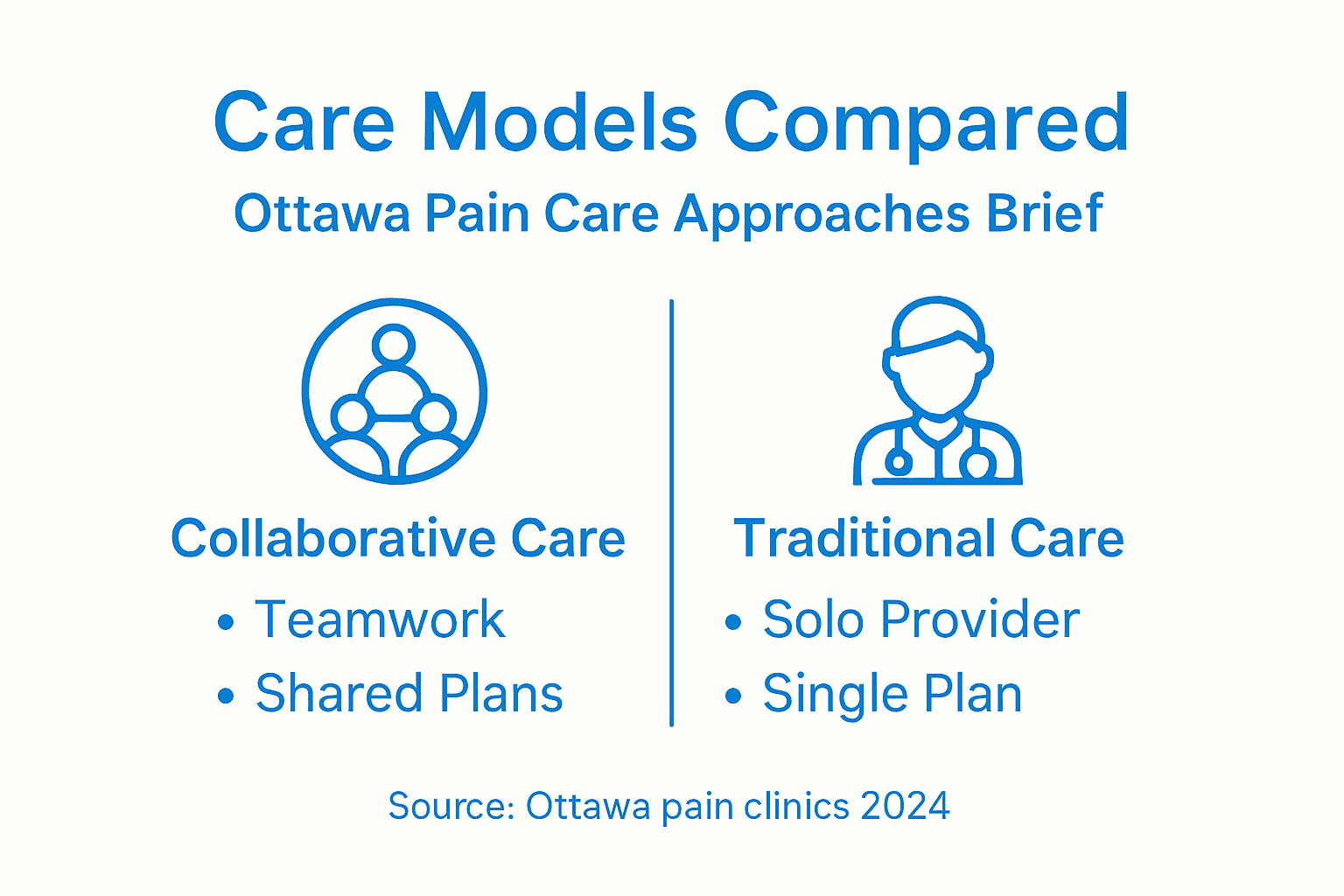
The differences between traditional and collaborative care extend beyond professional interactions. Collaborative models prioritize preventative strategies, chronic disease management, and patient empowerment, whereas traditional approaches were more reactive and narrowly focused. By integrating diverse professional perspectives, collaborative healthcare can offer more sophisticated, adaptable treatment strategies that respond dynamically to patient needs, potentially reducing overall healthcare costs and improving long-term health outcomes.
This table highlights key differences between collaborative and traditional healthcare approaches in Canada:
Aspect | Collaborative Care | Traditional Care |
Team Composition | Multiple disciplines involved | Primarily physician-centric |
Patient Role | Active partner in decisions | Passive treatment recipient |
Treatment Strategy | Holistic, preventative plans | Episodic, reactive interventions |
Information Sharing | Ongoing teamwork and dialogue | Limited communication between providers |
Outcome Focus | Long-term wellness, efficiency | Immediate issue resolution |
Pro tip: Ask potential healthcare providers about their collaborative care approach and how different specialists coordinate to support your specific health needs.
Experience Collaborative Healthcare That Truly Supports Your Pain Care Journey in Ottawa
Chronic pain and complex musculoskeletal conditions demand more than isolated treatments. This article highlights how collaborative healthcare, involving physiotherapists, chiropractors, and physicians working as a united team, can revolutionize your recovery experience. If you are seeking coordinated, patient-centred care that respects your individual goals and offers clear communication among experts then you have found the right approach.
Discover how our specialized clinic brings together a diverse team of professionals offering physiotherapy, chiropractic care, massage therapy, and specialized services such as concussion management — all under one roof and tailored specifically for Ottawa residents. By choosing Integrate Ottawa, you are selecting evidence-based, team-driven treatments designed to reduce recovery times and enhance your overall well-being. Take the first step today to experience comprehensive care with transparent communication and clear roles around your treatment plan. Visit us now at Integrate Ottawa and book your appointment to start your journey toward better health.
Frequently Asked Questions
What is collaborative healthcare?
Collaborative healthcare is a model where healthcare professionals from various disciplines work together to provide comprehensive patient care. This approach focuses on integrating the unique expertise of each professional to address complex health challenges and deliver holistic treatment strategies.
How does collaborative healthcare differ from traditional healthcare models?
Collaborative healthcare emphasizes teamwork and coordinated care involving multiple healthcare professionals, while traditional healthcare models are often physician-centric and fragmented, treating conditions in isolation without integrated communication.
What are the benefits of team-based care in managing pain conditions?
Team-based care allows for more comprehensive patient assessments and integrated treatment plans, leading to improved health outcomes. It enables healthcare providers to develop tailored rehabilitation strategies that address the complex needs of pain management effectively.
How can patients get involved in their collaborative care?
Patients can participate actively by engaging in shared decision-making, communicating their preferences, and collaborating with healthcare professionals to create treatment plans that align with their specific needs and goals.
Recommended
Comments