

Acute Injury Management – Optimizing Active Recovery
Spraining an ankle during a weekend run or straining a muscle mid-game can quickly sideline even the most active Ottawa residents. Musculoskeletal injuries often mean sudden pain, swelling, and the worry of lost momentum in training or daily life. Seeking out the latest, evidence-based strategies from a multidisciplinary team ensures that you receive expert guidance in acute injury management, minimizing downtime and supporting a strong, safe recovery.
Table of Contents
Key Takeaways
Point | Details |
Acute Injury Management Focus | Emphasises immediate assessment, protection of tissues, and progressive rehabilitation for optimal recovery. |
Modern vs Traditional Approaches | Modern strategies prioritise controlled movement and education over strict rest, enhancing recovery outcomes. |
Importance of Timely Intervention | Prompt, evidence-based care is crucial to prevent long-term complications and improve rehabilitation trajectories. |
Multidisciplinary Approach Benefits | Collaboration among healthcare professionals enhances diagnosis and treatment, leading to a more effective recovery process. |
Acute Injury Management Defined and Debunked
Acute injury management represents the critical first response approach designed to minimize tissue damage, control inflammation, and accelerate healing for musculoskeletal injuries. Unlike traditional rest-based strategies, modern protocols emphasize strategic, controlled movement and targeted interventions. Timely physiotherapy intervention plays a pivotal role in optimizing recovery trajectories and preventing long-term complications.
The core objectives of acute injury management involve immediate assessment, protection of injured tissues, and initiating a progressive rehabilitation pathway. This approach requires understanding the specific injury mechanisms, identifying potential risks, and implementing evidence-based interventions. Key strategies include managing pain and swelling, protecting the injured area from further damage, and gradually reintroducing functional movement patterns that support natural healing processes.
Professional healthcare practitioners utilize a structured framework for acute injury management that includes comprehensive assessment, diagnostic imaging when necessary, and personalized treatment plans. Trauma care outcomes can significantly vary depending on the speed and quality of initial interventions, highlighting the importance of expert guidance. Critical components include precise pain control techniques, targeted soft tissue management, and strategic bracing or support mechanisms to facilitate optimal tissue recovery.
Pro tip: Apply the PEACE and LOVE protocol for soft tissue injuries: Protect, Elevate, Avoid inflammation, Compress, Educate first, then Load, Optimise, Vascularisation, and Exercise.
The table below compares modern and traditional acute injury management approaches:
Aspect | Modern Approach | Traditional Approach |
Movement philosophy | Early controlled use | Strict rest |
Swelling control | Compression, elevation | Ice, elevation |
Role of exercise | Gradual reintroduction | Delayed, minimal exercise |
Patient involvement | High, with education | Low, passive care |
Types of Acute Musculoskeletal Injuries
Musculoskeletal injuries represent a complex spectrum of tissue damages that can significantly impact an individual’s mobility and quality of life. Precise injury classification systems help healthcare professionals understand the nuanced nature of these acute traumas, enabling targeted treatment strategies. Fundamentally, these injuries involve damage to muscles, ligaments, tendons, bones, and associated connective tissues resulting from sudden trauma or excessive physical stress.
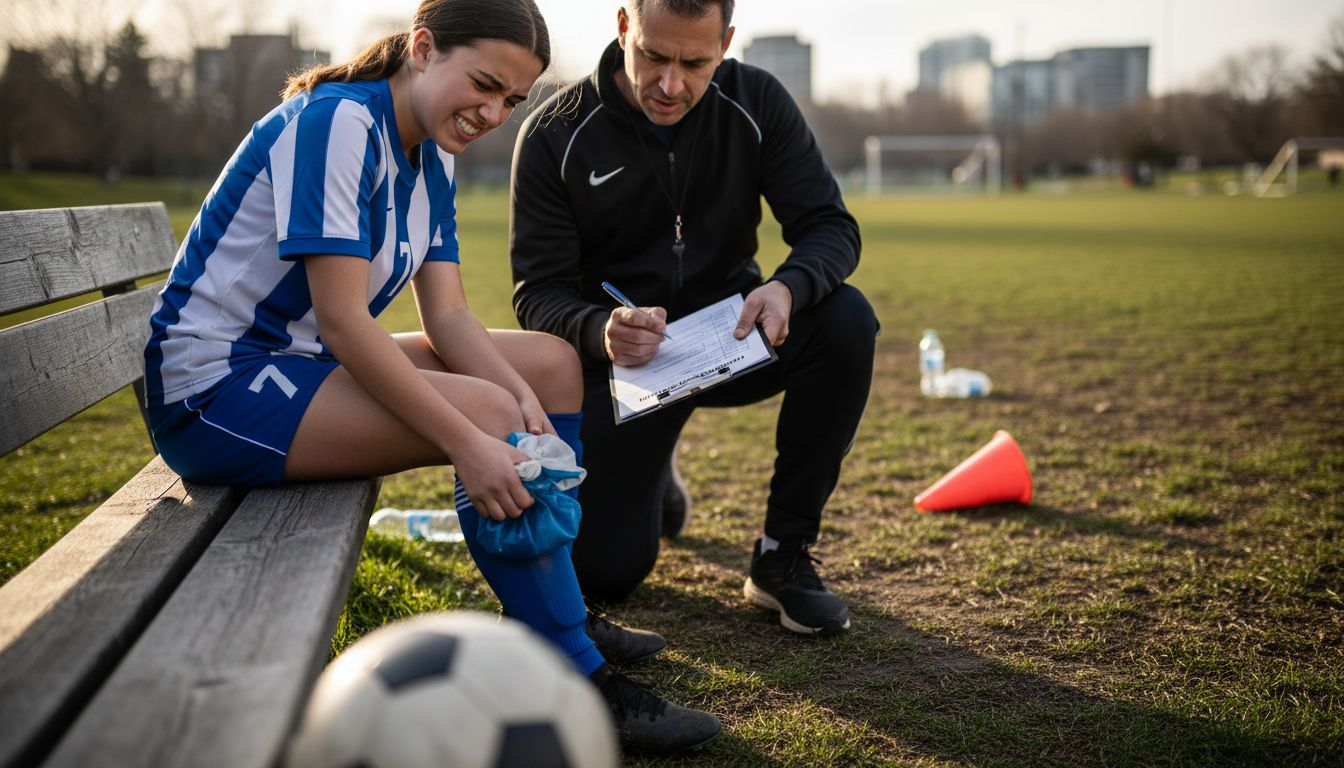
The primary categories of acute musculoskeletal injuries include sprains, strains, fractures, dislocations, and contusions. Sprains involve ligament damage, typically occurring in joints like ankles and knees. Strains affect muscles and tendons, often resulting from overstretching or sudden movements. Fractures represent bone disruptions ranging from microscopic cracks to complete breaks, while dislocations involve joint displacement. Contusions are characterized by soft tissue damage and bruising caused by direct impact.
Understanding the mechanism of injury is crucial for effective management. Acute injury types typically present with consistent symptoms including localized pain, swelling, reduced range of motion, and potential structural deformity. Professional assessment helps differentiate between injury grades and develop appropriate rehabilitation protocols that minimize long-term functional limitations.
Here is a summary of common acute musculoskeletal injuries and their key characteristics:
Injury Type | Injured Structure | Typical Cause | Common Symptom |
Sprain | Ligament | Joint twisting or impact | Joint swelling, pain |
Strain | Muscle or tendon | Overstretch or overload | Muscle weakness, pain |
Fracture | Bone | Direct blow or fall | Bone pain, deformity |
Dislocation | Joint | Severe force or trauma | Obvious joint shift |
Contusion | Soft tissue | Direct blunt force | Bruising, tenderness |
Pro tip: Always document the precise moment and circumstances of your injury, as this information can significantly assist healthcare professionals in developing an accurate treatment plan.
Key Steps in Immediate Injury Care
Immediate injury care is a critical process that demands swift, calculated responses to minimize potential long-term damage and support optimal recovery. Urgent clinical intervention requires a structured approach that addresses both physical and emotional aspects of trauma. The primary goal is to stabilize the injured individual, prevent further harm, and create a foundation for effective rehabilitation.
The fundamental protocol for immediate injury care centres around three critical components: assessment, protection, and initial treatment. First, carefully assess the injury’s severity by checking for signs of bleeding, deformity, or compromised mobility. Immobilization is crucial to prevent additional tissue damage. Systematic trauma evaluation follows the standard ABCs (Airway, Breathing, Circulation), ensuring no life-threatening conditions are present. This involves controlling bleeding, preventing shock, and maintaining the patient’s vital functions.
Documentation and emotional support are often overlooked but equally important aspects of immediate injury care. Accurately record the injury’s circumstances, mechanism, and initial symptoms, as this information guides subsequent medical interventions. Create a calm environment, provide reassurance to the injured person, and minimize psychological stress. Professional medical assessment should be sought promptly, especially for injuries involving significant pain, restricted movement, or potential structural damage.
Pro tip: Keep a basic first aid kit readily accessible and learn fundamental emergency response techniques to provide immediate, competent care during unexpected injury situations.
Role of Evidence-Based Physiotherapy
Evidence-based physiotherapy represents a sophisticated approach to injury rehabilitation that combines rigorous scientific research, clinical expertise, and individual patient needs. Clinical research supports a systematic methodology that transforms traditional treatment paradigms by prioritizing data-driven interventions. This approach ensures that every rehabilitation strategy is carefully evaluated, measured, and tailored to achieve optimal patient outcomes.
The fundamental principles of evidence-based physiotherapy centre on three core components: the best available scientific research, clinical practitioner expertise, and individual patient characteristics. Randomized controlled trials and systematic reviews form the backbone of treatment protocols, enabling physiotherapists to select interventions with proven effectiveness. These evidence-based strategies include targeted techniques like neuromuscular re-education, controlled loading protocols, and biomechanical assessment, which are systematically designed to accelerate healing, restore function, and minimize re-injury risks.
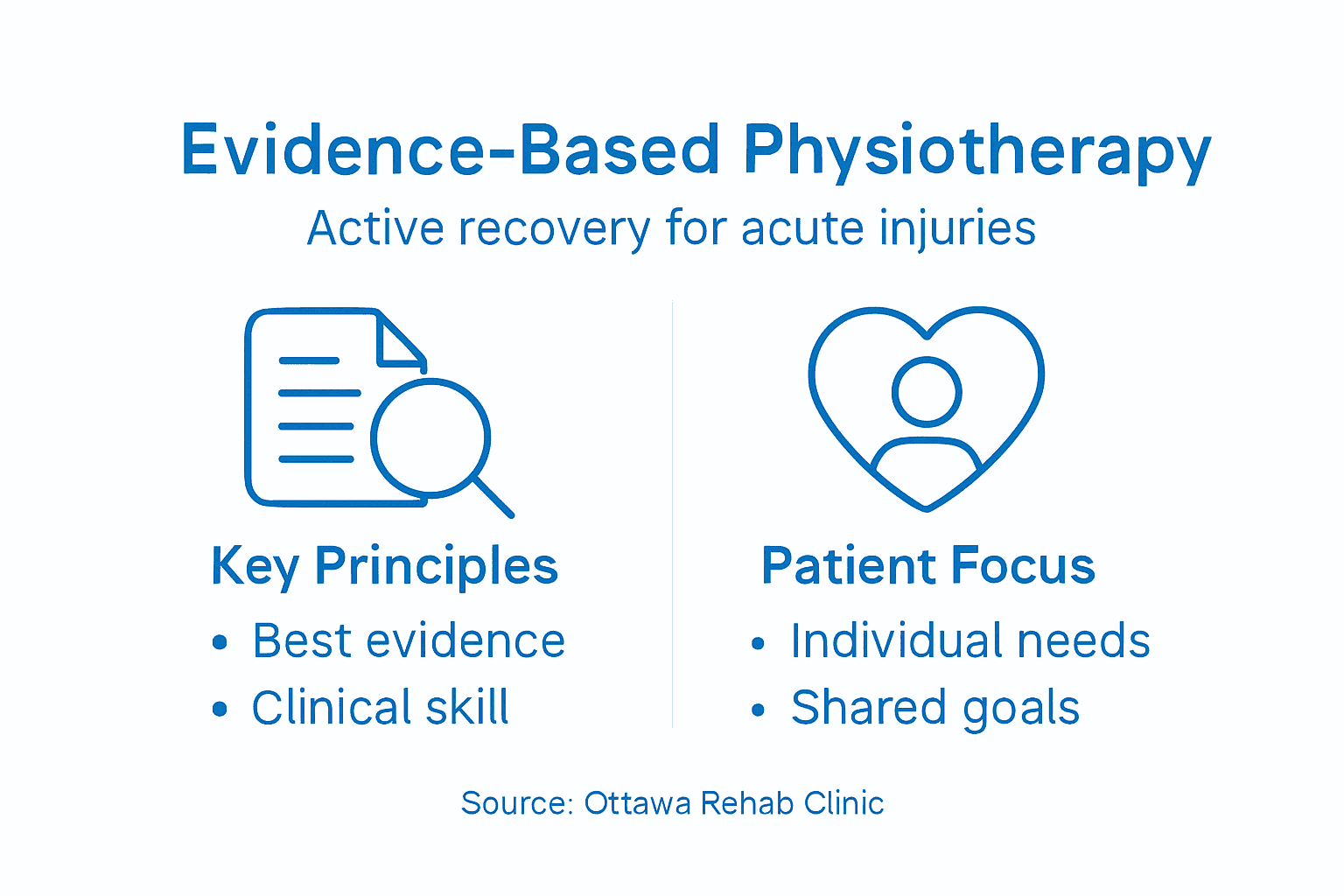
Critical to this approach is the recognition that each patient’s rehabilitation journey is unique. Evidence-based physiotherapy goes beyond generic treatment plans by integrating objective research findings with a nuanced understanding of individual patient needs. This means considering factors such as age, fitness level, injury severity, and personal recovery goals. Physiotherapists use advanced assessment tools, movement analysis technologies, and comprehensive screening protocols to develop personalized rehabilitation strategies that are both scientifically validated and individually optimized.
Pro tip: Request detailed evidence supporting your rehabilitation plan and actively participate in understanding the rationale behind each recommended intervention.
Multidisciplinary Team Approach in Ottawa
A multidisciplinary team approach transforms injury management from isolated treatments to comprehensive, holistic care that addresses patient needs from multiple professional perspectives. Orthopaedic Trauma Services in Ottawa exemplify this collaborative model, integrating specialized professionals to deliver coordinated, patient-centred rehabilitation strategies. This approach recognizes that effective recovery extends beyond single-discipline interventions, requiring seamless communication and integrated expertise.
The core strength of a multidisciplinary team lies in its diverse skill set and collaborative problem-solving. Rehabilitation teams typically include physiotherapists, orthopedic surgeons, chiropractors, massage therapists, sports medicine physicians, and rehabilitation psychologists. Each professional contributes unique insights, ensuring patients receive nuanced assessments that consider physical, biomechanical, and psychological dimensions of injury recovery. This comprehensive approach allows for more accurate diagnoses, personalized treatment plans, and strategies that address both immediate symptoms and long-term functional restoration.
In the Ottawa healthcare landscape, multidisciplinary teams operate with remarkable precision and interconnectedness. Professionals regularly collaborate through shared electronic health records, interdisciplinary case conferences, and coordinated care protocols. This systematic approach enables rapid information exchange, allows for dynamic treatment adjustments, and ensures patients receive consistent, evidence-based interventions. The ultimate goal is creating a seamless patient journey that minimizes recovery time, reduces potential complications, and supports optimal functional outcomes across diverse injury types and severity levels.
Pro tip: When seeking treatment, request a comprehensive team assessment and understand how different specialists will collaborate in your specific rehabilitation plan.
Risks of Delayed or Inadequate Management
Delayed or inadequate injury management can transform a manageable acute condition into a complex, long-term health challenge with significant physical, psychological, and economic consequences. Inadequate acute injury treatment substantially increases the risk of developing chronic pain syndromes, persistent functional limitations, and reduced quality of life. The window for effective intervention is often narrow, making prompt and precise medical response critically important for preventing cascading negative outcomes.
The physiological implications of delayed management extend beyond immediate tissue damage. Prolonged inflammation can lead to abnormal tissue remodelling, reduced mobility, and compromised healing mechanisms. Patients may experience increased pain sensitivity, muscle atrophy, and compensatory movement patterns that create secondary complications. Neurological changes can occur when pain signals remain unchecked, potentially rewiring pain perception circuits and making future treatment more challenging. These complex interactions underscore the importance of timely, comprehensive injury assessment and intervention.
Global health research highlights that inadequate injury management contributes significantly to preventable long-term disability and increased healthcare costs. The risks are particularly pronounced in musculoskeletal injuries, where delayed treatment can result in permanent structural changes, reduced functional capacity, and increased likelihood of recurring injuries. Complex interactions between physical trauma, inflammatory responses, and neurological adaptation create a challenging landscape that requires sophisticated, multidisciplinary intervention strategies to mitigate potential negative outcomes.
Pro tip: Document your injury’s progression immediately, photograph visible symptoms, and seek professional assessment within 48 hours to maximize recovery potential.
Take Control of Your Recovery with Expert Acute Injury Management
Acute injuries demand swift, precise action to prevent long-term complications and ensure a smooth path to healing. If you are facing challenges such as pain, swelling, or limited movement following a sudden injury, it is critical to engage with evidence-based physiotherapy and a multidisciplinary team who understands the importance of early controlled movement and personalized care. At Integrate Ottawa, we specialize in guiding you through every step of your recovery using proven protocols like PEACE and LOVE to protect and progressively restore your function.
Experience the difference that expert musculoskeletal care can make by visiting Integrate Ottawa. Our comprehensive services include physiotherapy, chiropractic care, and pain medicine, all coordinated by professionals dedicated to your active recovery. Don’t let delayed treatment or inadequate management affect your quality of life. Book your appointment today to start your personalized rehabilitation journey with team-centred care that truly supports your healing goals.
Frequently Asked Questions
What is acute injury management?
Acute injury management refers to the immediate response strategies used to minimize tissue damage, control inflammation, and promote healing in musculoskeletal injuries. It emphasizes strategic movement and targeted interventions rather than strictly resting the injured area.
What are some common types of acute musculoskeletal injuries?
Common types of acute musculoskeletal injuries include sprains, strains, fractures, dislocations, and contusions. These injuries can involve damage to muscles, ligaments, tendons, and bones due to sudden trauma or excessive physical stress.
How can evidence-based physiotherapy help in injury recovery?
Evidence-based physiotherapy involves using scientific research to guide rehabilitation strategies. It ensures that treatment plans are individually tailored and grounded in proven techniques, optimizing recovery through targeted approaches like controlled loading and biomechanical assessment.
Why is timely injury management important?
Timely injury management is crucial as delayed or inadequate response can lead to chronic pain, prolonged inflammation, and long-term functional limitations. Immediate intervention helps prevent severe complications and supports faster recovery.
Recommended
Comments