

How to Prepare for Physiotherapy: Step-by-Step Guide

Finding the right approach for physiotherapy can feel overwhelming, especially when you’re focused on a fast and effective recovery. For Canadian patients, the groundwork you lay before your first session can make a difference. Well-prepared clients often see better results and fewer delays in treatment. This guide reveals practical steps that help Canadians maximize each physiotherapy visit, from organizing medical records to choosing clothing that supports a productive session.
Table of Contents
Quick Summary
Key Point | Explanation |
1. Organize Medical Records | Collect all relevant medical documents, including diagnostic reports and treatment histories, to assist your physiotherapist in creating a tailored treatment plan. |
2. Communicate Goals Clearly | Discuss your health concerns and desired outcomes openly with your therapist to ensure they understand your treatment expectations and can develop an appropriate strategy. |
3. Wear Suitable Clothing | Choose comfortable and accessible clothing and footwear that allows easy movement and visibility for effective assessment and treatment. |
4. Plan Transportation and Time | Assess transportation options and schedule appointments to avoid stress, ensuring timely arrival for your physiotherapy sessions. |
5. Follow Post-Session Instructions | Carefully review and implement your physiotherapist’s recommendations after each session to support your recovery and monitor your progress effectively. |
Stage 1: Gather Relevant Medical Information
Preparing for physiotherapy requires collecting a comprehensive overview of your medical history and current health status. This step is crucial because detailed medical documentation helps physiotherapists design precise treatment plans.
Start by gathering all relevant medical documents. These should include recent diagnostic reports, X-ray or imaging results, surgical histories, medication lists, and records of previous injuries or treatments. Your family physician can help you compile these documents efficiently. Request copies of your medical records from all healthcare providers who have been involved in treating your current condition.
Pro tip: Organize your medical documents chronologically and create a summary sheet listing key medical events, surgeries, and ongoing health conditions. This approach will save time during your initial physiotherapy assessment and help your healthcare provider understand your complete medical context. The more organized and thorough your information, the more effectively your physiotherapist can develop an accurate assessment and treatment strategy.
Once you have compiled your medical information, you will be well prepared for the next stage of your physiotherapy preparation.
Stage 2: Discuss Goals and Concerns with Your Therapist
In this critical stage of physiotherapy preparation, you will establish an open dialogue with your healthcare provider about your specific treatment expectations and potential apprehensions. Patient-centred communication is fundamental to developing an effective therapeutic approach.
Begin by preparing a clear and concise summary of your health concerns, physical limitations, and desired outcomes. Think about what you want to achieve through physiotherapy such as reducing pain, improving mobility, recovering from an injury, or enhancing athletic performance. Be specific and realistic when describing these goals. Your physiotherapist needs to understand not just your physical symptoms, but also how these challenges impact your daily life and personal activities.
Be honest and transparent during your discussion. The College of Physiotherapists of Ontario recommends that patients openly communicate their treatment objectives and any underlying concerns. This means sharing not just physical symptoms, but also any anxiety or uncertainty you might have about the treatment process. Your therapist is a professional partner in your healthcare journey and wants to create a treatment plan that makes you comfortable and addresses your unique needs.
By the end of this conversation, you and your physiotherapist will have a mutual understanding of your health goals, setting the stage for a collaborative and effective rehabilitation strategy.
Stage 3: Wear Appropriate Clothing and Footwear
Preparing for your physiotherapy session involves selecting clothing and footwear that will support a comprehensive and comfortable assessment. Your choice of attire can significantly impact the effectiveness of your evaluation and treatment.
Choose clothing that allows easy movement and provides clear access to the area being examined or treated. Opt for stretchy, breathable fabrics like athletic wear or loose fitting garments that can be easily rolled up or moved. For lower body assessments, consider wearing shorts or comfortable pants that can be lifted above the knee. If you are addressing an upper body concern, a tank top or a shirt with loose sleeves works best. Your physiotherapist needs to be able to observe and manipulate your body without unnecessary fabric restrictions.

When it comes to footwear, prioritize comfort and stability. Bring the shoes you typically wear during physical activities or the ones that might be related to your current condition. Athletic shoes with good arch support and minimal wear are ideal. If you are experiencing foot or ankle issues, consider bringing multiple pairs of shoes to help your therapist understand how different footwear might impact your movement and pain levels.
By selecting appropriate clothing and footwear, you set the stage for a thorough and productive physiotherapy assessment.
Stage 4: Organize Transportation and Scheduling Needs
Preparing for physiotherapy involves strategic planning around transportation and scheduling to ensure a smooth and stress-free experience. Your ability to arrive on time and without unnecessary complications can significantly impact your treatment effectiveness and overall healthcare journey.
Start by carefully reviewing the clinic’s location and understanding your transportation options. If you are experiencing mobility challenges, consider arranging accessible transportation or requesting assistance from family members or friends. Calculate travel time realistically, accounting for potential traffic or mobility constraints. When booking your appointment, select a time slot that provides ample buffer for travel and reduces potential rushing or anxiety about arrival.
Create a comprehensive scheduling strategy that accommodates your treatment plan. Block out sufficient time not just for the appointment itself, but for potential additional activities like exercises, rest periods, or follow up consultations. If you require workplace accommodations or need to adjust personal commitments, communicate these needs in advance. Consider creating digital or physical calendar reminders to track appointment dates, potential treatment homework, and follow up sessions. By proactively managing your scheduling and transportation logistics, you demonstrate commitment to your rehabilitation process and reduce potential stress associated with medical appointments.
With transportation and scheduling carefully organized, you are now ready to approach your physiotherapy experience with confidence and preparedness.
Stage 5: Review Post-Session Recommendations
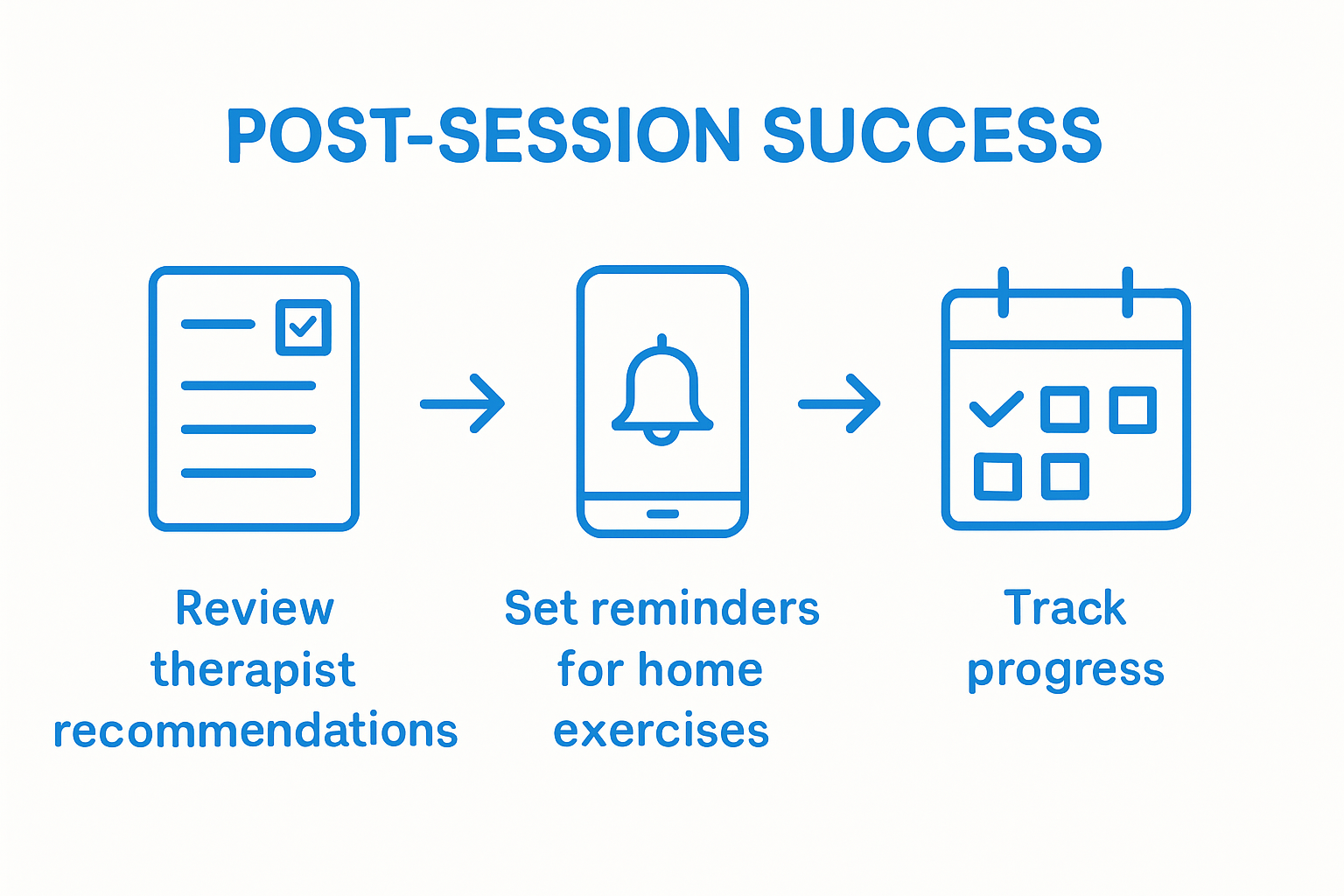
After your physiotherapy session, carefully reviewing your therapist’s recommendations is crucial for maintaining progress and supporting your recovery journey. Understanding and adhering to post-session guidance plays a critical role in achieving your treatment goals.
Pay close attention to the specific instructions provided by your physiotherapist. These recommendations might include prescribed exercises, movement modifications, potential activity restrictions, and home care strategies. Create a dedicated space to document these instructions either in a physical notebook or digital app. Break down complex instructions into manageable steps and consider asking your therapist to demonstrate or clarify any exercises you find challenging. Patient education is fundamental to successful rehabilitation, emphasizing the importance of following prescribed exercises and lifestyle modifications.
Establish a tracking system to monitor your progress and compliance with recommended activities. Set reminders on your phone, create a visual chart, or use a rehabilitation tracking app to ensure you consistently perform prescribed exercises. If you experience any pain, discomfort, or uncertainty while following these recommendations, contact your physiotherapist promptly for guidance. By actively engaging with your post-session recommendations, you become an integral partner in your own healing process.
With your post-session recommendations clearly understood and implemented, you are taking significant steps towards a successful recovery.
Prepare for Physiotherapy with Expert Support in Ottawa
Understanding how to gather your medical information, discuss your goals, and follow post-session recommendations can feel overwhelming when starting physiotherapy. Common challenges like finding the right therapist, organising transportation, and knowing what to wear can create uncertainty and anxiety before your first appointment. At Integrate Ottawa, we recognise these pain points and provide a patient-centred, evidence-based approach that puts your unique needs first.
Take control of your recovery with tailored physiotherapy services that focus on your individual goals and concerns. Whether you are managing pain, recovering from injury, or improving mobility, our collaborative team works closely with you to ensure every session is comfortable, effective, and responsive to your lifestyle. Visit Integrate Ottawa to explore our comprehensive services and understand how to prepare confidently for your physiotherapy journey.
Ready to start your path to recovery with trusted professionals who value communication and personalised care? Book your initial assessment today and experience the difference of working with a dedicated team that supports you every step of the way. Learn more about how our physiotherapy approach connects with your preparation needs by visiting our website now.
Frequently Asked Questions
What information should I gather before my physiotherapy appointment?
To prepare for your physiotherapy appointment, gather all relevant medical documents, including diagnostic reports, medication lists, and records of previous treatments. Organize these documents chronologically and create a summary sheet highlighting key medical events.
How can I effectively communicate my goals and concerns to my physiotherapist?
Prepare a clear summary of your health concerns and desired outcomes before your appointment. Be specific about what you want to achieve, such as reducing pain or improving mobility, to ensure your physiotherapist understands your unique needs.
What type of clothing should I wear to my physiotherapy session?
Choose comfortable clothing that allows for easy movement and provides access to the area being treated. Athletic wear or loose-fitting garments are ideal, as they enable your physiotherapist to assess and treat your condition effectively.
How can I organize my transportation and scheduling for physiotherapy?
Carefully review the clinic’s location and plan your transportation options to arrive on time without rushing. Schedule your appointments with ample buffer time for travel, and consider using digital reminders to keep track of your treatment schedule.
What should I do after my physiotherapy session to ensure progress?
After your session, review your physiotherapist’s recommendations thoroughly and document them for reference. Follow their guidance on exercises and care strategies consistently to maximise your treatment outcomes.
How can I stay on track with my post-session recommendations?
Establish a tracking system to monitor your compliance with prescribed exercises and recommendations. You can set reminders on your phone or create a visual chart to help ensure you follow your physiotherapist’s guidance regularly.
Recommended


Comments