

Active Recovery – Why It Matters for Injury Rehab

After a tough workout or sudden injury in Ottawa, choosing between rest and action can feel confusing. Active recovery empowers you to actively participate in your healing with controlled movement, building strength and function through purposeful exercise. This approach shifts recovery from passive waiting to a plan that supports your body’s natural healing and uses neuroplasticity for faster progress. Discover how structured, evidence-based strategies help prevent stiffness, rebuild trust in your body, and set you on the path to resilient, pain-free performance.
Table of Contents
Key Takeaways
Point | Details |
Active Recovery Enhances Healing | Engaging in controlled movements stimulates blood flow and strengthens tissues, accelerating recovery. |
Structured Progression is Crucial | Tailored rehabilitation programmes should adapt to individual healing timelines to avoid setbacks and improve recovery outcomes. |
Psychological Benefits are Significant | Active participation in recovery fosters a sense of control and empowerment, enhancing overall mental well-being. |
Consistency is Key | Adhering to an active recovery regimen is essential; skipping sessions can hinder progress and lead to setbacks. |
What Active Recovery Means in Rehabilitation
Active recovery is your chance to take the wheel in your own healing process. Rather than sitting passively while waiting for an injury to mend, you’re engaging in purposeful movements and targeted activities designed to speed up recovery and restore function. This approach differs fundamentally from rest alone, though rest still plays a role. What makes active recovery powerful is that you’re not just waiting for time to do the work—you’re working with your body’s natural healing mechanisms.
At its core, active recovery relies on the principle that movement stimulates healing. When you engage in controlled, low-intensity activity during rehabilitation, you activate your body’s repair systems. Your muscles receive signals to rebuild stronger. Blood flow increases to the injured area, delivering oxygen and nutrients needed for tissue repair. Your nervous system also begins to relearn how to coordinate and control movement patterns, something that becomes critical as you progress in recovery. For someone recovering from a sports injury in Ottawa, this might mean starting with gentle range-of-motion exercises the day after an injury, then gradually advancing to strength-building work under professional guidance. This progressive approach helps prevent the stiffness and weakness that comes from complete immobilisation.
What’s important to understand is that active recovery exists on a spectrum. Early-stage recovery might involve simple movements like controlled ankle circles after a sprain or gentle shoulder rolls following a rotator cuff strain. As healing progresses, you move toward more demanding activities like resistance exercises, functional movement patterns, and sport-specific drills. The key word here is “controlled”—everything should match your current healing stage and capacity. This is where working with physiotherapists, chiropractors, or exercise specialists becomes valuable. They can assess your injury, determine safe movement parameters, and adjust your programme as your body responds. You’re not randomly exercising; you’re following a logical progression based on tissue healing timelines and your individual response to activity.
The mechanism behind this effectiveness involves neuroplasticity and how the brain adapts through repetitive, purposeful movements. Your nervous system doesn’t just recover passively—it rewires itself through practice. When you perform an exercise repeatedly, your brain creates stronger neural pathways for that movement. This is why consistency matters more than intensity in early rehabilitation. Doing your exercises three times per week for six weeks produces better long-term outcomes than doing an intense bout once and then stopping. For active individuals aged 25 to 45 who are used to regular training, this structured approach can feel more empowering than simply resting, because you’re actively participating in your recovery timeline.
Pro tip: Start your active recovery programme within the first few days of injury (unless you’ve been advised otherwise by your healthcare provider), as early movement prevents complications like stiffness and muscle atrophy while supporting your body’s natural healing response.
How Active Recovery Supports Healing
Active recovery works because it addresses multiple aspects of how your body actually heals. When you engage in controlled exercises and targeted movements, you’re not just passively waiting for tissues to repair themselves. Instead, you’re actively triggering the biological processes that accelerate recovery. Blood circulation increases to the injured area, delivering oxygen and nutrients that damaged tissues need to rebuild. At the same time, controlled loading helps prevent the stiffness and weakness that comes from immobilisation. Your body responds to movement signals by strengthening connective tissues, rebuilding muscle fibres, and reorganising neural pathways. This is why someone recovering from a knee injury in Ottawa might start with gentle range-of-motion work in week one, then progress to light resistance exercises by week three. Each phase builds on the previous one, creating a structured pathway toward full functional recovery.
One of the most significant benefits of active recovery is how it reduces pain while simultaneously improving function. Controlled exercises enhance circulation and decrease mechanical stress, which means you experience less pain as tissues heal and movement patterns normalise. This isn’t about pushing through severe pain, but rather understanding that appropriate movement often reduces discomfort compared to complete rest. As you perform exercises correctly and consistently, your joints become more flexible, your muscles gain strength and endurance, and your nervous system becomes more confident in movement. This confidence matters greatly for active individuals. When you can perform a movement without pain, you rebuild trust in your body and move away from the protective, guarded patterns that often develop after injury.
Beyond the physical mechanics, active recovery produces powerful psychological benefits. You’re no longer a passive recipient waiting for healing to happen to you. Instead, you become actively engaged in your own recovery process. This engagement creates a sense of control and purpose, which research consistently shows improves outcomes and mental health during rehabilitation. Learning proper movement patterns and injury prevention strategies during your recovery period gives you knowledge you can carry forward. You understand how to train smarter, recognise warning signs early, and take preventive action before minor issues become major injuries. For someone aged 25 to 45 who values performance and independence, this educational component transforms rehabilitation from a frustrating setback into an opportunity to build a more resilient body.
The progression within active recovery is carefully calibrated to match your body’s healing timeline. Early phases focus on restoring movement and preventing complications. Middle phases build strength and functional capacity. Later phases return you to sport-specific or activity-specific demands. Throughout this progression, your healthcare team at Integrate Ottawa monitors your response and adjusts intensity accordingly. Pain that worsens during or after exercise indicates you’ve progressed too quickly. Pain that improves over the course of several days suggests appropriate loading. This feedback loop between you and your care providers ensures you’re always working at the right intensity, which is the sweet spot for optimal healing.
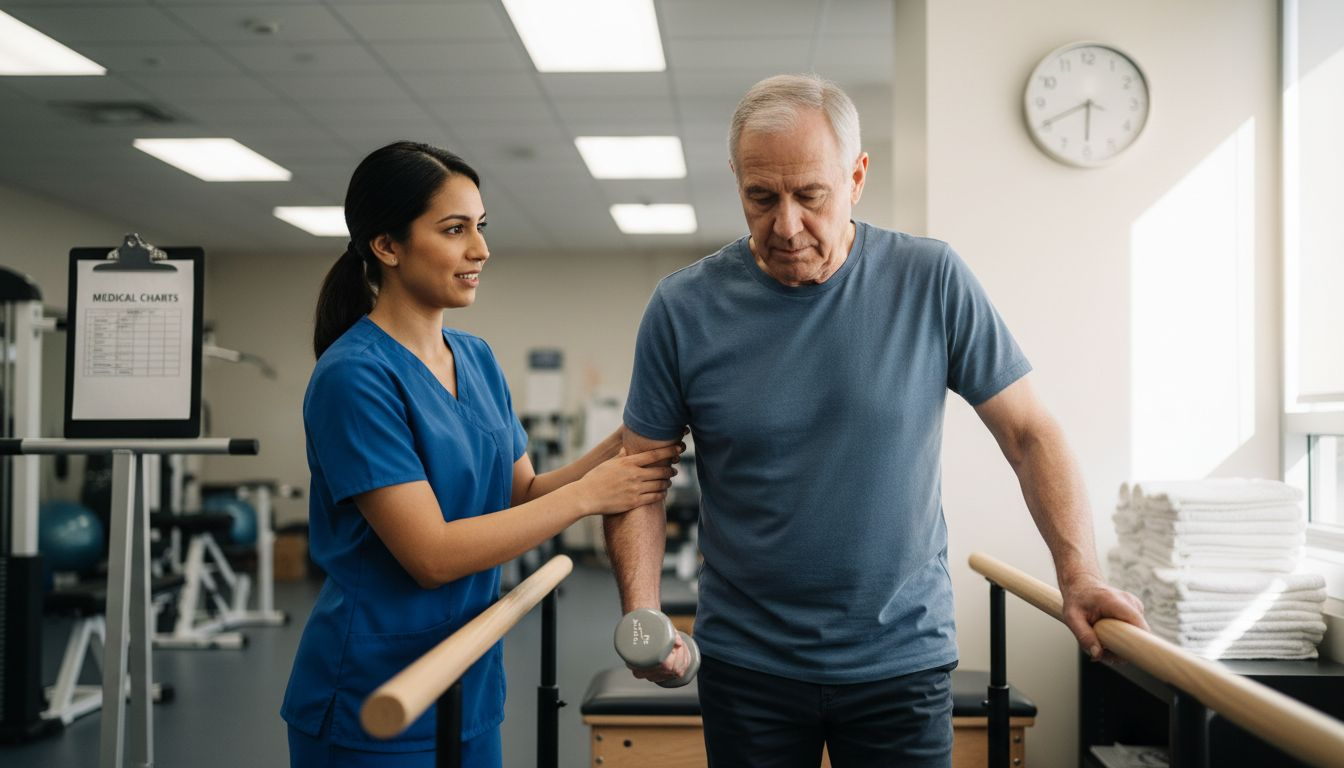
Pro tip: Keep a simple log of your exercises, pain levels, and how you feel the following day, as this information helps your physiotherapist or chiropractor fine-tune your programme and ensures you’re progressing at the ideal pace for your specific injury.
Types of Active Recovery After Injury
Active recovery takes different forms depending on where you are in your healing journey. There isn’t one single approach that works for everyone or every stage of recovery. Instead, think of active recovery as a toolbox where your physiotherapist, chiropractor, or exercise specialist selects the right tools for your current situation. Early-stage recovery looks completely different from mid-stage recovery, which looks different again from return-to-sport recovery. Understanding these distinctions helps you know what to expect and why your rehabilitation programme might change week to week. This progressive approach is what separates effective rehabilitation from generic exercise routines.
Range-of-motion and mobility work forms the foundation of early active recovery, typically beginning within days of injury. These activities involve moving your injured joint or limb gently through its available range, without resistance. For example, after an ankle sprain, you might perform ankle circles, alphabetic ankle writing (moving your foot to “write” letters in the air), or gentle side-to-side ankle rocks. After a shoulder injury, you might use your uninjured arm to gently assist the injured shoulder through movements. This early phase prevents stiffness, maintains muscle memory, and signals to your nervous system that movement is safe. Pain should be minimal during these exercises, usually no more than a 3 out of 10 on a pain scale. Isometric strengthening exercises come next, where you engage muscles without moving the joint. Holding a muscle contraction for 5-10 seconds without any movement creates strength gains while protecting healing tissues. This bridges the gap between pure mobility work and more demanding strength training.
Progressive resistance training represents the middle stage of active recovery, typically beginning 2-4 weeks post-injury depending on injury severity. Here, exercise therapy strategies build strength and functional capacity as tissues become more resilient. You might progress from bodyweight exercises to light resistance bands, then to weights. The key is gradual progression. If you injured your knee, you might progress from double-leg squats to single-leg squats over several weeks. If you injured your shoulder, you might progress from light band pulls to heavier resistance. This phase requires monitoring because it’s easy to advance too quickly and trigger setbacks. Your care provider watches for pain patterns that indicate you’re pushing appropriately versus overdoing it.
Functional and movement-pattern exercises focus on activities that mimic real-world demands. Rather than isolating single muscles, you train movement patterns. After a lower-body injury, this might involve stepping patterns, lunging movements, or lateral movement drills. After an upper-body injury, it might involve reaching patterns or rotational movements. These exercises prepare your body for actual activities like climbing stairs, carrying groceries, or returning to your sport. Sport-specific training comes last, where exercises directly replicate the demands of your chosen activity. A runner returns to running progressively. A volleyball player works on jumping and landing mechanics. A desk worker focuses on posture and repetitive strain prevention. Throughout all these phases, communication with your healthcare team remains essential. Pain levels, swelling patterns, and movement quality guide every adjustment.
Here is a summary of the phases of active recovery and their primary focus:
Recovery Phase | Typical Activities | Main Goal | Example Progression |
Early | Gentle mobility, assisted movement | Restore mobility, reduce stiffness | Ankle circles post-sprain |
Middle | Resistance training, light loading | Build strength, prevent weakness | Bodyweight to resistance bands |
Late | Functional, sport-specific drills | Regain daily or sport skills | Jumping drills, return to running |
Factors That Shape Your Recovery Type
The specific combination of active recovery approaches depends on several factors. Injury type matters greatly. A ligament sprain follows a different timeline than a muscle strain or joint injury. Injury severity determines how quickly you progress. A mild sprain might involve light activity within days, while a severe injury requires longer protection. Your baseline fitness level influences progression speed. Someone already training regularly typically tolerates rehabilitation exercises more comfortably. Your occupation or activity goals determine what functional activities matter most for your recovery.
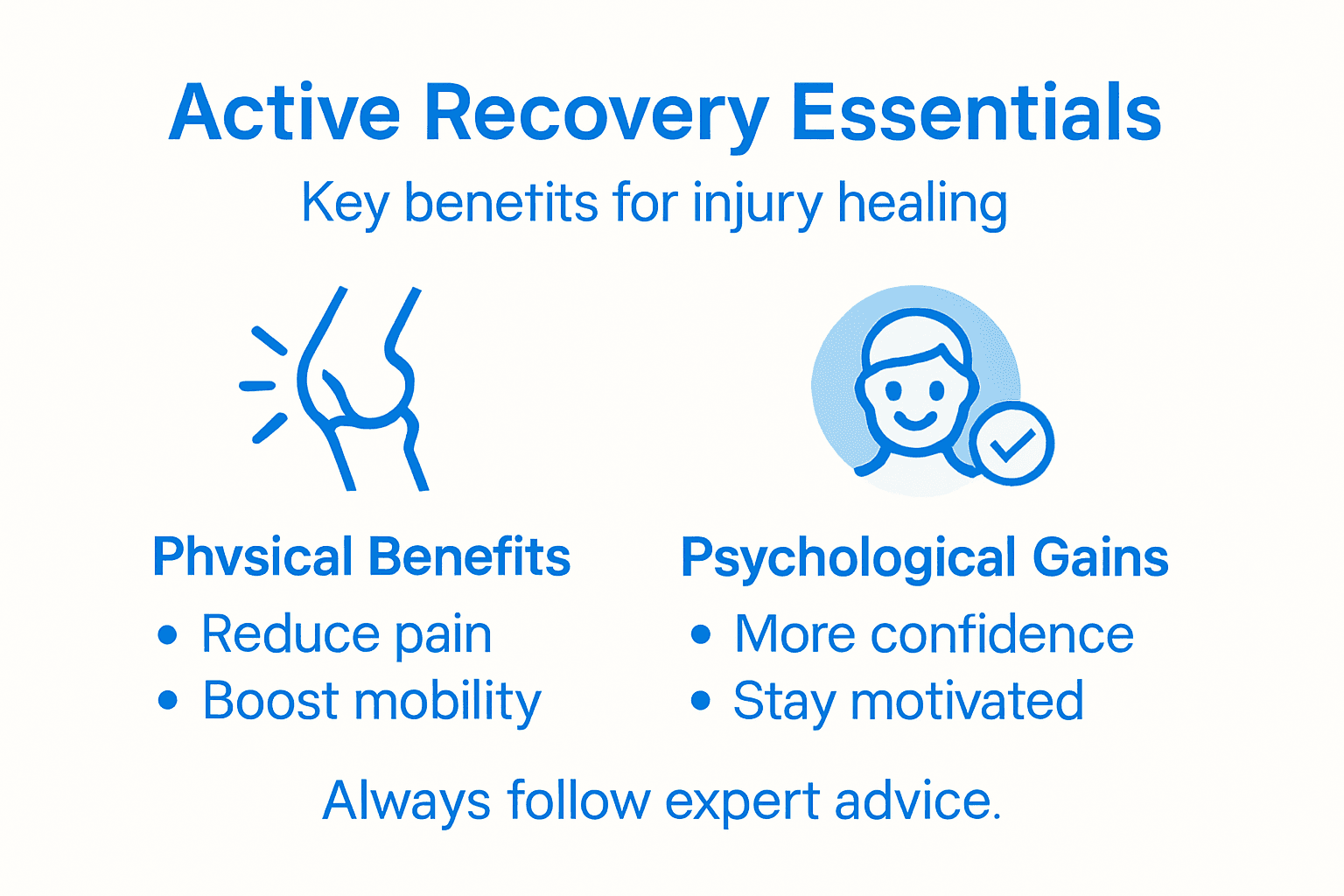
Pro tip: Ask your physiotherapist or chiropractor to explain which phase of active recovery you’re currently in and what signals indicate you’re ready to progress to the next phase, so you understand the logic behind each programme adjustment rather than guessing whether you’re doing too much or too little.
Science-Backed Benefits and Limitations
The evidence supporting active recovery is substantial and well-documented across clinical research. Studies consistently demonstrate that active rehabilitation produces measurable improvements across multiple dimensions. Muscle strength increases noticeably when you perform resistance exercises progressively. Your muscles respond to controlled loading by building new muscle fibres and increasing their contractile force. Endurance improves as your cardiovascular system adapts to repeated activity. Joint range of motion expands through consistent, purposeful movement. Pain decreases as enhanced circulation reduces mechanical stress on healing tissues and your nervous system becomes less sensitised to movement. These aren’t theoretical benefits but measurable outcomes that rehabilitation specialists track throughout your recovery. For active individuals in Ottawa recovering from sports injuries, this means you can expect concrete progress you can feel and measure, not just hope that time will fix things.
Beyond the physical metrics, active recovery produces psychological and functional benefits that matter tremendously. Faster functional recovery means you return to activities that matter to you more quickly than passive approaches would allow. You can climb stairs without pain sooner. You can return to your sport sooner. You can work without limitation sooner. This functional improvement directly impacts your quality of life and mental health. Research consistently shows that patients engaged in active recovery report improved psychological wellbeing compared to those who rely purely on rest. You feel empowered rather than helpless. You understand your recovery process rather than feeling like a passive observer. You develop knowledge about movement, strength, and injury prevention that protects you long-term. This educational component creates lasting benefits beyond just healing from your current injury. Many athletes and active individuals tell us that their best training habits and injury awareness came from going through proper rehabilitation.
However, active recovery isn’t a magic solution without limitations. The approach requires genuine patient adherence. Your exercises only work if you actually do them consistently. This sounds obvious, but research shows that adherence remains one of the biggest challenges in rehabilitation. Life gets busy. Exercises feel tedious. You feel better and think you can skip sessions. Then setbacks occur. The second critical limitation is proper progression. Advancing too quickly can overwhelm healing tissues and cause setbacks that set you back weeks. Advancing too slowly leaves you feeling frustrated and potentially weakens your conditioning more than necessary. Getting the progression right requires expertise and individualised guidance. This is why working with qualified professionals at Integrate Ottawa matters. They have the experience to read your body’s signals and adjust intensity appropriately. Poor technique represents another limitation. Performing exercises incorrectly can perpetuate bad movement patterns or place stress on tissues you meant to protect. A physiotherapist corrects these patterns early, but if you’re doing exercises without professional supervision, poor technique can delay healing.
The research also highlights that active recovery outcomes depend heavily on individualisation. What works perfectly for one person’s ankle sprain might not match another person’s sprain because healing timelines, pain responses, and movement limitations differ. Your age, baseline fitness, injury severity, and occupation all influence what active recovery looks like for you. Generic online programmes can’t account for these differences. They might work reasonably well for some people but cause problems for others. This is why assessment and customisation by a qualified healthcare provider produces better outcomes than following standard protocols blindly. Active recovery is scientifically supported, but its success in your specific situation depends on proper diagnosis, appropriate progression, correct technique, and consistent adherence. When all these elements align, the results are powerful.
Compare key benefits and limitations of active recovery:
Aspect | Benefits | Limitations |
Physical | Faster return to function, less stiffness | Requires consistency, risk of improper technique |
Psychological | Greater sense of control, less frustration | Needs motivation and understanding |
Individual | Tailored progression, injury prevention | Not one-size-fits-all, demands custom guidance |
Pro tip: Ask your physiotherapist to show you which specific signs indicate you’re ready to progress to the next exercise level, such as pain staying below a certain threshold or completing a set number of repetitions without compensation patterns, rather than advancing based purely on how many days have passed.
Common Mistakes and How to Avoid Them
Most people who struggle with active recovery don’t fail because they lack discipline or intelligence. They fail because they make predictable mistakes that accumulate into bigger problems. The good news is that recognising these pitfalls early lets you avoid them entirely. The most common mistake is treating active recovery as optional rather than central to your healing. You might think rest alone will fix your injury, so you skip your exercises when life gets busy or when you feel slightly better. This inconsistent approach severely undermines your progress. Tissues heal on a timeline, and consistent movement supports that timeline. Skipping sessions means you miss critical windows for neurological adaptation and strength building. When you return to activity later, you’re weaker and stiffer than you should be. The solution is straightforward: schedule your exercises like you’d schedule a work meeting. Treat them as non-negotiable appointments with yourself. Write them in your calendar. Set phone reminders. Do them at the same time daily so they become habitual rather than something you think about.
The second major mistake is advancing your exercises too quickly. This often happens because you feel better, assume you’ve healed completely, and jump to harder exercises without waiting for professional guidance. Tissues heal gradually, and pushing too hard too soon can retrigger inflammation or cause new micro-tears. The pain might not appear immediately, so you don’t connect the setback to your decision to progress. Then a week later you’re worse than before. Avoiding inadequate progression requires proper supervision and gradual loading strategies. Your physiotherapist or chiropractor has objective criteria for progression: pain levels staying within limits, completing sets without compensation patterns, maintaining proper form even when fatigued. These criteria exist for reasons grounded in tissue biology. Follow them exactly rather than advancing based on how you feel or how many days have passed. The opposite mistake also occurs: progressing too slowly because you’re afraid of causing pain. While caution is sensible, excessive caution leads to stiffness, weakness, and prolonged recovery. Your care provider can explain what level of challenge is appropriate for your current stage.
A third critical mistake is performing exercises with poor technique. Your body is extremely good at finding workarounds. If you perform a shoulder exercise incorrectly, your neck might compensate. If you perform a knee exercise incorrectly, your lower back might take extra load. Over time, this creates new pain patterns and reinforces bad movement habits that persist long after your original injury heals. You’ve essentially traded one problem for another. Video yourself performing exercises and compare your form to instruction videos from your physiotherapist. Ask for periodic form checks during appointments. Pay attention to subtle cues your care provider gives about your technique because these corrections prevent complications. Another frequent mistake is neglecting the educational component of rehabilitation. Understanding why you’re doing each exercise, how it relates to your injury healing, and what proper movement patterns should feel like transforms rehabilitation from tedious compliance to purposeful participation. Ongoing education fosters correct movement patterns and prevents reinjury. Ask questions. Request demonstrations. Understand the biomechanics behind your programme. This knowledge becomes your insurance policy against future injuries.
Common Specific Mistakes by Recovery Stage
Early stage mistakes: Attempting loaded exercises before mobility is restored, or moving joints through painful ranges thinking that pushing through pain accelerates healing (it doesn’t).
Mid-stage mistakes: Returning to sport or heavy activity before strength reaches 80 percent of your uninjured side, or abandoning your programme because you feel good without completing the full rehabilitation cycle.
Late-stage mistakes: Skipping maintenance exercises after returning to full activity, thinking your injury is completely healed and needs no ongoing attention.
The pattern across all these mistakes is the same: you’re managing your rehabilitation reactively rather than proactively. You’re responding to pain or improvement rather than following a structured plan based on healing science. The solution is partnering with qualified professionals who can guide your decisions and hold you accountable to a proper progression.
Pro tip: Keep a brief recovery log noting your exercises, pain levels before and after, and how your body feels the next day, then share this information with your physiotherapist at your next appointment so they can identify patterns that might indicate you’re progressing appropriately or need to adjust your programme.
Take Charge of Your Healing with Expert Active Recovery Support
Recovering from an injury can feel overwhelming when stiffness, pain, and uncertainty interrupt your lifestyle. This article highlights how active recovery empowers you to speed healing through controlled movement, strengthening, and expert guidance. If you have experienced a sprain, strain, or other musculoskeletal injury, you know how important it is to avoid common pitfalls like progressing too quickly or losing motivation. Understanding your recovery phase and receiving tailored support are critical to regain strength without setbacks.
At Integrate Ottawa, our team-based approach combines physiotherapy, chiropractic care, and specialized treatments designed for your unique recovery journey. We focus on evidence-supported methods that help improve mobility, rebuild strength, and restore function safely. Do not wait to regain control over your rehabilitation path. Visit our main site to book a consultation and let us help you progress confidently through each phase of active recovery. Discover how proper guidance can transform your healing experience and protect your body long-term.
Frequently Asked Questions
What is active recovery in injury rehabilitation?
Active recovery is a structured approach that engages individuals in purposeful movements and targeted activities to promote healing and restore function, rather than relying solely on rest.
How does active recovery enhance the healing process?
Active recovery stimulates blood flow, delivers nutrients to damaged tissues, and involves controlled movements that rebuild strength and improve coordination, supporting the body’s natural healing mechanisms.
What types of exercises are involved in active recovery?
Active recovery includes a range of exercises based on recovery stages, such as gentle mobility and range-of-motion work in the early stages, progressing to strength training and sport-specific drills as healing advances.
How can I ensure I’m following the right progression in my active recovery program?
Working with a healthcare provider is essential to customize the program. They will monitor your pain levels, assess your strength, and adjust the intensity of exercises to ensure safe and appropriate progression.
Recommended
Comments