Hip Pain Treatment in Ottawa
Deep groin aches, pain on the outside of the hip, stiffness after sitting. We find where it's coming from and build a plan you can follow.
- 4.9 from 368 Google reviews
- Appointments until 8pm on weekdays
- Weekend appointments
- 4
- Professions that treat hip pain here: physiotherapy, chiropractic, osteopathy and massage
- Since 2016
- Serving Ottawa
What Is Hip Pain?
Hip pain treatment in Ottawa starts with working out which part of the hip is sore. The hip is a ball-and-socket joint where the top of the thigh bone sits in a cup in the pelvis. A ring of cartilage called the labrum lines that cup. Strong ligaments hold the joint together, and layers of muscle move it: the hip flexors at the front, the glutes at the side and back, the groin muscles on the inside.
Pain can come from any of those structures. It can come from the joint surface itself, as it does with osteoarthritis. It can also come from somewhere else and show up in the hip, the low back being the usual source.
Where you feel it gives a clue. Deep pain in the groin tends to point at the joint. Pain on the outside, over the bony point you lie on at night, often involves the gluteal tendons. Pain in the buttock that runs down the back of the leg may be coming from a nerve in your back, which is why we check for sciatica as part of a hip assessment.
Hip pain turns up in runners and hockey players, in people who sit for long stretches at work, in adults from middle age onward as joint cartilage changes, and during pregnancy.
What Does Hip Pain Feel Like?
It depends on what's irritated. These are the patterns you might recognize:
A deep ache in the groin that's stiff first thing in the morning, eases once you're moving, then returns after a long walk. Putting on socks or getting out of a low car seat is hard. This is a common picture with hip osteoarthritis.
A sharp pinch or catch at the front of the hip when you squat, sit with your knees high or twist. Some people feel a click with it. That can point to the labrum or to how the ball and socket meet.
Pain on the outside of the hip that's worst lying on that side at night, climbing stairs or standing on one leg to pull on pants. That's the classic pattern for gluteal tendon irritation.
Pain at the front of the hip with kicking, sprinting or lifting your knee, often after a specific moment in sport. That suggests a hip flexor or groin strain.
During pregnancy, pregnancy-related pain at the front of the pelvis, in the buttock or around the hips can make turning over in bed or stepping into a car painful.
How Serious Is My Hip Pain?
Mild hip pain aches after activity, settles with rest and doesn't make you limp. It's often worth adjusting what you're doing for a week or two and seeing whether it eases.
Moderate pain is different. You're limping, it's waking you at night, you're avoiding stairs, or it hasn't changed in a couple of weeks. That's the point where an assessment can help you understand what's going on and what to do about it.
Some signs need a doctor or emergency department rather than us. Go straight there if you can't put weight on the leg after a fall, especially if you're older. The same applies to a hot, swollen hip with a fever, sudden severe pain with no clear cause, or hip pain alongside unexplained weight loss. Numbness in the groin or inner thighs, or new bladder or bowel changes with back pain, also needs urgent medical care.
Scans aren't always needed. An X-ray can show arthritis and an MRI can show the labrum, but what you feel and how you move often matters more than the picture. If your assessment suggests imaging would change the plan, we'll explain why and refer you to your family doctor.
Common Causes of Hip Pain
Hip Osteoarthritis
Gluteal Tendinopathy and Outer Hip Pain
Hip Flexor and Groin Strains
Labral Irritation and Hip Impingement
Pain Referred from the Low Back
Pelvic Girdle Pain in Pregnancy
How We Assess Hip Pain
Your first appointment is about finding the source before treating it. Here's what happens.
- 1
Your history
Where it hurts, when it started, what makes it worse, how you're sleeping, and what your work, sport or pregnancy asks of your hips. Past injuries and surgeries count too. - 2
Watching you move
We look at how you walk, squat, stand on one leg and get up from a chair. These everyday movements often show which muscles are working hard and which aren't. - 3
Hands-on testing
We check how far the hip moves in each direction, test the strength of your glutes and hip flexors, and use specific tests for the joint, the labrum and the tendons. - 4
Checking the back and knee
Pain that feels like it's in the hip can start in the low back, and a stiff hip can change how your knee works. We screen both. - 5
Agreeing on a plan
We explain what we found, the options, any risks, how often you'd come in and what you'd do at home. Nothing starts until you're comfortable with it.
What Does Treatment for Hip Pain Involve?
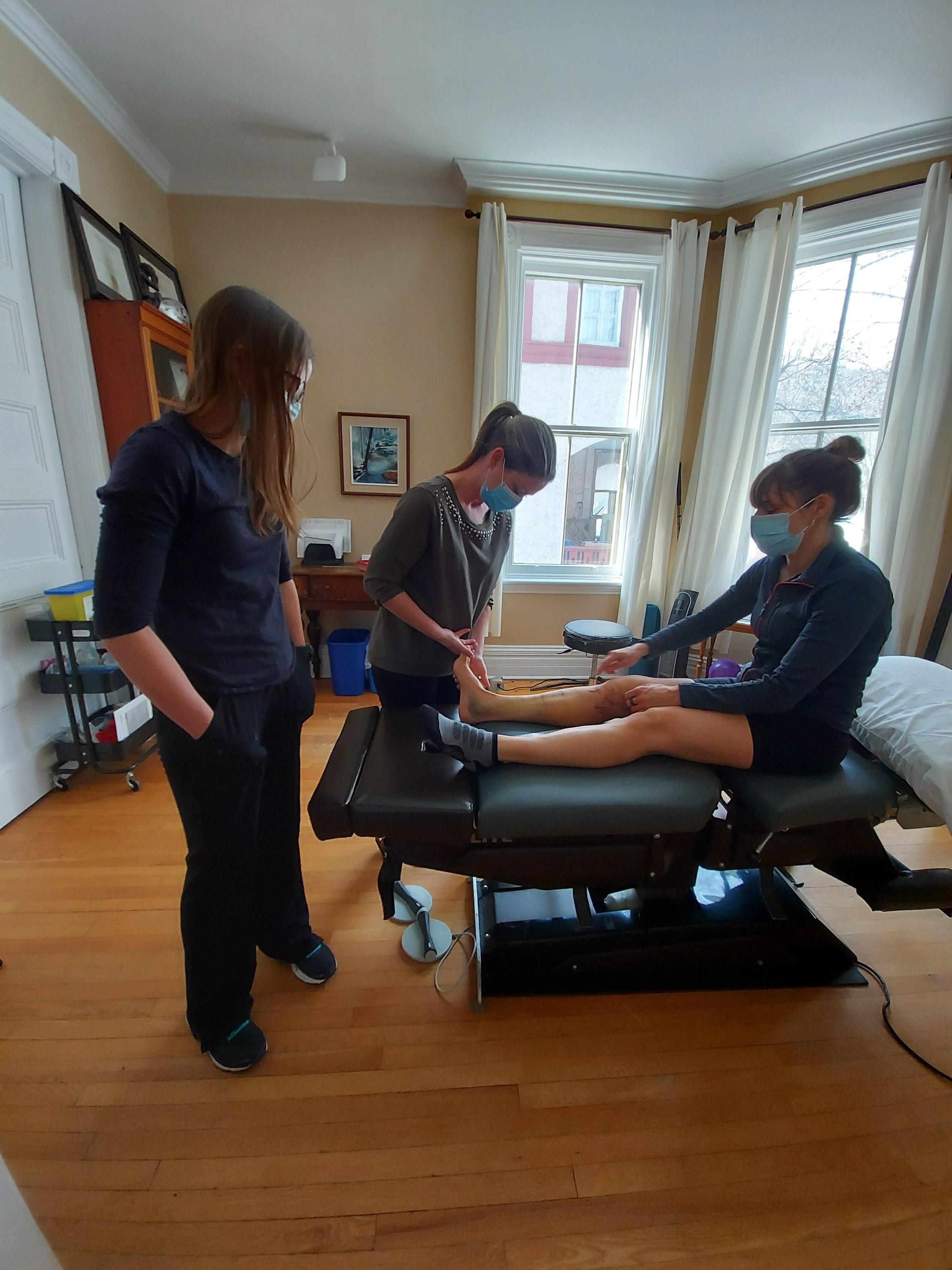
Four professions treat hip pain at Integrate: physiotherapy, chiropractic, osteopathy and massage therapy. That's our collaborative team. If your hip needs strength work and your low back needs hands-on care, you can book both with us at our Ottawa clinics, and with your consent your practitioners can compare notes.
Early on, the goal is to calm things down. That may mean changing what keeps aggravating it, like your sleeping position, chair height or running stride, alongside hands-on work and gentle movement. Later, the focus moves to strength and getting you back to stairs, sport or long walks.
- Hands-on care, such as soft tissue work, joint mobilization and, where it suits you, chiropractic adjustment, which may help ease pain and stiffness
- A short home exercise program that starts gentle and builds strength in the glutes and hip muscles over the following weeks
- Practical advice on what loads the hip day to day: sleeping, sitting, stairs, and how to return to running or sport
During pregnancy, positioning and exercise are adapted to what's comfortable for you and baby, and pelvic health physiotherapy is another option for pain around the pelvis.
How Long Does Hip Pain Take to Get Better?
It depends on the cause, and here's an honest range. A muscle strain or a flare-up after a change in training may settle over a few weeks once the load is right.
Tendon pain on the outside of the hip tends to be slower. Tendons adapt gradually, so a couple of months or more is common, and pushing harder doesn't speed it up.
Osteoarthritis is managed over time rather than resolved. Strength work and movement may help you do more of what you want with less pain, and that usually builds over months.
Hip pain in pregnancy often eases after birth, though not for everyone. If it lingers, it's worth looking at as part of your postpartum recovery.
What moves the timeline: how long you've had it, how well you're sleeping, how much you can change what aggravates it, your general health, and how consistently you do your home exercises. We check your progress at each visit. If it isn't changing, we'll say so and talk about other options, including referral.
Common Questions About Hip Pain
Do I need a doctor's referral to book?
Should I use heat or ice on a sore hip?
Should I stop running or walking?
Can a hip problem cause knee or back pain?
Is hip pain treatment covered by insurance?
Book Hip Pain Treatment in Ottawa
Book a first visit with a physiotherapist, chiropractor, osteopathic manual practitioner or RMT in Ottawa, and we'll work out where your hip pain is coming from.