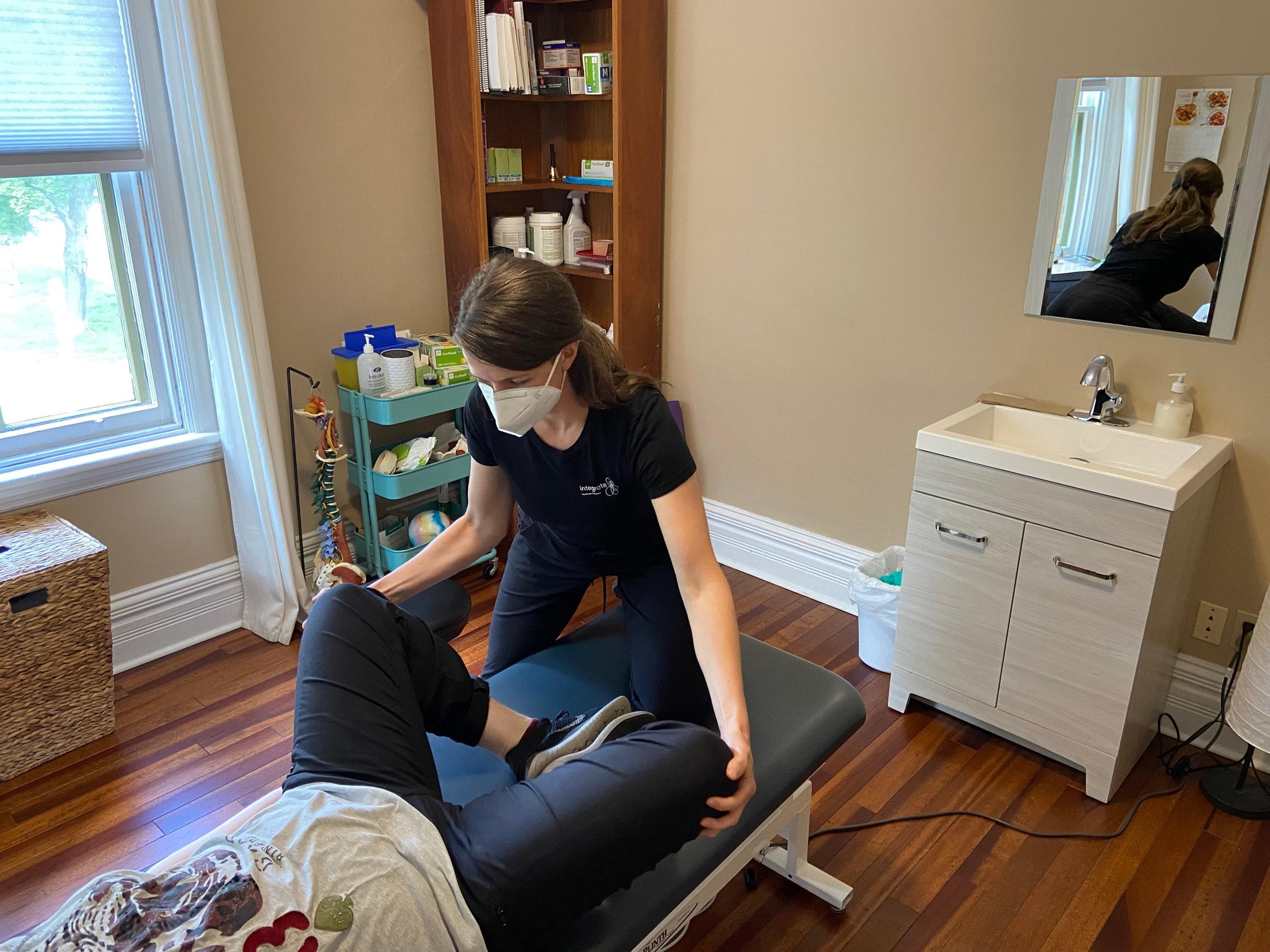
Knee Pain Treatment in Ottawa
Physiotherapy, chiropractic and massage for runners, active people and knees recovering from surgery, with a plan built around what you want to get back to.
- 4.9 from 368 Google reviews
- Appointments until 8pm on weekdays
- Weekend appointments
What Is Knee Pain, and Where Does It Come From?
Knee pain is a symptom, not a diagnosis. Your knee is a hinge where the thigh bone meets the shin bone, with the kneecap gliding in a groove at the front. Pain can come from the joint surfaces, the two menisci that cushion the joint, the ligaments that hold it steady (the ACL, PCL, MCL and LCL), or the tendons that cross it, like the patellar tendon below the kneecap.
Where it hurts helps narrow things down. Pain around or behind the kneecap often points to patellofemoral pain, sometimes called runner's knee. Pain on the outside of the knee in runners and cyclists can come from the IT band. Pain along the inside joint line after a twist may involve the meniscus.
At our Ottawa clinics, knee pain comes in from runners, active people and anyone working back from knee surgery. The first job is to work out which structure is irritated, because that decides the plan.
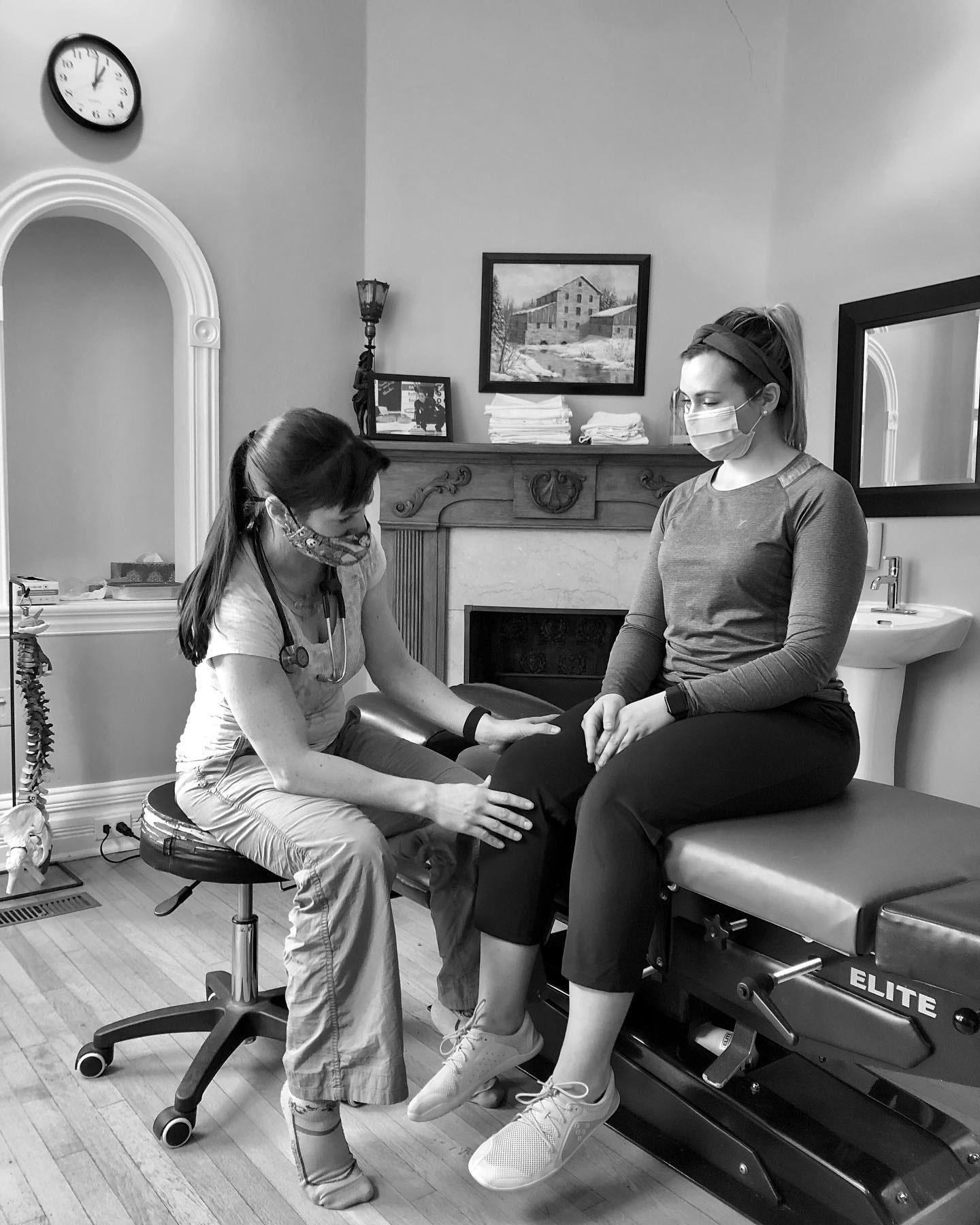
What Does Knee Pain Feel Like?
A dull ache around the kneecap that gets worse on stairs, when squatting, or after sitting through a film with your knees bent is typical of patellofemoral pain. A sharp, burning pain on the outside of the knee partway through a run, which eases when you stop, fits IT band irritation.
After a twisting injury, watch for swelling, catching or clicking, a knee that locks and won't straighten, or a sense that it might give way on uneven ground. Pain below the kneecap that's stiff first thing in the morning and loosens as you warm up often comes from the patellar tendon.
Knee pain doesn't always start in the knee. Stiff hips and flat or rigid feet change how load travels through the leg, so your assessment includes your hip and your foot and ankle too.
Knee Problems We Treat
Patellofemoral Pain (runner's Knee)
Patellar Tendinopathy
IT Band Syndrome
Meniscus Irritation and Tears
MCL, LCL and ACL Sprains
Knee Osteoarthritis
Rehab Before and After Knee Surgery
Rehab After Knee Replacement
How Serious Is My Knee Pain?
Mild knee pain comes and goes with activity, settles with rest, and doesn't stop you walking normally. That pattern often responds to adjusting how much you're doing and building strength. Moderate pain lingers after activity, wakes you at night, or limits stairs and squats. It's worth having it assessed before it changes how you move.
Ligament and meniscus injuries come in grades. A sprain or partial tear leaves the structure intact but irritated, and these often settle with guided rehab. A full ligament tear, especially of the ACL, can leave the knee unstable, and surgical repair is one option to discuss with an orthopaedic surgeon.
Go to a doctor or emergency department rather than booking with us if you can't put weight on the leg after an injury, the knee swelled up fast within hours, it's locked and won't straighten, it's hot and red with a fever, or your calf is swollen and painful. If anything in your assessment suggests you need imaging or a medical opinion, we'll tell you and help you get it.
What Causes Knee Pain, and Who Gets It?
Runners and active people tend to run into knee pain when load climbs faster than the tissue can adapt: a jump in weekly distance, more hills, or a spring race on the calendar after a quiet winter. If you train on the canal paths in Ottawa, the switch back to outdoor running each spring is one moment that can catch knees out.
Sports with cutting and pivoting, like soccer, basketball and skiing, put ligaments and menisci at risk of a twisting injury. Weak hip and thigh muscles, old injuries and sudden changes in footwear can all add load to the front of the knee.
Wear in the joint, or osteoarthritis, becomes more likely with age and after past injuries, and tends to bring stiffness that's worse after rest. Knee surgery, from a meniscus repair to an ACL reconstruction or a knee replacement, leaves strength and movement to rebuild afterwards.
How We Assess Your Knee
A first visit with your physiotherapist or chiropractor follows the same basic order, so you know what's coming.
- 1
Your story
When it started, what you were doing, what makes it better or worse, and what you want to get back to. If you've had surgery, bring your operative report and your surgeon's protocol. - 2
Watching you move
We look at how you walk, squat, step down and balance on one leg, because the way the knee moves under load often shows more than the knee at rest. - 3
Hands-on exam
Range of motion, strength testing and ligament and meniscus tests. Chiropractors here use a full lower extremity exam that takes in the whole leg. - 4
Above and below the knee
Your hip and foot get checked too, since stiffness or weakness there can change how much load the knee takes. - 5
A plan you understand
We explain what we found, what we think is irritated, the options for treatment, and what you can do at home starting that day.
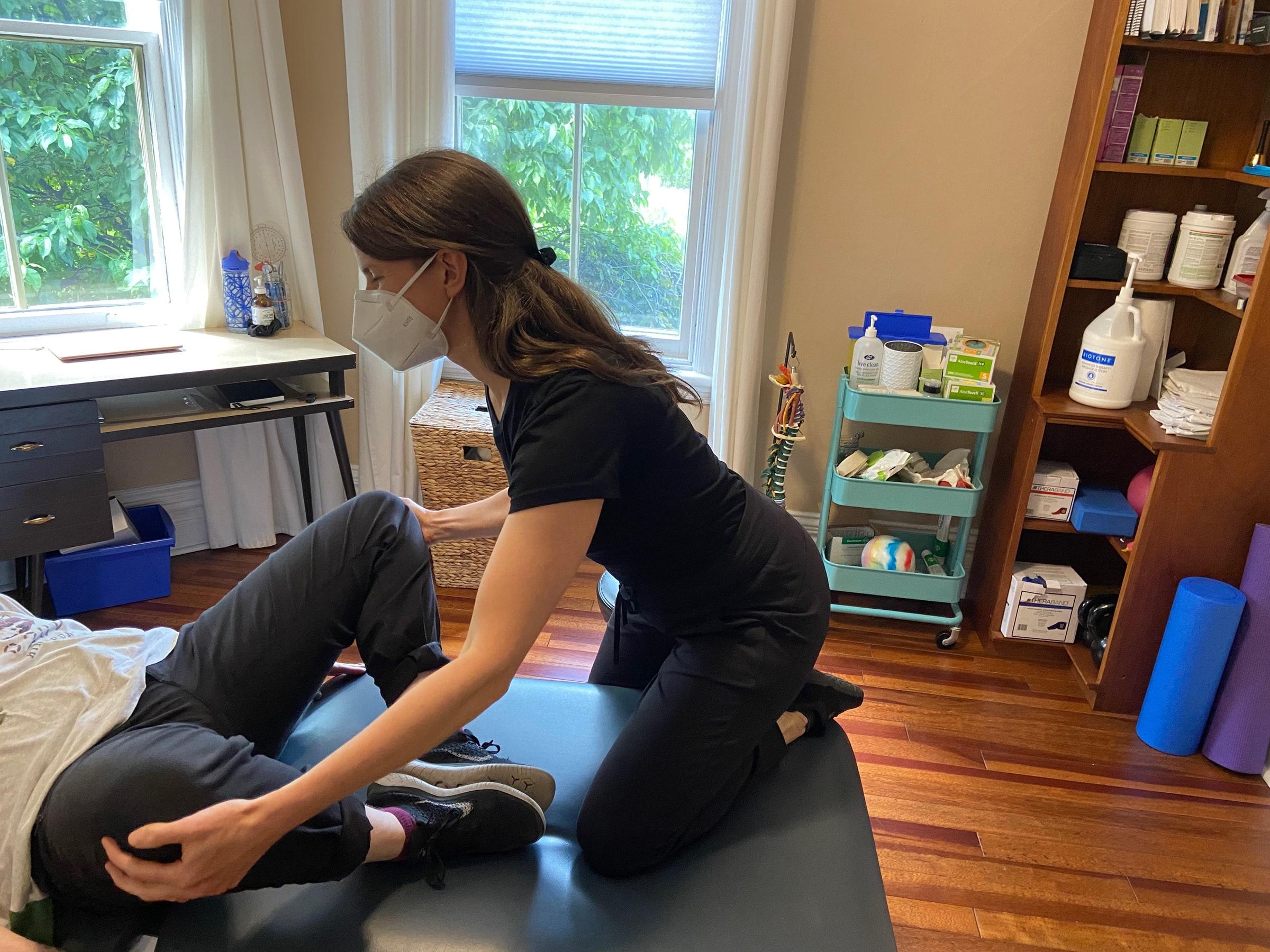
What Does Knee Pain Treatment Look Like?
Early on, the aim is to settle the knee. That may mean changing your training rather than stopping it, taping or hands-on work to ease pain, and gentle exercises to keep the knee moving. Later, the focus moves to strength and control, and to building back toward the stairs, runs or sport you care about.
- Physiotherapy: physiotherapy for knees is built on progressive exercise, and includes pre-operative and post-operative rehab if you're having or have had surgery.
- Chiropractic: a lower extremity exam and hands-on treatment for the knee and the hip and foot that load it, with your chiropractor.
- Massage therapy: massage from an RMT for tight quads, hamstrings and calves that can add to knee pain.
We're a collaborative team: physiotherapists, chiropractors and RMTs work side by side at Integrate, so with your consent they can compare notes on your knee instead of each starting from scratch.
Between visits you'll have a short set of exercises to do at home, plus guidance on how much running or activity to keep up. Those home sessions are where a large part of the strength comes from.
How Long Does Knee Pain Take to Recover?
Recovery depends on what's irritated, how long it's been going on, and how much your knee needs to handle in daily life. A flare of runner's knee caught early may settle over a few weeks once training is adjusted. Tendon problems tend to be slower and can take a few months of steady loading. A knee that's been sore for a long time usually needs more patience than a recent strain.
After surgery, your surgeon's protocol sets the timeline. Rehab after an ACL reconstruction or a knee replacement runs over many months, and we'll follow that protocol while adjusting the pace to how your knee responds.
We can't promise a date. We'll give you a realistic range at your assessment and check your progress against it as you go.
Common Questions About Knee Pain
Do I need a doctor's referral to book for my knee?
Should I keep running while my knee hurts?
Do I need an X-ray or MRI before I come in?
Can I start physiotherapy before knee surgery?
Is knee pain treatment covered by insurance?
Book Knee Pain Treatment in Ottawa
Tell us what your knee is doing and what you want to get back to, and we'll match you with the right physiotherapist, chiropractor or RMT.