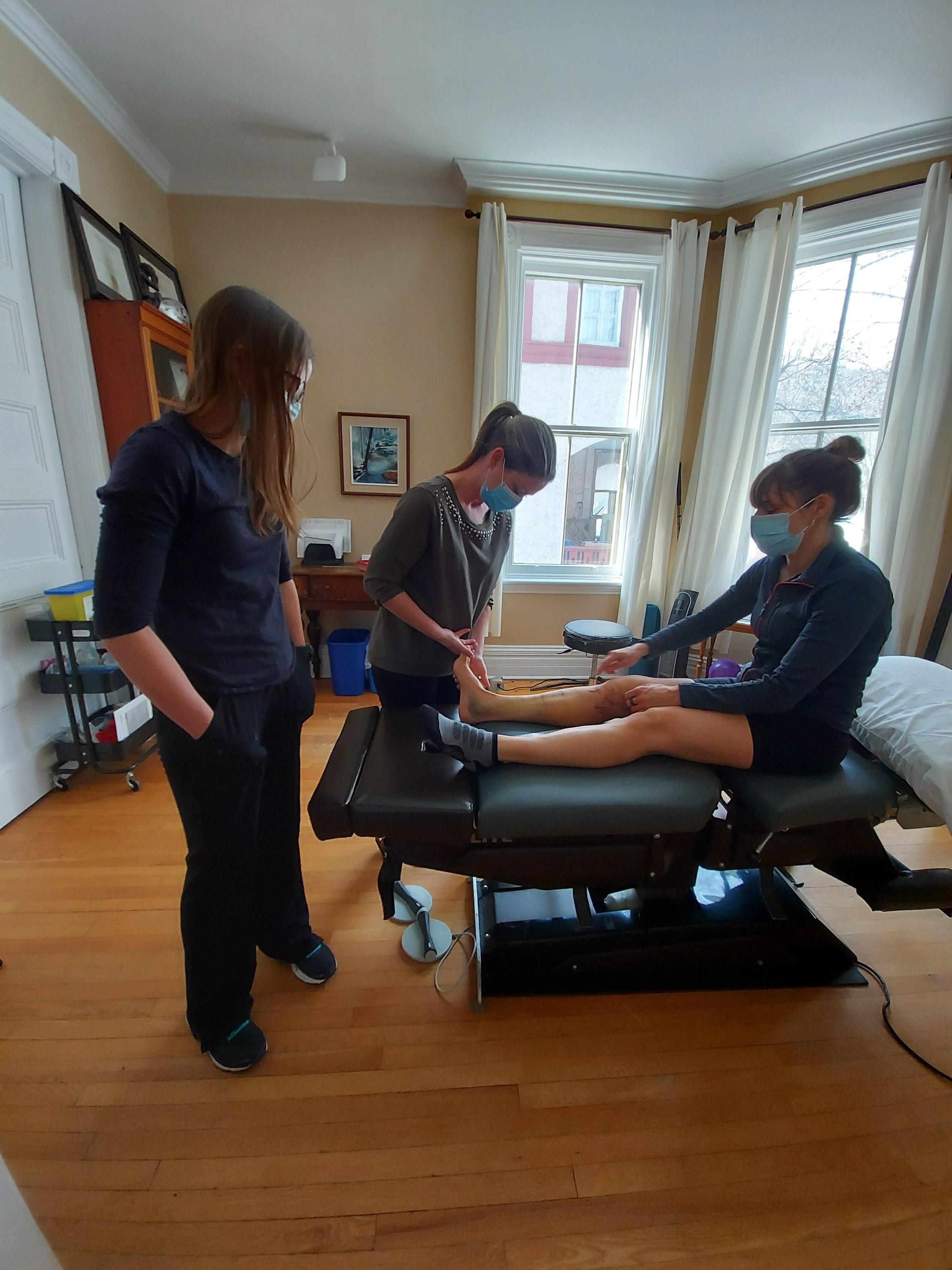
Foot and Ankle Pain Treatment in Ottawa
Heel pain with your first steps, an Achilles that stiffens up, an ankle that keeps rolling or shins that ache on every run. We assess what's going on and build a plan around it.
- 4.9 from 368 Google reviews
- Appointments until 8pm on weekdays
- Weekend appointments
- Shockwave
- Available at our Centretown clinic for heel and Achilles pain
- Since 2016
- Serving Ottawa
What Counts as Foot and Ankle Pain?
Foot and ankle pain treatment in Ottawa covers a handful of problems that share a body part but behave differently. Naming the structure involved is the first step, because each one is treated in its own way.
Plantar fasciitis is irritation of the plantar fascia, a thick band of tissue running along the sole from your heel bone to the base of your toes. Achilles tendinopathy affects the tendon that connects your calf muscles to the back of your heel. The tendon gets sore and less able to handle load, often after a change in activity.
An ankle sprain is a stretch or tear of the ligaments holding the ankle together, usually on the outside after the foot rolls inward. Shin splints, which you may see written as medial tibial stress syndrome, is irritation along the inner edge of the shin bone where the lower leg muscles attach.
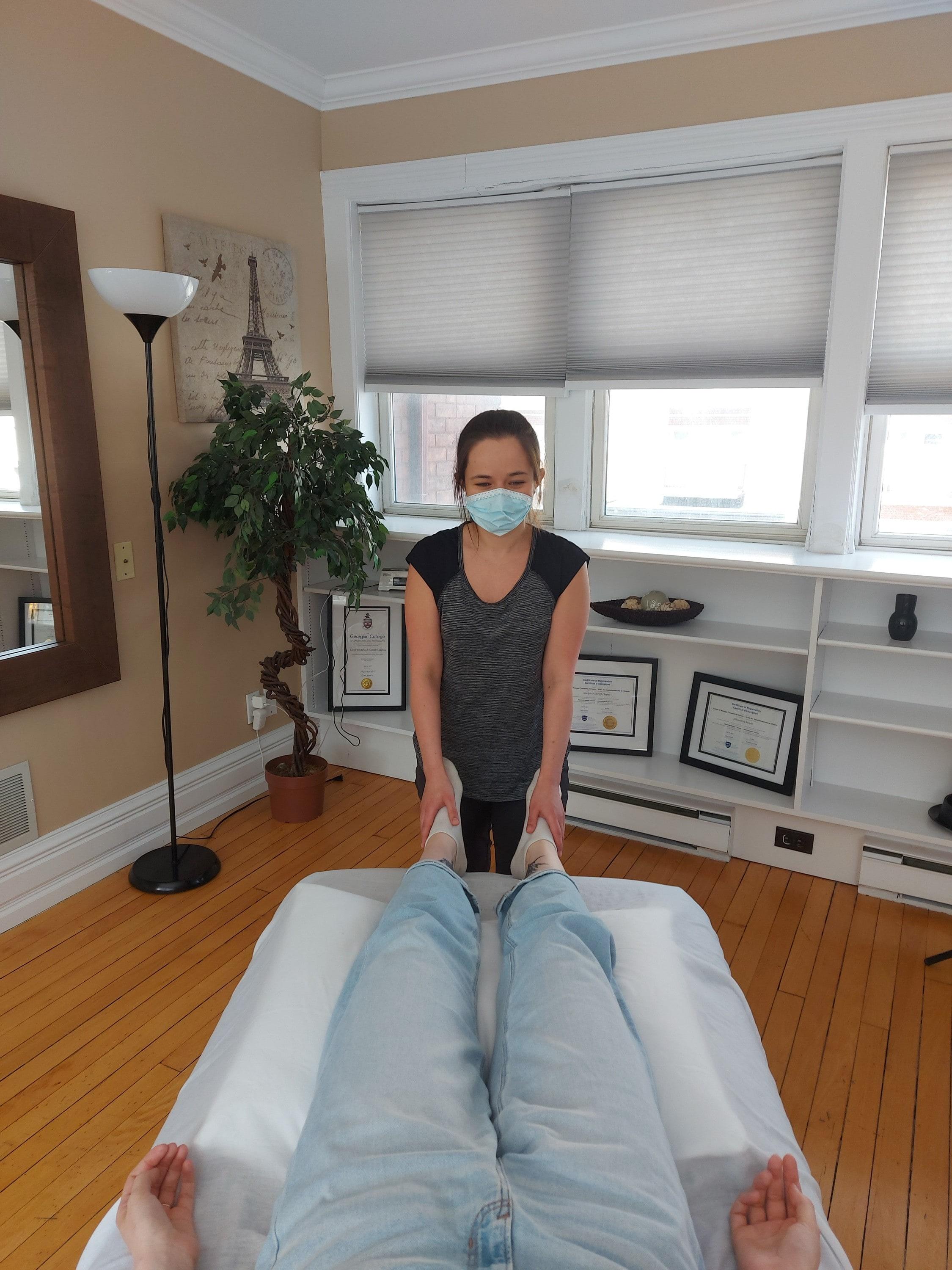
What Does It Feel Like?
Plantar fasciitis tends to announce itself first thing in the morning. The first few steps out of bed are sharp under the heel, it eases as you walk around, then it creeps back after a long day on your feet or after you stand up from sitting.
Achilles pain often feels stiff in the morning and achy at the start of a run. It may warm up and settle, then come back worse later that day or the next morning. The tendon can feel tender or thicker when you pinch it.
A sprain brings swelling and bruising around the outer ankle. Weeks or months later, the ankle may still feel wobbly on uneven ground or give way on a curb. Shin splints show up as a dull ache along the inside of the shin during or after running, tender over a stretch of bone rather than one spot.
Pain that wakes you at night, or one small spot on the bone that's sharply tender to press, is worth having checked sooner.
How Serious Is It?
Sprains are graded by how much of the ligament is involved. A grade 1 sprain is a stretch with mild swelling. A grade 2 is a partial tear, with more swelling, bruising and some looseness in the joint. A grade 3 is a full tear, and the ankle may feel unstable when you stand on it.
With a fresh ankle or foot injury, we use the Ottawa ankle rules, a screening check developed here in Ottawa, to decide whether an X-ray is needed. If you can't take four steps on it, or there's tenderness at specific points on the bone, we'll send you to your doctor or urgent care to rule out a fracture first.
Achilles tendinopathy builds slowly. A rupture is different: a sudden snap or the feeling of being kicked in the back of the heel, followed by trouble pushing off or rising onto your toes. That needs a doctor the same day. Shin splints are usually manageable with changes to training, but pinpoint bone pain that's getting worse can point to a stress fracture, which may need imaging.
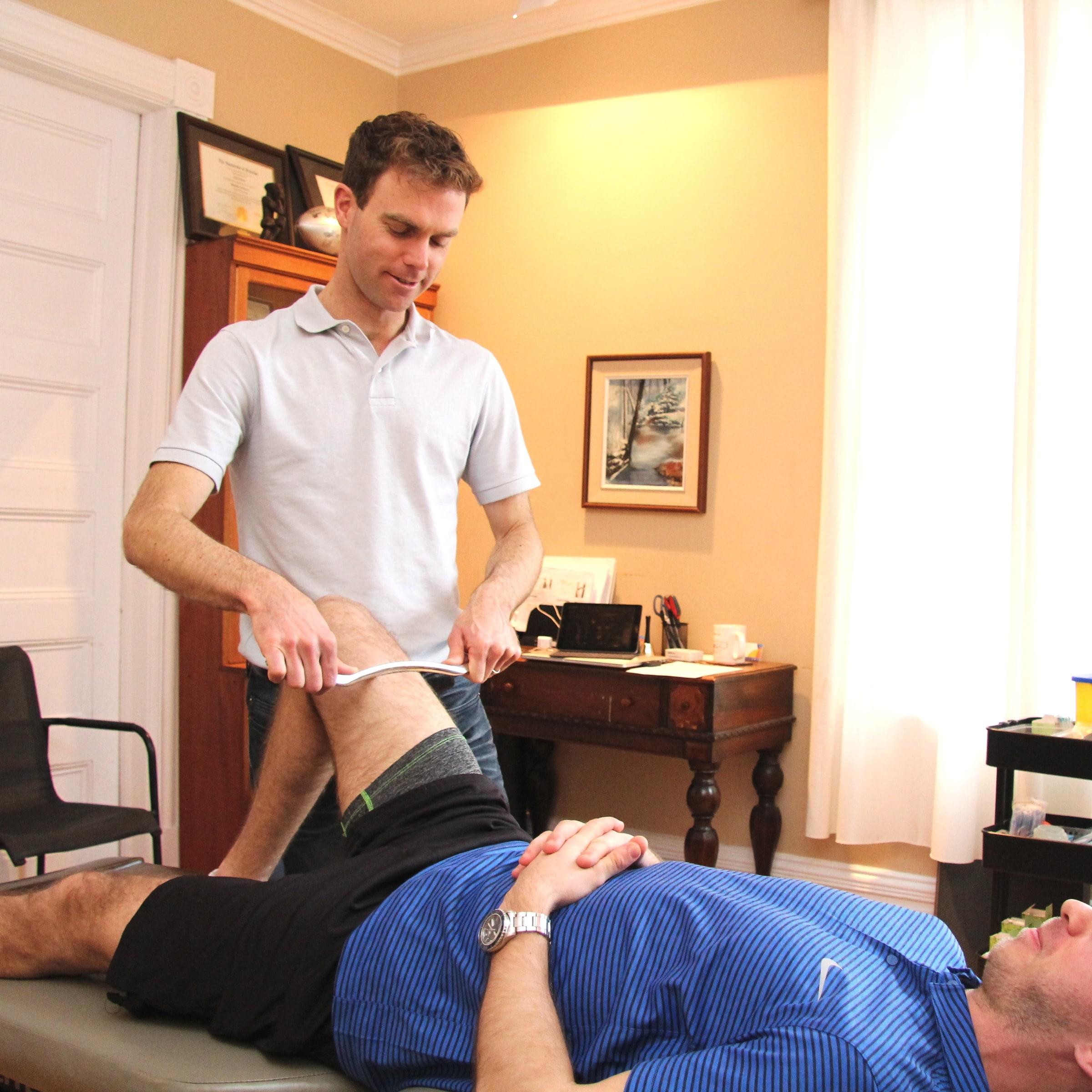
What Causes It and Who Gets It?
Tissues in the foot and lower leg get irritated when they're asked to do more than they're ready for. That often means a jump in running distance, more hills, a new sport or a return to activity after time off. Long shifts standing on hard floors, a switch to flatter or worn-out shoes and tight or weak calves all add to the load on the heel and Achilles.
Sprains usually come from a single awkward landing or a misstep. Icy Ottawa sidewalks roll plenty of ankles every winter, and spring brings sprains on trails and courts. An ankle that has been sprained before is more likely to go again if strength and balance weren't rebuilt afterwards.
Shin splints turn up in runners, walkers building up for an event and anyone adding impact faster than their legs can adapt. Pain higher up the leg can change how you load your foot, so we sometimes look at the knee and hip as well.
How We Assess Foot and Ankle Pain
The first appointment is about finding out which structure is irritated and why, so treatment matches the problem.
- 1
Your history
When it started, what makes it better or worse, what it stops you doing, your footwear and any recent change in training or work. - 2
Screening for anything that needs a doctor
We check for signs of a fracture, a tendon rupture or other problems that need imaging or a physician before hands-on treatment. - 3
Movement and strength testing
Ankle range of motion, calf raises, single-leg balance and how you walk or hop. A chiropractor can also do a full lower extremity exam that takes in the knee and hip. - 4
A plan you agree on
We explain what we found, what treatment may involve, the options and what it costs, and decide the next steps with you.
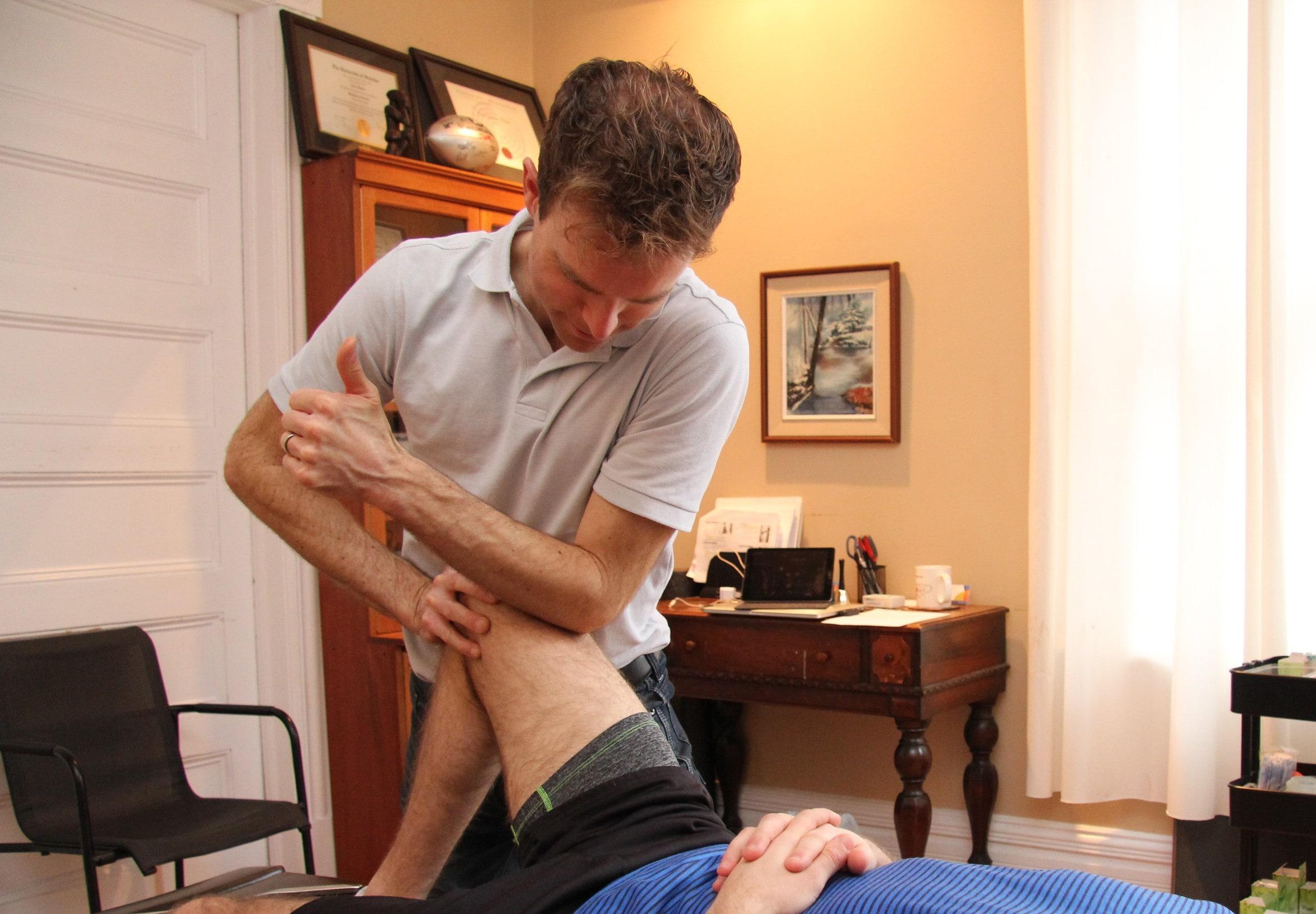
What Does Treatment Involve?
Early on, the goal is to calm the irritated tissue enough that walking and daily life are more comfortable. Later, the focus moves to rebuilding strength and tolerance so the foot and ankle can handle your work, sport or commute again.
- Physiotherapy with a progressive loading program for the calf, Achilles and foot, plus balance work after a sprain.
- Shockwave therapy at our Centretown clinic for plantar fasciitis and Achilles pain that hasn't settled with exercise.
- Dry needling and massage therapy for tight, sore calves and lower leg muscles.
Between visits you'll have exercises to do at home and guidance on adjusting running, standing or footwear while things settle. Integrative care: your physiotherapist, chiropractor and RMT can plan around each other's work, so you're not getting conflicting advice.
How Long Does Recovery Take?
It depends on which structure is involved and how long it's been bothering you. A mild sprain often settles over a few weeks, though rebuilding balance and strength can take longer, and that part matters for avoiding the next one. A partial ligament tear usually needs more time.
Plantar fasciitis and Achilles tendinopathy tend to be slower. Tendons and fascia adapt gradually to load, so improvement is often measured in months rather than weeks, especially if the pain has been there a long time. Shin splints may ease within weeks once training volume is adjusted.
What moves the timeline: how early you start, how consistently you do the home exercises, how much load your job or sport puts through your feet, and whether anything else, like an old injury higher up the leg, is feeding into it. We'll reassess along the way and adjust the plan if progress stalls.
Common Questions About Foot and Ankle Pain
Do I need a doctor's referral to book?
Can I keep running while my foot or shin hurts?
Are new shoes or orthotics worth it?
Is treatment covered by insurance?
What happens if it isn't getting better?
Book Foot and Ankle Care in Ottawa
Whether it's a fresh sprain or heel pain that's hung around for months, the first visit sorts out what's going on and what to do next.