Urinary Incontinence Treatment in Ottawa
Leaking when you laugh, lift or rush to the bathroom is common and treatable. Pelvic health physiotherapy can help you understand why it's happening and what to work on.
- 4.9 from 368 Google reviews
- Appointments until 8pm on weekdays
- Weekend appointments
- Pelvic health
- Physiotherapy with internal pelvic floor training
- Since 2016
- Serving Ottawa
What Is Urinary Incontinence?
Urinary incontinence means losing urine when you don't mean to. It can be a few drops when you sneeze or a full rush before you reach the toilet.
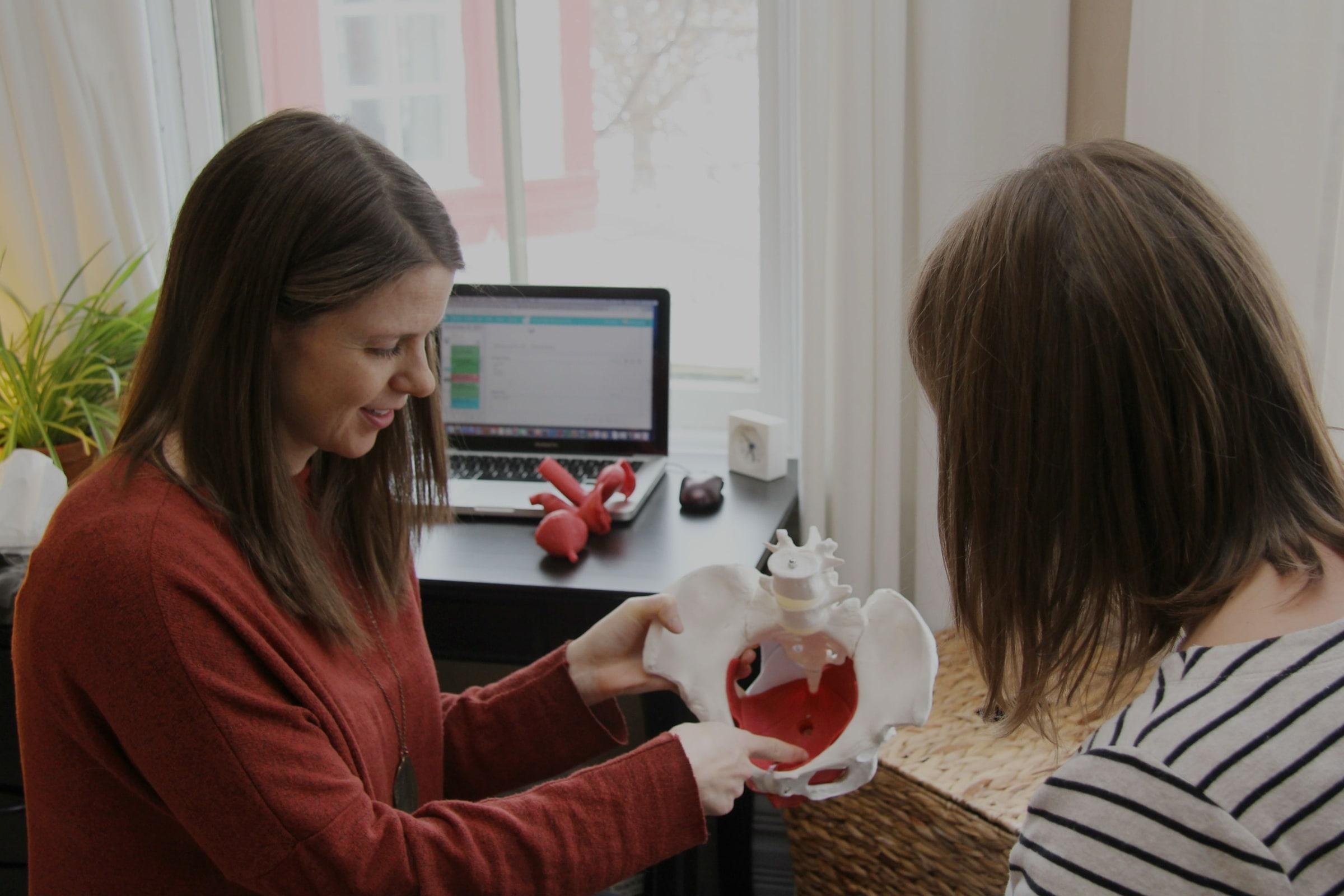
Your bladder sits on a sling of muscle called the pelvic floor. Those muscles help hold the urethra closed when pressure in your belly rises, and they relax when it's time to empty. When they're weak, poorly timed or held too tight, leaking can follow.
There are two main types. Stress incontinence is leaking with effort: coughing, jumping, lifting. Urge incontinence is a sudden, strong need to go that's hard to hold off. Plenty of people have a mix of both, called mixed incontinence. At our Ottawa clinic, pelvic health physiotherapy starts by working out which type you have, because the treatment differs.
What Stress and Urge Leaking Feel Like
Stress leaking tends to show up at predictable moments. A cough, a sneeze, a laugh, the jump on a trampoline or the lift of a laundry basket. You may notice it more by evening or late in a run, once the muscles are tired.
Urge leaking feels different. The need to go arrives fast and strong, sometimes set off by running water, cold weather or putting your key in the front door. You might be going to the bathroom often, getting up at night to pee, or planning outings around where the toilets are.
Some people also feel heaviness in the pelvis, have trouble emptying fully or leak a few drops after they've finished. Those details all help your physiotherapist piece together what's going on.
How Serious Is Bladder Leaking?
Leaking ranges from a few drops now and then to soaking through a pad. Mild leaking can still be worth treating if it stops you running, lifting your kids or laughing freely. It isn't something you have to accept as normal after birth or with age.
Leaking that comes with a feeling of bulging or dragging in the vagina may point to pelvic organ prolapse, which a pelvic health assessment can look at as well.
Some signs need a doctor first. See your family doctor promptly for blood in your urine, burning or pain when you pee, fever, or leaking that started suddenly with no clear reason. Go to an emergency department if you lose bladder control along with new back pain and numbness in your groin, inner thighs or legs.
What Causes Urinary Incontinence?
The pelvic floor carries a lot of load, and anything that adds to it or changes it can lead to leaking.
- Pregnancy puts steady weight on the pelvic floor, and leaking can begin well before birth. It often sits alongside pregnancy-related pain in the back or pelvis.
- Vaginal birth stretches the pelvic floor muscles and tissues, which is why leaking is part of postpartum recovery for some new parents.
- Lower estrogen around menopause can change the tissues around the bladder and urethra.
- Ongoing coughing, constipation and straining, heavy lifting and high-impact sport all push down on the pelvic floor over and over.
Caffeine, alcohol and fizzy drinks can irritate the bladder and add to urgency. Holding on too long, or going "in case" too often, can change how your bladder signals you as well.
How We Assess Bladder Leaking
Everything is explained before it happens, and you can pause or stop at any point.
- 1
Talking it through
We ask when you leak, how much, what you drink, how often you go, and about pregnancies, births, bowel habits and your general health. A bladder diary may be suggested for the days before or after. - 2
Movement and breathing
Your physiotherapist looks at posture, breathing, your hips and low back, and how your core and pelvic floor respond when you cough or lift. - 3
Internal exam, if you choose
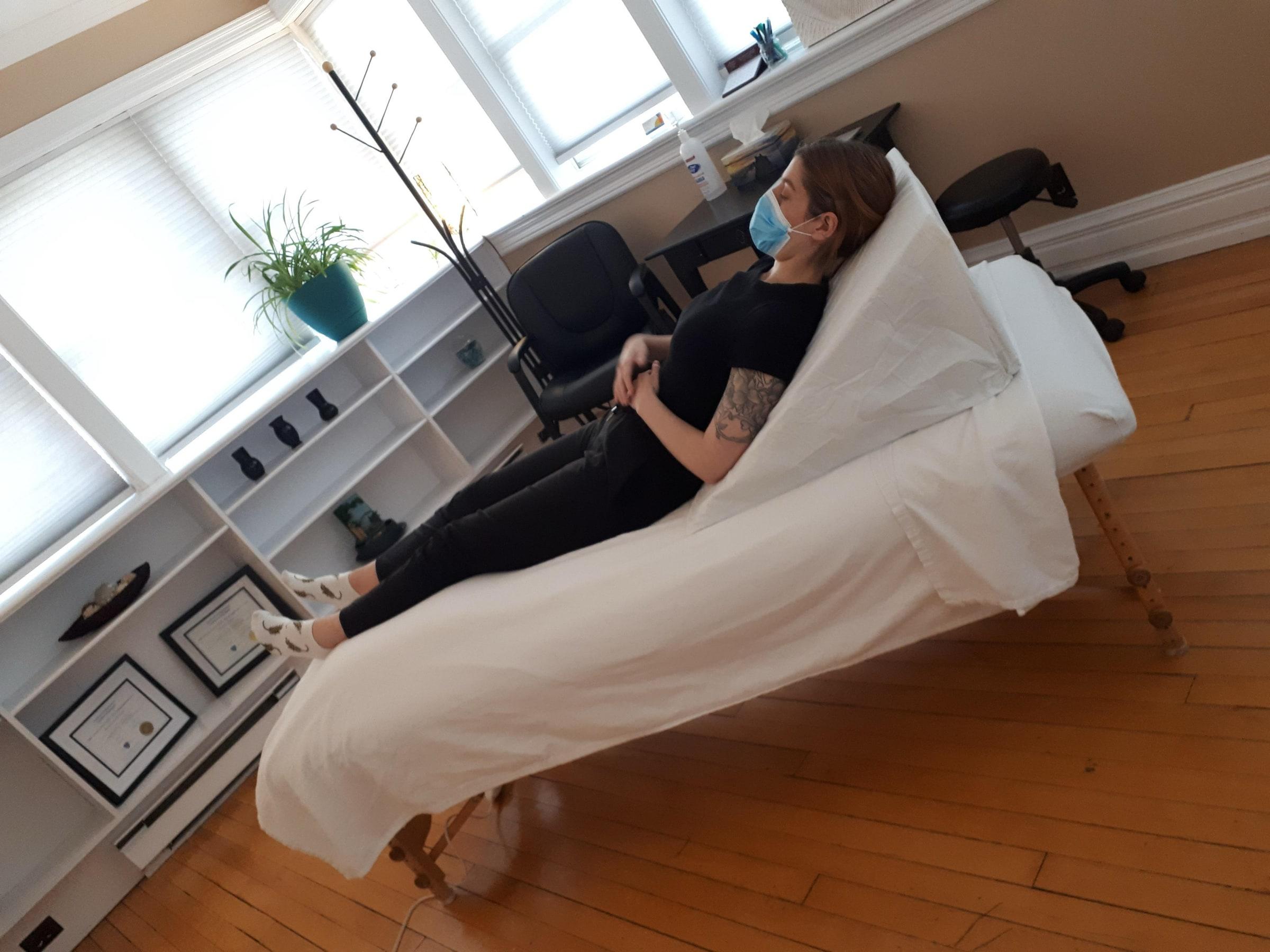
An internal exam is the clearest way to check how your pelvic floor muscles contract and relax. It's optional and only done with your consent. You'll have privacy to undress and a sheet to cover yourself. If you'd rather not, we can still assess and treat you. - 4
A plan made together
We explain what we found, what we'd suggest and the options, then decide on next steps with you.

What Pelvic Floor Treatment Looks Like
Shelagh Haynes, a registered physiotherapist on our team, has internal pelvic floor training, and her practice focuses on urinary incontinence and postnatal care. Treatment is shaped around what your assessment found.
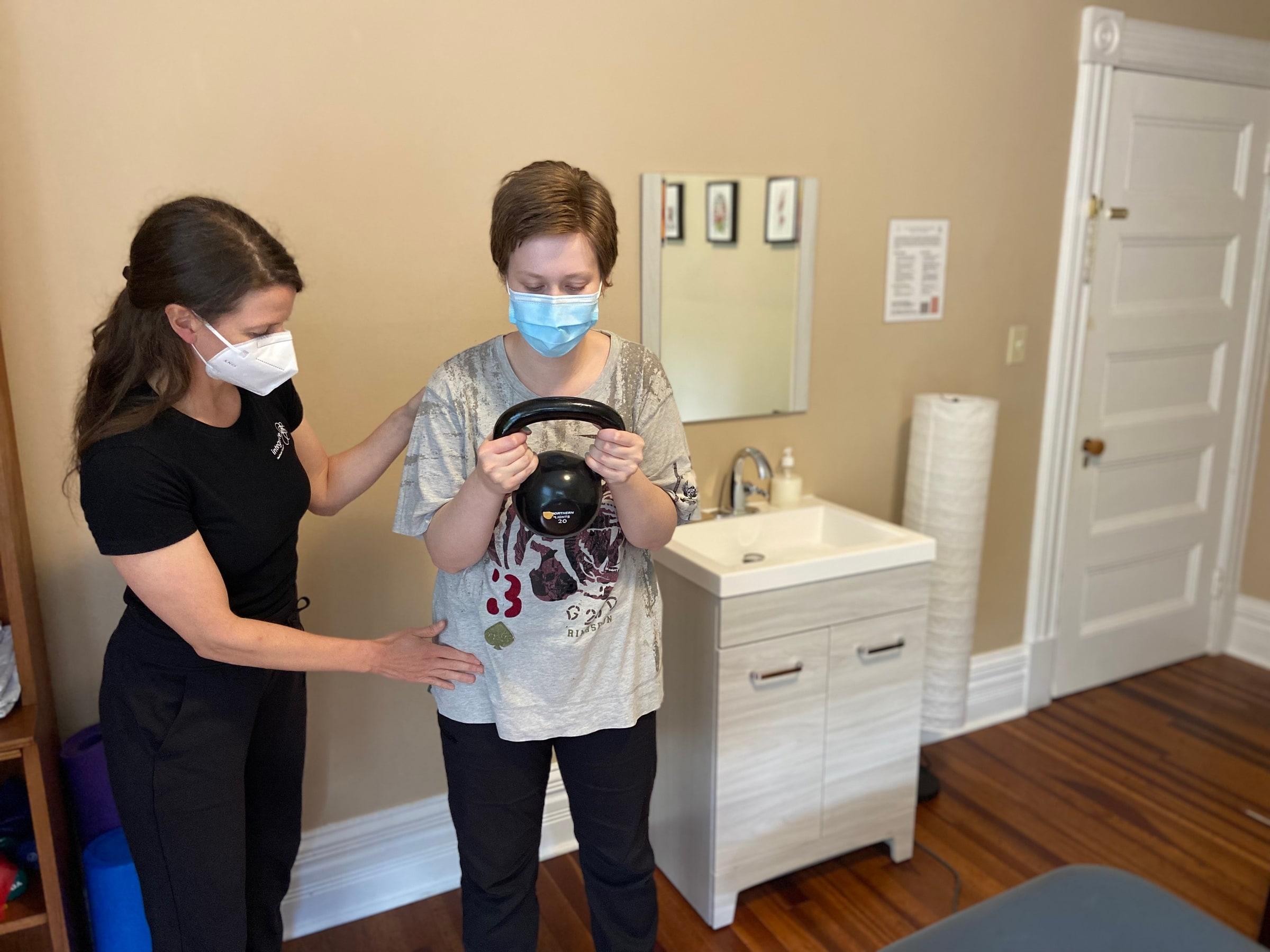
- Pelvic floor training matched to you: for some, that's building strength and endurance. For others, it's learning to relax muscles that are holding too tight.
- Timing the squeeze: practising a quick pelvic floor contraction before a cough, sneeze or lift can help reduce leaking in those moments.
- Bladder habits: urge-control strategies, fluid timing and gradually stretching the time between bathroom trips can help calm urgency.
Most of the work happens at home between visits, so you'll leave with a short routine you can fit into your day. Early sessions focus on finding the right muscles and coordination. Later sessions add load, like running, lifting or the sport you want back.
integrative care. If something needs a medical look, our team includes a nurse practitioner, Marika Haydock, alongside our physiotherapists, RMTs and naturopathic doctor.
How Long Pelvic Floor Recovery Takes
Pelvic floor muscles change the way other muscles do: gradually. Improvement tends to show over weeks to months, not days.
How quickly things shift depends on the type of leaking, how long it's been going on, whether there's also prolapse, where you are in pregnancy, postpartum or menopause, and how regularly you do your home exercises. Ongoing coughing or constipation can slow things down until they're addressed.
We recheck your progress as you go. If things aren't moving the way we'd expect, we'll change the plan or talk with you about seeing your doctor for further investigation.
Related Pelvic and Pregnancy Concerns
Common Questions About Urinary Incontinence
Do I need a referral to see a pelvic health physiotherapist?
Can I book while I'm pregnant?
When can I book after giving birth?
Can't I do pelvic floor exercises on my own at home?
What happens if the leaking doesn't improve?
Book Pelvic Health Physiotherapy in Ottawa
If leaking is changing how you move, exercise or plan your day, a pelvic health assessment is a good place to start. The internal exam is always your choice.