Pelvic Floor Physiotherapy in Ottawa
Assessment and treatment for pelvic floor symptoms before and after birth, and for anyone dealing with leaking, heaviness, urgency or pelvic pain.
- 4.9 from 368 Google reviews
- Appointments until 8pm on weekdays
- Weekend appointments
- 4
- Physiotherapists with pelvic health training on our team
- 2
- Clinics offering it: Centretown and Lowertown
- No referral
- You can book a physiotherapist directly in Ontario
What Pelvic Health Physiotherapy Is, and Who It's For
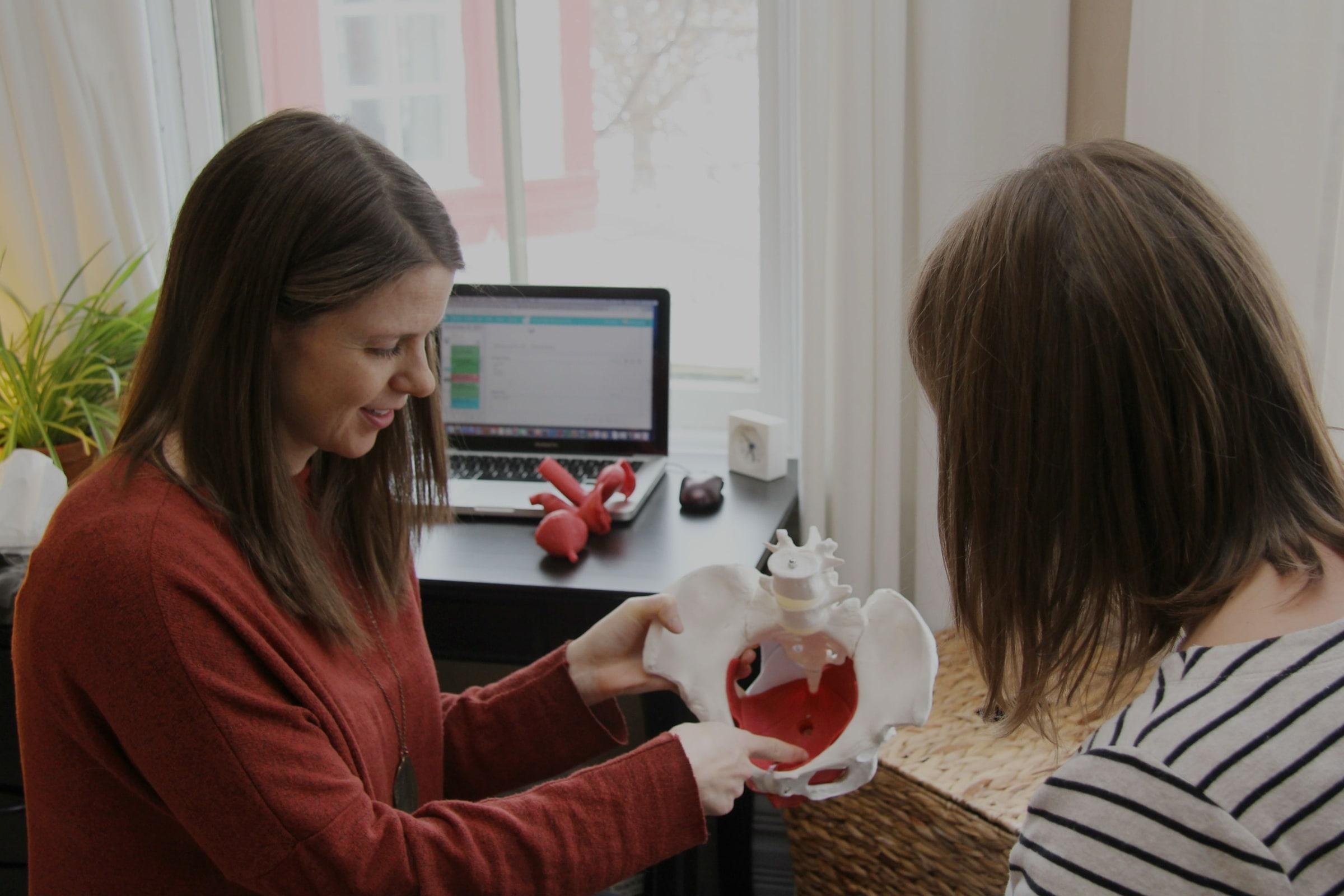
Pelvic health physiotherapy is the assessment and treatment of the muscles, nerves and connective tissue of the pelvic floor. Those muscles sit like a sling between the pubic bone and the tailbone. They hold up the bladder, bowel and uterus, they're part of bladder and bowel control and sexual function, and they work with the deep abdominals and hips to steady your trunk. When they're weak, gripping, or firing at the wrong moment, the result can be leaking when you cough or run, a dragging heaviness low down, urgency that has you mapping bathrooms, or pain with intercourse.
It's a focused area of physiotherapy, and at our Ottawa clinics it's booked as its own appointment type so the time is set aside for a full history and an unhurried examination. People come during pregnancy, in the weeks and months after a vaginal birth or a caesarean, and years later when symptoms show up again around perimenopause or after a change in activity. Men with ongoing pelvic pain or recovery after prostate surgery are seen here too. You don't have to have a diagnosis before you book, and you don't need a doctor's note.
What We Treat with Pelvic Health Physiotherapy
Leaking with Coughing, Sneezing, Lifting or Running
Urinary Urgency and Frequency
Pelvic Organ Prolapse and Vaginal Heaviness
Pain with Intercourse
Vaginismus and Persistent Vulvar Pain
Postpartum Recovery After Vaginal Birth or Caesarean
Abdominal Separation (diastasis Recti)
Pregnancy-Related Pelvic Girdle and Low Back Pain
Constipation, Straining and Bowel Urgency
Tailbone and Deep Pelvic Pain
Pelvic Pain in Men and Recovery After Prostate Surgery
Preparing for or Recovering from Pelvic Surgery
What a Pelvic Health Assessment Involves
Pelvic health assessments are booked separately from a standard physiotherapy visit, so there's room for the conversation and the examination in one appointment. Here's the usual order.
- 1
Choosing the Right Appointment
Select the pelvic health assessment when you book, rather than a general physiotherapy visit. If you're unsure which practitioner or location suits you, call the clinic and we'll sort it out before you arrive. - 2
Talking First
The visit opens with questions: your symptoms, your bladder and bowel habits, your birth history or surgical history, what you've tried, and what you want to get back to. Nothing is examined until you've had the chance to describe what's going on and ask whatever you want to ask. - 3
Consent, Explained Before Anything Happens
Your physiotherapist walks you through what an internal pelvic floor examination involves, why it may be useful in your case, and what the alternatives are. You give consent for each part, and you can decline any of it or stop at any point without needing a reason. - 4
The Physical Assessment
This often starts outside the pelvis: how you breathe, how your ribs and hips move, how your abdominal wall responds when you load it. An internal vaginal or rectal examination, if you've consented to one, checks muscle tone, strength, coordination and any areas of tenderness. You're draped throughout, and the room is private. - 5
Your Plan and What You Do Between Visits
You leave knowing what was found and what the plan is. That usually includes a short home program (specific muscle work, breathing, or the opposite of Kegels if your pelvic floor is already overworking) plus practical changes to toileting, lifting or training. Progress is reassessed at follow-up visits rather than assumed.
Is Pelvic Health Physiotherapy Covered by Insurance?
Pelvic health visits are billed as physiotherapy, so extended health plans that include physiotherapy generally cover them the same way they cover any other physiotherapy appointment. Coverage amounts, per-visit caps and annual maximums vary by plan, and some plans ask for a physician's referral before they'll reimburse even though Ontario doesn't require one to be seen. Checking your plan wording before your first visit saves a surprise later.
Receipts are issued under the treating physiotherapist's registration number, with the date, the service and the amount, which is what insurers ask for. If your symptoms relate to a workplace injury, WSIB claims follow the same process as other physiotherapy care and are worth raising when you book.
Current fees are shown when you book online and we'll confirm them with you before your first appointment, including the cancellation policy.
Who You'd See
Pelvic health here is delivered by registered physiotherapists who've taken additional training in pelvic floor assessment and treatment. At Centretown, Shelagh Haynes has completed internal pelvic floor training with a focus on urinary incontinence and postnatal pelvic floor problems. Roma Paliga has further pelvic floor training and also teaches prenatal medical therapeutic yoga, which pairs well with the prenatal side of this work. Prateeksha Viradiya has continuing education in pelvic health and in lymphedema.
At Lowertown and Centretown, Drashti Chauhan lists pelvic health among her areas of practice. If you'd rather read about everyone before choosing, the full team page has each practitioner's background. All of them are registered with the College of Physiotherapists of Ontario, and all of them work alongside the chiropractors, massage therapists and osteopathic practitioners in the same Ottawa clinics, so care can be shared when your symptoms involve more than the pelvic floor.
Our Approach to Pelvic Health Physiotherapy in Ottawa
- Consent is checked at every stage, and an internal examination is an option you choose rather than a step you're walked into. Useful work can be done without one.
- The pelvic floor is assessed in context, with your breathing, ribs, hips and abdominal wall, because a muscle that's holding tension is often responding to something else.
- You get something concrete to do between visits, and we'd rather give you two exercises you'll do than eight you won't.
Where to Book Pelvic Health Physiotherapy
Pelvic Health Physiotherapy is available at 2 of our locations. Each button opens that location's calendar for pelvic health physiotherapy.
2 locations
Lowertown (Ste Anne Medical Centre)
500 Old St. Patrick Street, Ottawa, ON K1N 9G4
(613) 852-7769integratelowertown@gmail.com
Pelvic Health Physiotherapy Questions, Answered
How soon after giving birth can I book a pelvic health appointment?
Can I be treated without an internal examination?
What happens if I have my period on the day of my appointment?
Can I bring my baby to the appointment?
How many visits will I need?
Aren't Kegels enough on their own?
Book Pelvic Health Physiotherapy in Ottawa
Pelvic health assessments are booked as their own appointment at our Centretown and Lowertown clinics.