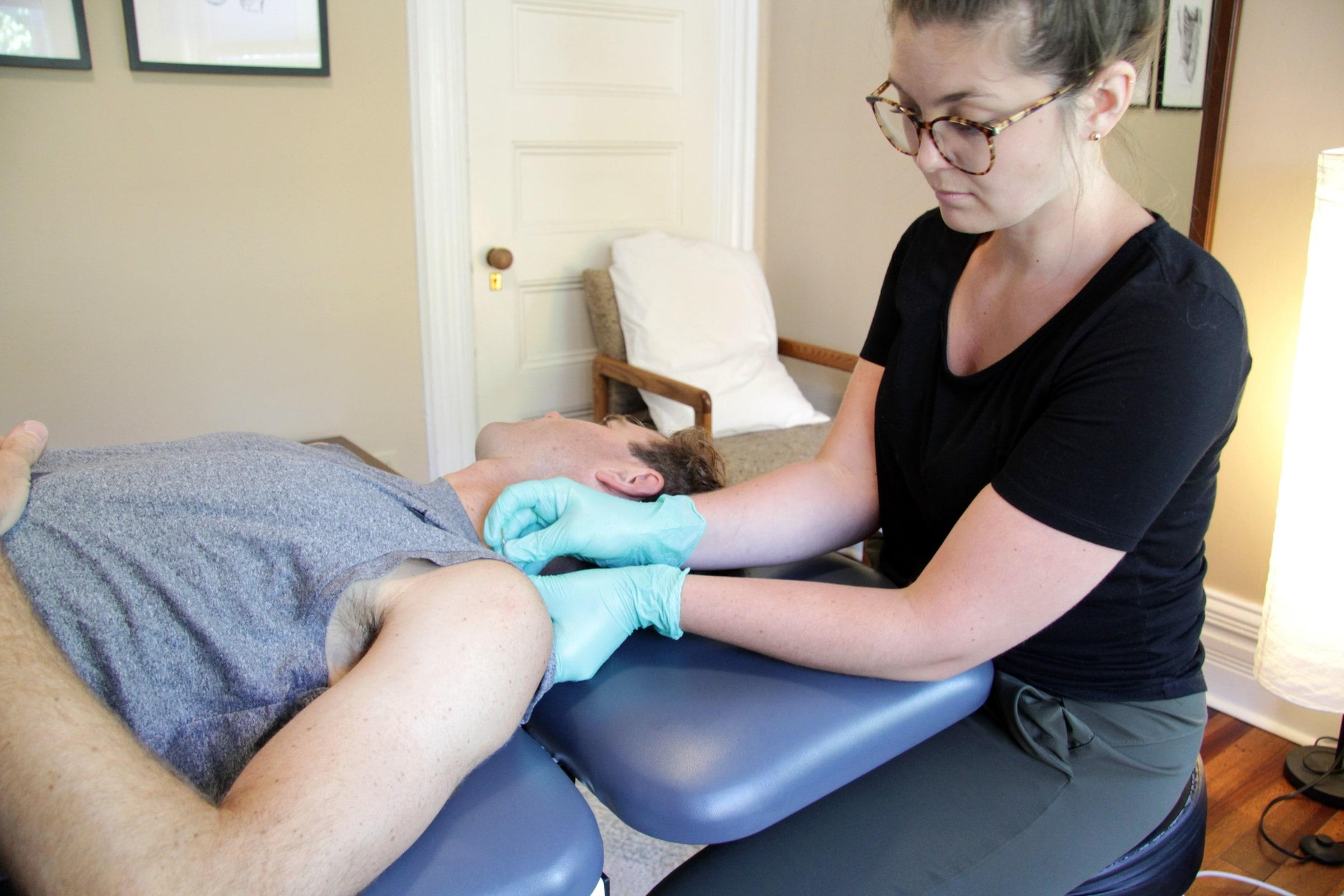
TMJ and Jaw Pain Treatment in Ottawa
Clicking, locking, clenching or a jaw that aches by evening. Our chiropractors, physiotherapists and RMTs in Ottawa look at your jaw and your neck together.
- 4.9 from 368 Google reviews
- Appointments until 8pm on weekdays
- Weekend appointments
- 60 min
- First orofacial and TMJ massage visit with Sonya, RMT, in Carleton Place
- Since 2016
- Serving Ottawa
What Is TMJ Dysfunction?
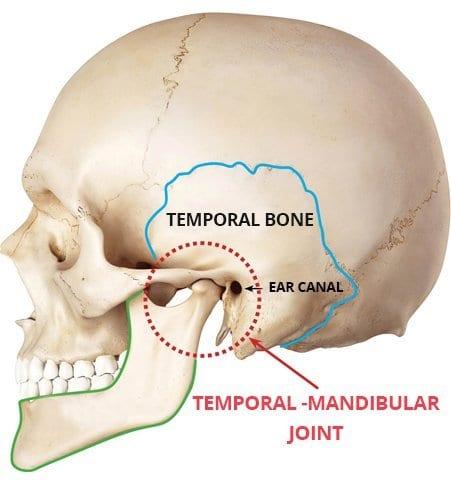
Your temporomandibular joint, or TMJ, is the hinge in front of each ear where your lower jaw meets your skull. It both rotates and slides, every time you talk, chew or yawn. Between the bone surfaces sits a small disc of cartilage that moves with the jaw. The muscles that close it, the masseter along your cheek and the temporalis over your temple, are strong for their size and work all day.
TMJ dysfunction, or TMD, is the umbrella term for pain and trouble moving in this joint and the muscles around it. A note from your dentist might say "myofascial pain", "disc displacement" or "bruxism". The first means sore, overworked jaw muscles. The second means the disc has slipped out of its usual spot. Bruxism is clenching or grinding.
If you're looking for TMJ treatment in Ottawa, the label on your paperwork matters less than which of these is driving your pain. Sorting that out is what an assessment is for.
What Does Jaw Pain Feel Like?
Jaw pain usually sits right in front of the ear, or spreads across the cheek and up into the temple. It can be a dull ache, a tired jaw after a chewy meal, or a sharp catch when you open wide to yawn or bite into an apple.
You might hear a click or pop as you open. Some jaws catch partway and need a small wiggle before they open fully. Others lock, either stuck closed so you can't open wide, or stuck open for a moment after a yawn. Your teeth may not seem to meet the way they used to.
Clenching and grinding tend to show up as a jaw that's sore first thing in the morning, or tight by the end of a stressful workday. Pain from the jaw muscles can also refer into the head, so headaches at the temples, a feeling of fullness in the ear or an ache behind the eyes can trace back to the jaw.
How Serious Is It, and When Should You See a Doctor?
Mild TMJ trouble is a click that doesn't hurt, or soreness that comes and goes with stress or a long chew. A painless click on its own often needs nothing more than keeping an eye on it.
Moderate is pain that's there on more days than not, a jaw that catches before it opens, or headaches that keep coming back. This is where hands-on care and exercises can help.
More severe problems include a jaw that locks closed and stays that way, which can mean the disc is no longer sliding back into place, or pain that stops you eating normally. Pain on both sides (bilateral TMJ pain) often points to clenching or grinding as part of the picture.
Some jaw symptoms need a dentist or doctor before they need us: a jaw that's locked open, swelling or heat over the joint, fever, numbness in the face, pain after a hard blow to the face, or jaw pain that comes with chest pain or shortness of breath. If anything in your assessment points that way, we'll refer you on.
What Causes Jaw Pain, and Who Gets It?
Jaw pain rarely has a single cause. Clenching through the day or grinding at night keeps the jaw muscles working when they should be resting. Stress, poor sleep and long hours of concentration can all feed that habit.
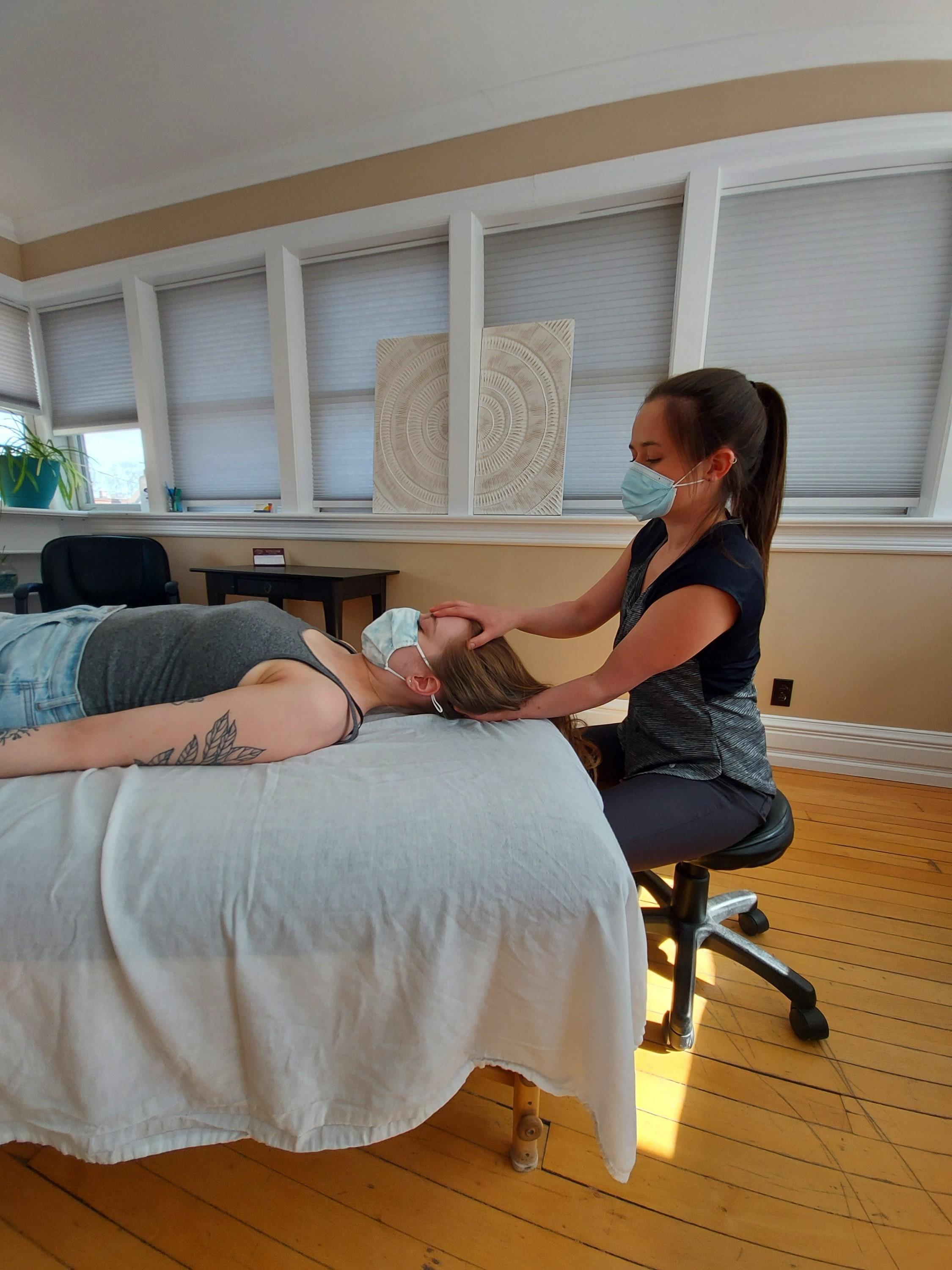
Your neck plays a part too. The muscles under your jaw and at the base of your skull work with the jaw muscles, and a head that sits forward of your shoulders for hours at a desk changes how they load. That's why a jaw assessment here includes your neck.
Other contributors include a blow to the face, whiplash from a car accident, long dental appointments with your mouth held wide, chewing gum or tough foods, and arthritis in the joint. TMJ problems can turn up at any adult age.
Problems That Often Come with Jaw Pain
Tension-Type Headaches
Neck Pain and Stiffness
Daytime Clenching
Night-Time Grinding
Forward Head Posture
Whiplash After a Car Accident
How We Assess Your Jaw
Whether you see a chiropractor, physiotherapist or RMT, the assessment covers your jaw and your neck together.
- 1
Your story
We ask when the pain began, what sets it off, whether you clench or grind, how you're sleeping and whether you've seen a dentist about it. We also screen for anything that needs a doctor first. - 2
Watching your jaw move
We measure how far you can open, watch the path your jaw takes as it opens and closes, and listen and feel for clicks, catches and drifting to one side. - 3
Feeling the muscles and joint
We press gently over the joint and through the masseter, temporalis and the muscles under the jaw to find which ones reproduce your pain. - 4
Checking your neck
We look at neck movement, posture and the muscles at the base of the skull, since these can feed jaw pain and jaw-related headaches. - 5
Agreeing on a plan
We explain what we found, what treatment we'd suggest and roughly how long it may take. You decide whether to go ahead.
What TMJ Treatment Looks Like
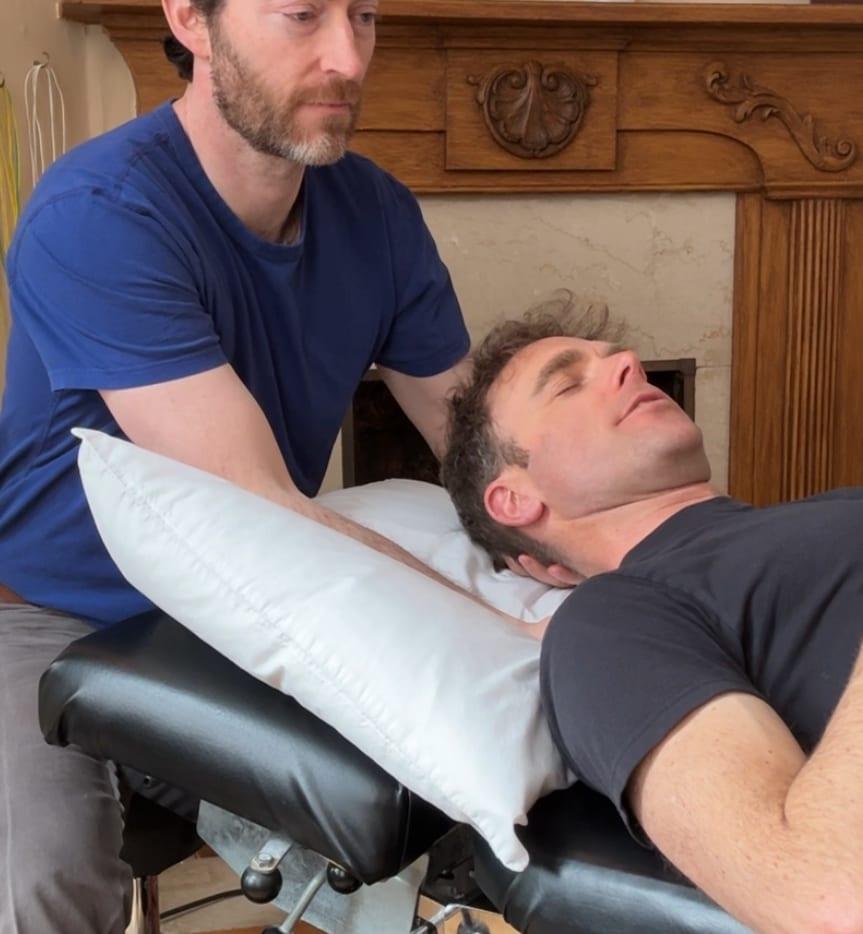
Early on, the goal is to calm things down. Treatment may include soft tissue work on the jaw, face and neck muscles, gentle joint mobilization and practical advice: softer foods for a while, resting your tongue on the roof of your mouth with your teeth apart, and noticing when you clench during the day.
Later, the focus shifts to control and strength. Exercises can help the jaw open in a straight line and hold up to a full day of talking and eating. You'll have a short home routine to do between visits.
Who you see depends on what's going on. Several of our practitioners work on the face, head and jaw, and they talk to each other about the patients they share. Here's what a collaborative team looks like for jaw pain:
- Dr. Chad Wilson, chiropractor, has taken additional training in TMJ care, and our chiropractors assess the jaw and neck together.
- Our physiotherapists can build the jaw and neck exercise program you'll do at home.
- At our Carleton Place clinic, Sonya Stuhec-Leonard, RMT, offers orofacial and TMJ massage, with a 60-minute first visit and 45 or 60-minute follow-ups.
How Long Does Jaw Pain Take to Settle?
It depends on what's driving it. A flare from a stressful stretch of clenching may ease within a few weeks once the jaw muscles are treated and you're catching the habit. A click that's been there for years may never fully go away, and that's often fine if it doesn't hurt. A jaw that locks, or pain that's been around for months alongside headaches and a stiff neck, tends to take longer and may need care from more than one of us.
Ongoing night grinding, poor sleep, high stress and dropping the home exercises once the jaw feels better can all slow things down. Keeping up the routine, wearing a night guard if your dentist has recommended one, and coming back for a reassessment if progress stalls can all help. We recheck your opening and pain at follow-ups so you can see whether it's heading in the right direction, and we'll tell you if it isn't.
Common Questions About TMJ and Jaw Pain
Do I need a referral to book for jaw pain?
Is TMJ treatment covered by insurance?
Should I see my dentist or you first?
What can I do at home while I wait for my appointment?
Book TMJ Treatment in Ottawa
See a chiropractor or physiotherapist at one of our Ottawa clinics, or book orofacial massage with Sonya in Carleton Place.