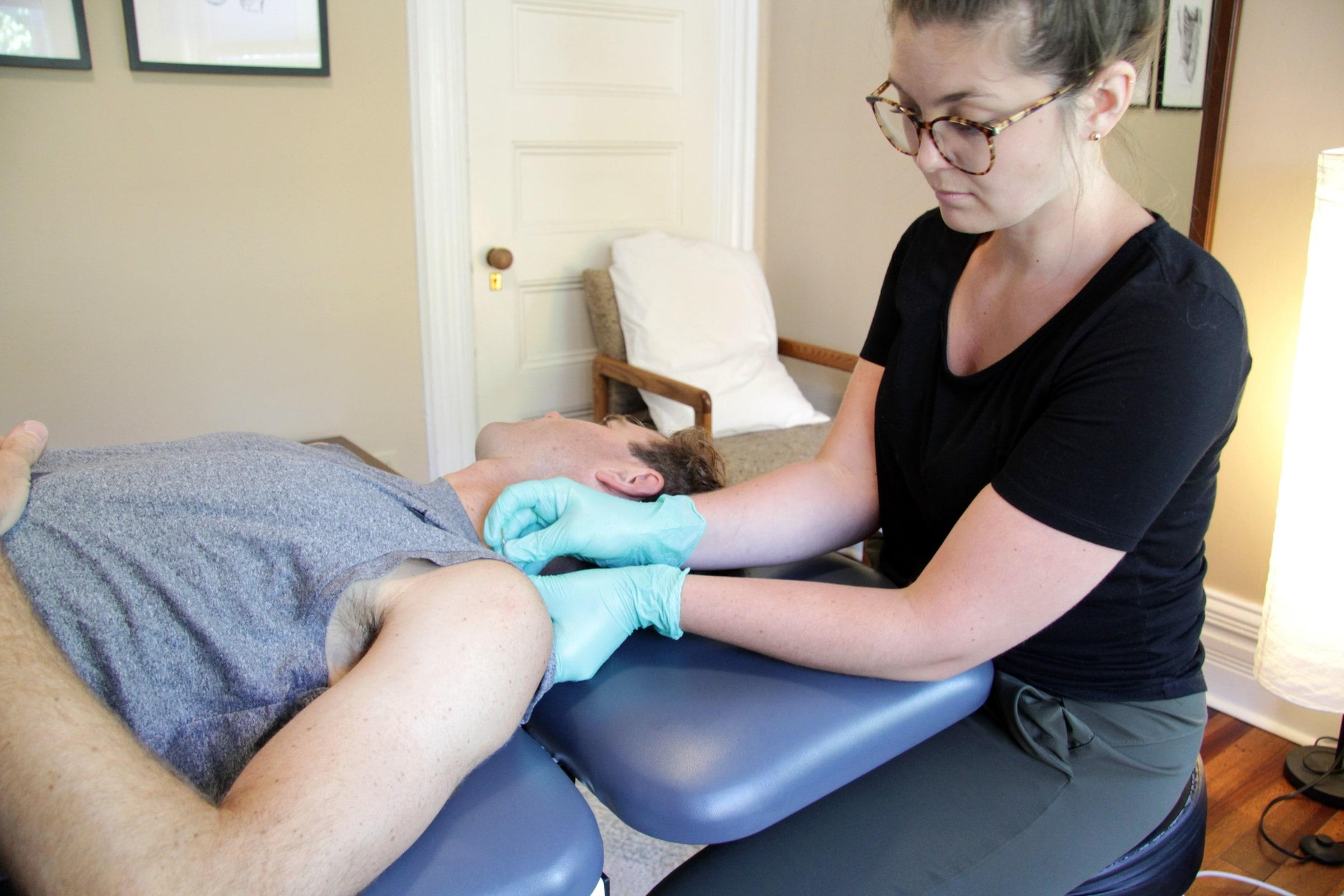
Whiplash Treatment in Ottawa
Neck pain, stiffness or headaches after a car accident? We offer chiropractic, physiotherapy and massage at our Ottawa clinics, with appointments set up for auto insurance claims.
- 4.9 from 368 Google reviews
- Appointments until 8pm on weekdays
- Weekend appointments
- MIG
- Appointments set up for Minor Injury Guideline auto claims
- Since 2016
- Serving Ottawa
What Is Whiplash?
Whiplash is a neck injury caused by the head being thrown forward and back, or side to side, faster than the neck muscles can brace against it. A rear-end collision is the classic cause, and it can happen at low speed.
The force can strain the muscles along the back and sides of your neck, sprain the ligaments that hold the vertebrae together, and irritate the small facet joints at the back of the spine. It can also follow a fall, a hit in contact sport or a hard jolt on a ride.
On a hospital note or an insurance form you may see it called whiplash-associated disorder, or WAD, with a grade from 0 to IV. That grade describes what was found on examination. It doesn't tell you how long you'll be sore.
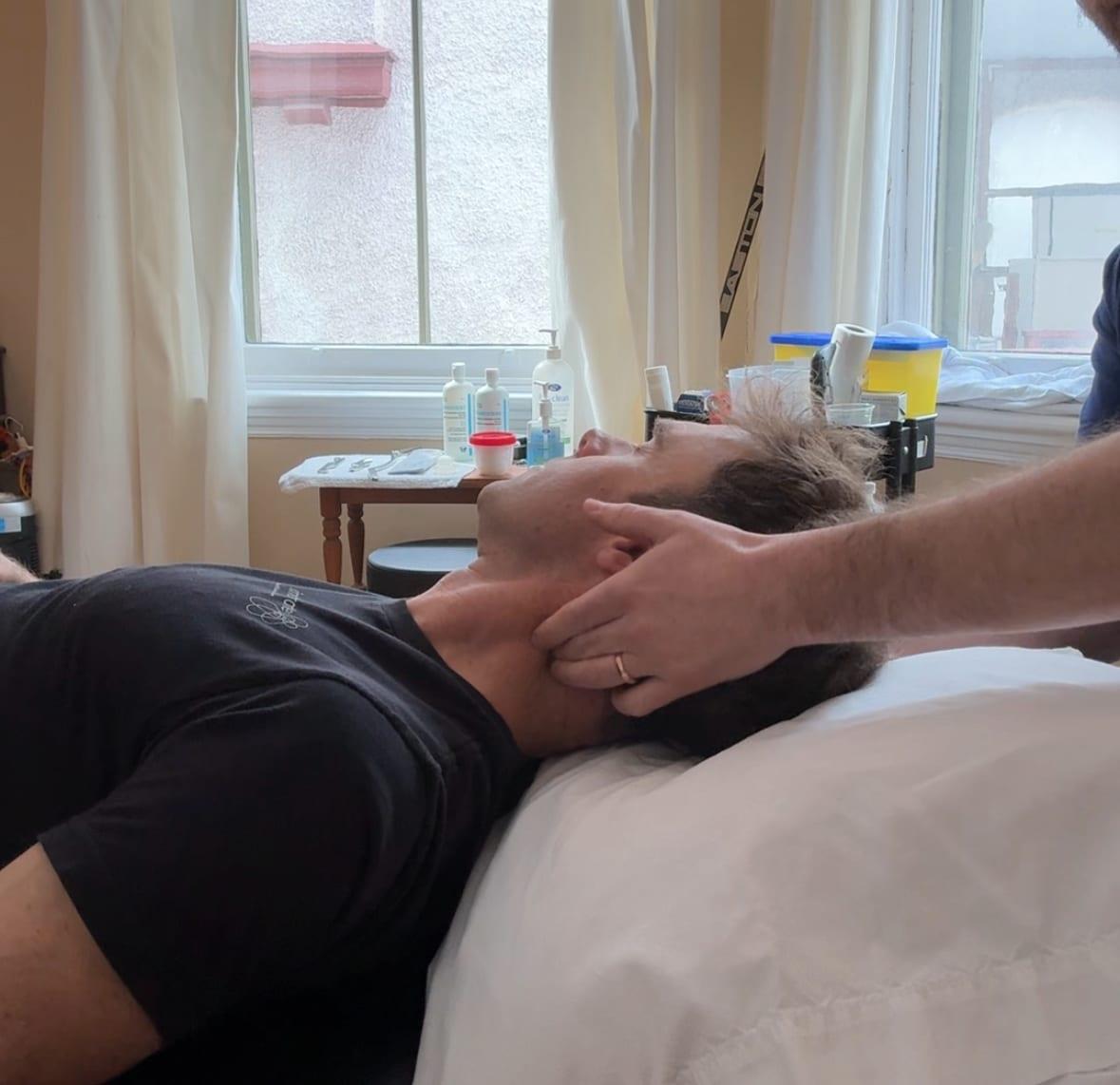
What Does Whiplash Feel Like?
Neck pain and stiffness come first for most of the list below. Turning to check your blind spot or looking down at your phone may hurt, and the ache can spread across the tops of your shoulders and between your shoulder blades.
Other symptoms that can show up:
- Headaches that start at the base of the skull and wrap toward the forehead
- Jaw pain or clicking, since the jaw takes part of the jolt too
- Tingling, numbness or heaviness in an arm or hand
- Dizziness, trouble concentrating, fatigue and poor sleep
Symptoms often don't appear right away. Feeling fine at the scene and waking up stiff the next morning, or two days later, is common with whiplash. That delay doesn't mean the injury is minor.
How Serious Is a Neck Injury After a Crash?
Whiplash is graded by what an examination finds. Grade I is neck pain, stiffness and tenderness on its own. Grade II adds reduced movement and tender points in the muscles or joints. Grade III adds signs that a nerve is involved, such as weakness, numbness or changed reflexes. Grade IV means a fracture or dislocation, which is a medical emergency.
Grades I and II don't usually need an X-ray or MRI. Go to a doctor or the emergency department before booking with us if you have severe pain in the middle of your spine, weakness or numbness in your arms or legs, a headache that keeps getting worse, vomiting, confusion, trouble swallowing or speaking, double vision, or any change in bladder or bowel control.
A collision that whips your neck can also jolt your brain. If you hit your head or feel foggy, irritable or sensitive to light, mention it, because concussion management may need to be part of your plan.
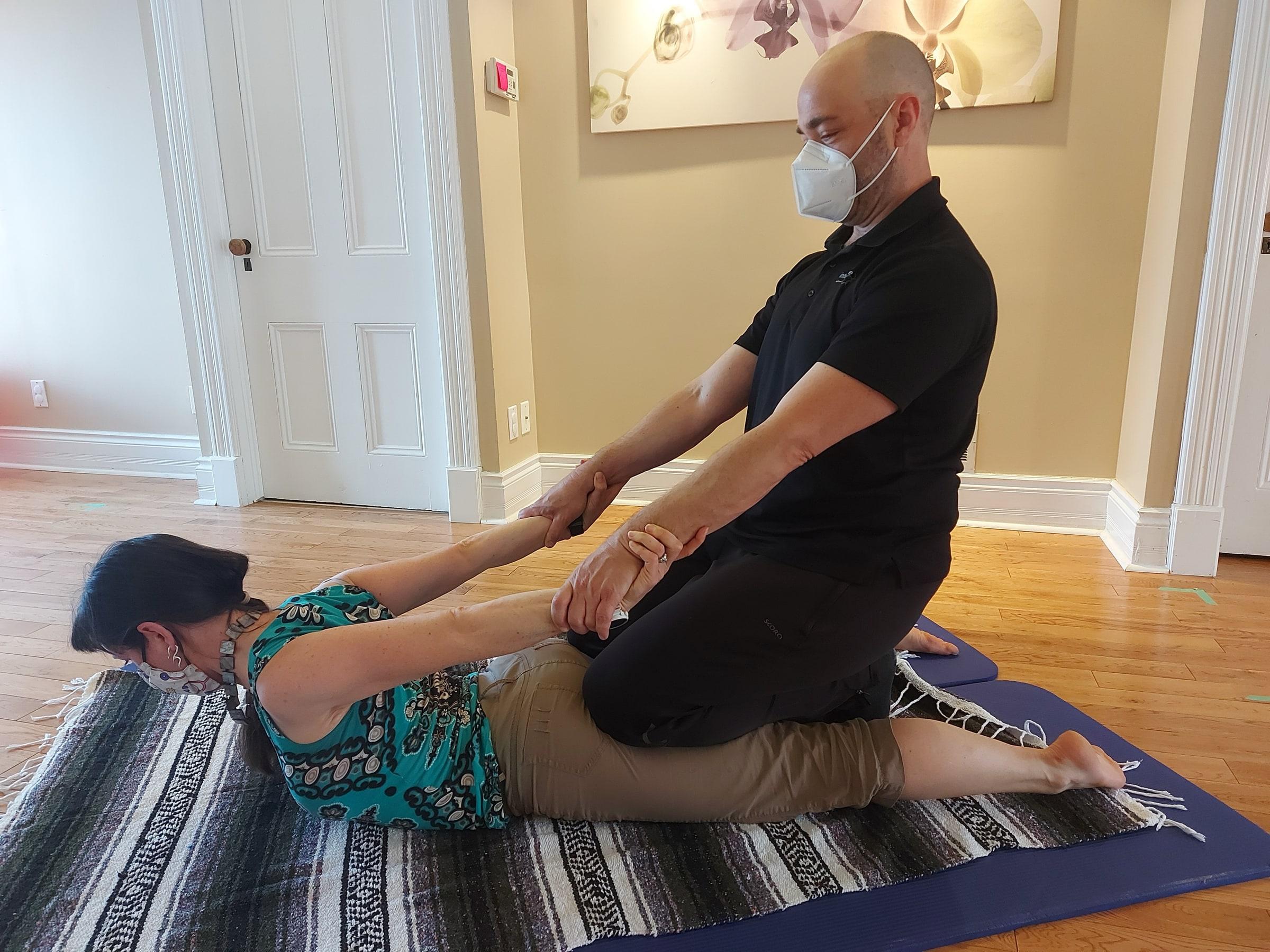
What Causes Whiplash and Who Gets It
In a rear-end collision your seat pushes your body forward while your head lags behind for a split second. Then it snaps forward. Those two movements happen faster than you can react, so the soft tissues of the neck take the load.
Drivers and passengers both get whiplash. A few things can make the injury harder or recovery slower:
- Having your head turned at the moment of impact
- A headrest set too low to catch the back of your head
- Not seeing the hit coming, so your muscles weren't braced
- Neck pain or headaches before the accident
- High pain levels in the first days, and the stress of dealing with the crash and the claim
How We Assess Your Neck
The first appointment is about finding out what was injured and making sure nothing needs a doctor before treatment begins.
- 1
The story of the accident
How the collision happened, where you were sitting, when symptoms started and what you've tried since. Bring any hospital notes or imaging reports you have. - 2
Screening for anything medical
We check for the warning signs above and test strength, sensation and reflexes in your arms. If something needs medical attention, we refer you before treating. - 3
Movement and tissue exam
We look at how far your neck turns and bends, which movements bring on pain, and which muscles and joints are tender. If you're dizzy, balance and eye movements get checked too. - 4
Your plan and the paperwork
We explain what we found, agree on goals with you and give you exercises to start at home. For an auto claim, this is also when the insurer forms get started.
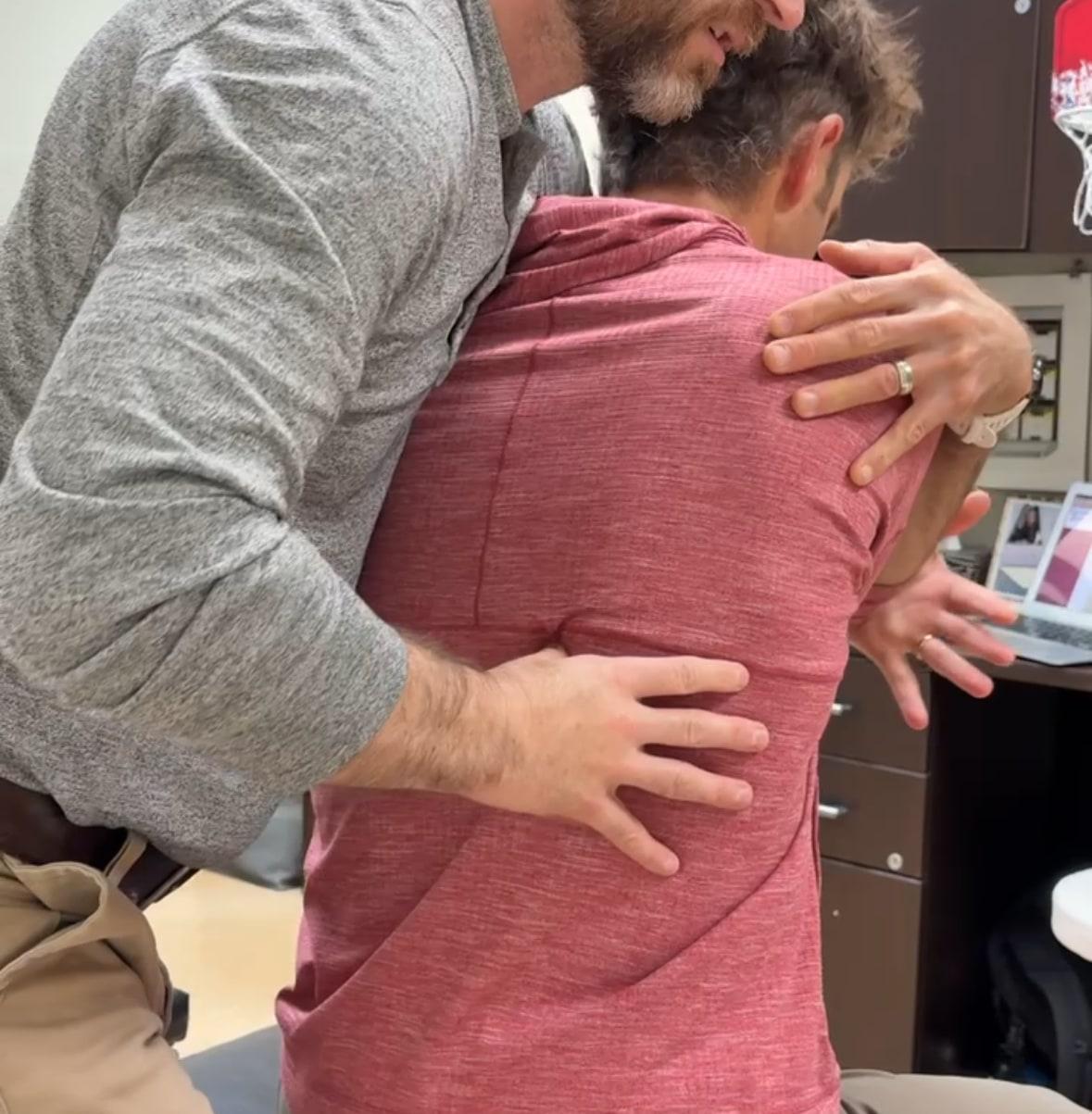
What Does Treatment Involve?
Early on, the aim is to calm pain and keep your neck moving. Clinical guidance for whiplash favours staying active over resting in a soft collar, so the first visits focus on gentle movement, advice on sleep and screen time, and hands-on care to ease muscle guarding.
As pain settles, treatment shifts toward strength and confidence: the deep muscles at the front of the neck, the muscles around your shoulder blades, and a gradual return to driving, work and sport. Depending on what your assessment shows, care may include:
- Physiotherapy for graded exercise, neck strengthening and dizziness or balance work
- Chiropractic care for joint mobilization and manual therapy to restore movement
- Massage therapy from an RMT for tension in the neck, shoulders and upper back
Your chiropractor, physiotherapist and RMT work under one roof, and with your consent they share notes on how you're responding. It's a collaborative team, so your plan can change without you starting over somewhere new. Between visits you'll have a short set of home exercises, and these may matter as much as anything we do in the room.
How Long Does Whiplash Take to Heal?
Grade I and II whiplash commonly improves over several weeks to a few months. A smaller group still has symptoms past three months, and for them a plan built on exercise and a gradual return to normal activity is the usual focus.
Recovery time depends on the grade, how much pain you have in the first weeks, whether a nerve is involved, any neck problems you had before, and how much stress the accident and claim are causing. Keeping up with your home exercises can help too.
At your assessment we'll give you a realistic range for your situation, check it against your progress at each visit, and refer you to your family doctor if things aren't moving the way we'd expect.
Problems That Can Come with a Neck Injury
Headaches from the Base of the Skull
Jaw Pain and TMJ Irritation
Shoulder and Upper Back Pain
Dizziness and Balance Problems
Concussion Symptoms
Arm Tingling or Numbness
Common Questions About Whiplash
How soon after a car accident should I book?
Do I need a doctor's referral?
Will my car insurance pay for treatment?
Do I need an X-ray or MRI for whiplash?
What happens if my neck isn't getting better?
Book Whiplash Treatment in Ottawa
Tell us at booking if it's a car accident claim and we'll set up the right appointment type. Our chiropractors, physiotherapists and RMTs see whiplash patients at our Ottawa clinics.