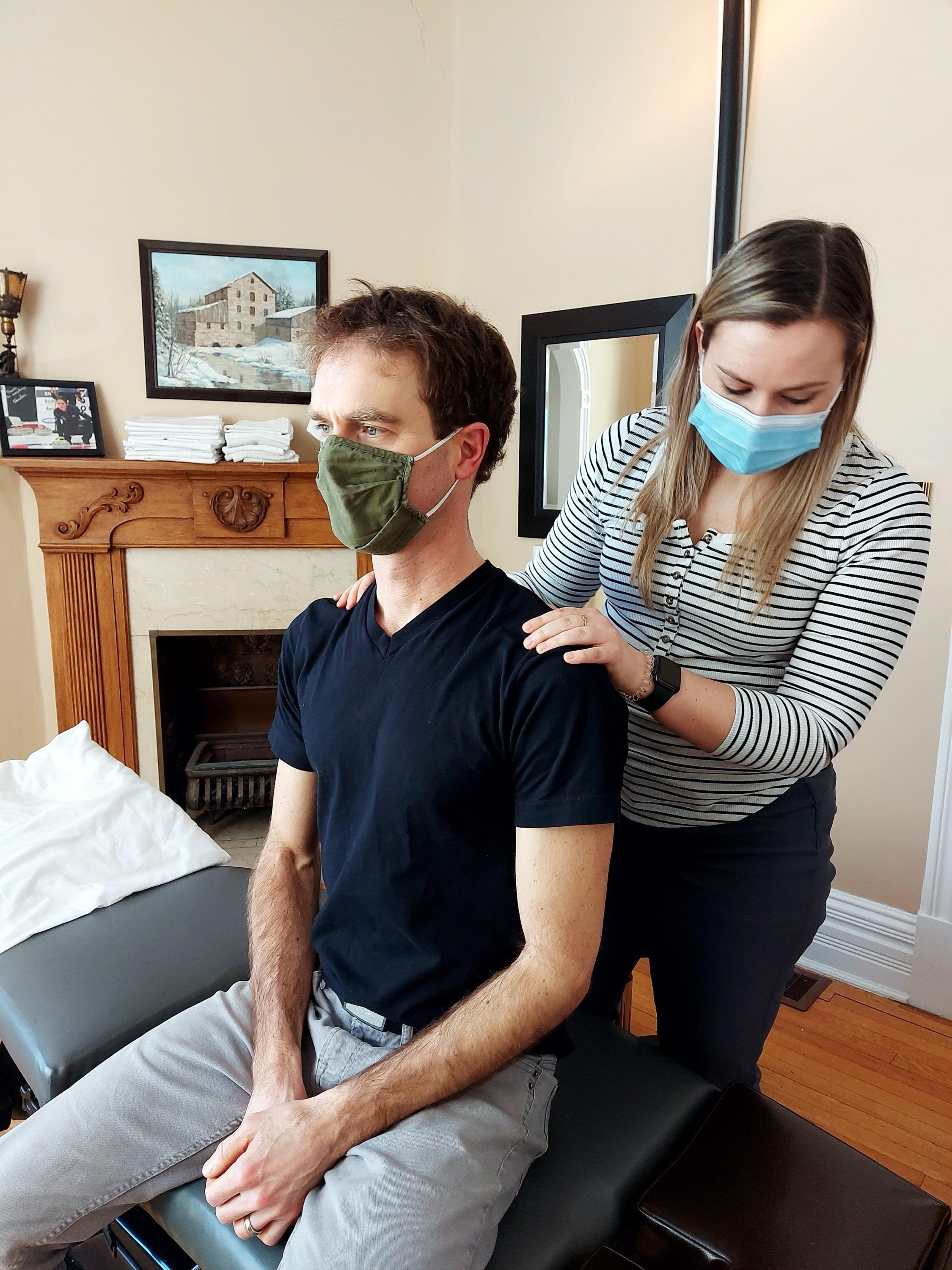
Shoulder Pain Treatment in Ottawa
Rotator cuff pain, a frozen shoulder or a sharp pinch when you reach overhead. Our team in Ottawa works out what's driving your shoulder pain and builds a plan with you to get the arm moving again.
- 4.9 from 368 Google reviews
- Appointments until 8pm on weekdays
- Weekend appointments
- 5
- Ways we treat shoulder pain, from physiotherapy and chiropractic to massage, acupuncture and dry needling
- Since 2016
- Serving Ottawa
What's Going on in a Painful Shoulder
Shoulder pain is a symptom, not a diagnosis. Your shoulder is a shallow ball-and-socket joint. Four small muscles, the rotator cuff, keep the ball centred while you move, and their tendons pass through a narrow space under the bony tip of the shoulder blade, called the acromion.
The shoulder problems we treat in our Ottawa clinics include three names you may have seen on a report or heard from a doctor.
Rotator cuff tendinopathy is irritation of one or more cuff tendons, often the supraspinatus on top of the shoulder. A rotator cuff tear is a partial or full split in one of those tendons.
Impingement, now often called subacromial pain, describes pain when the cuff tendons and the bursa above them are squeezed as you lift your arm.
Frozen shoulder, or adhesive capsulitis, is a thickening and tightening of the capsule around the joint. The shoulder loses movement in every direction, even when someone else tries to lift the arm for you.
Each of these responds to different care. Physiotherapy for a stiff, frozen shoulder looks quite unlike the plan for a sore cuff tendon, which is why the assessment comes first.
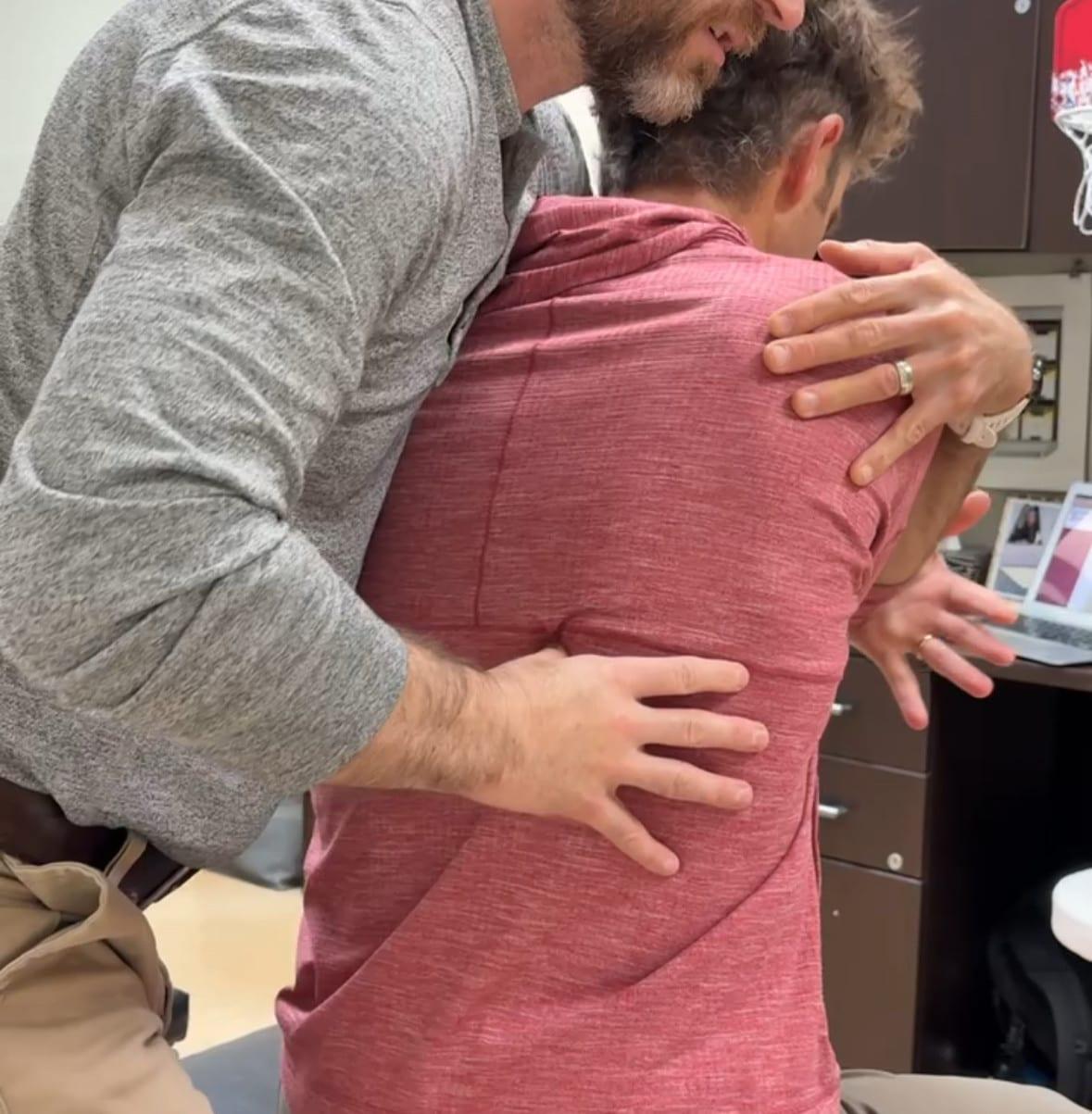
What Does Shoulder Pain Feel Like?
A cuff or impingement problem tends to show up as an ache on the outside of the upper arm, sometimes spreading toward the elbow. It catches as you lift your arm out to the side, often worst between shoulder and head height, and may ease once the arm goes higher.
Night pain comes with both. Lying on the sore side can wake you. Reaching into the back seat of the car, putting on a coat or doing up a bra strap can bring on a sharp pinch.
Frozen shoulder feels different. Early on the pain is often deep and constant. Then the joint stiffens until you can't lift the arm, turn it out or reach behind your back. Weakness with less pain, especially after a fall, points more toward a tear.
How Serious Is Your Shoulder Problem?
A mild problem hurts with certain movements, but you still have full reach and you sleep through most nights. A moderate one hurts most days, wakes you at night and starts to limit how high or far you can reach. A severe one leaves you unable to lift the arm, with clear weakness or pain that doesn't let up.
With tears, a partial tear means some of the tendon is still intact, and these often respond to strengthening. A full-thickness tear goes all the way through. Some still do well with exercise, while others, especially after an injury in a younger, active person, may need a surgeon's opinion.
A scan isn't needed to start treatment for a sore cuff tendon or impingement pain. Imaging earns its place when the arm is suddenly weak after a fall, when pain isn't changing despite good care, or when surgery is being considered. Our team includes a nurse practitioner, Marika Haydock, which helps when a shoulder needs a medical opinion.
Some shoulder pain isn't a shoulder problem at all. Call 911 if shoulder or arm pain comes with chest pressure, shortness of breath or sweating. See a doctor promptly after a dislocation, a fall with an obvious deformity, or a hot, red, swollen joint with fever.
What Causes Shoulder Pain and Who Gets It?
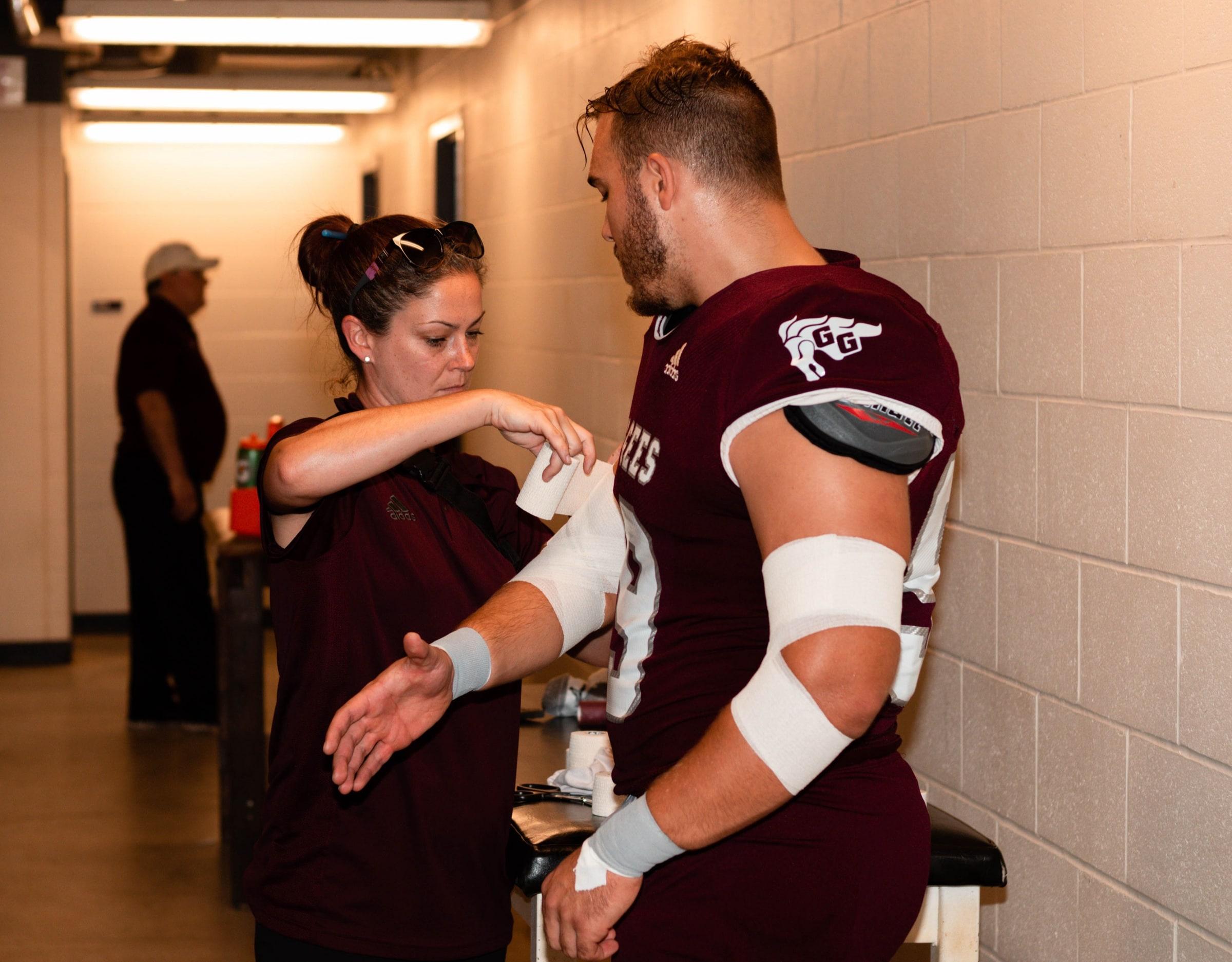
Cuff and impingement pain usually builds from load the tendons weren't ready for. Painting a ceiling, a weekend of moving boxes, a new gym program or a jump in swimming, tennis or volleyball can all tip a shoulder over. Tendons also change with age, so these problems turn up more from your 40s onward.
A fall onto an outstretched arm can strain or tear the cuff. Frozen shoulder shows up more often between about 40 and 60, in people with diabetes or thyroid conditions, and after a stretch of keeping the arm still following surgery or a fracture.
Pain that starts at the neck and runs down the arm, sometimes with tingling, may come from neck pain referring into the shoulder. Checking the neck is part of every shoulder assessment for that reason.
How We Assess Your Shoulder
Your practitioner explains what each test is for before doing it, and you can stop or skip any part.
- 1
Your story
When it started, what brings it on, how you're sleeping, your work and sport, past injuries, and health history such as diabetes or thyroid conditions. - 2
Movement testing
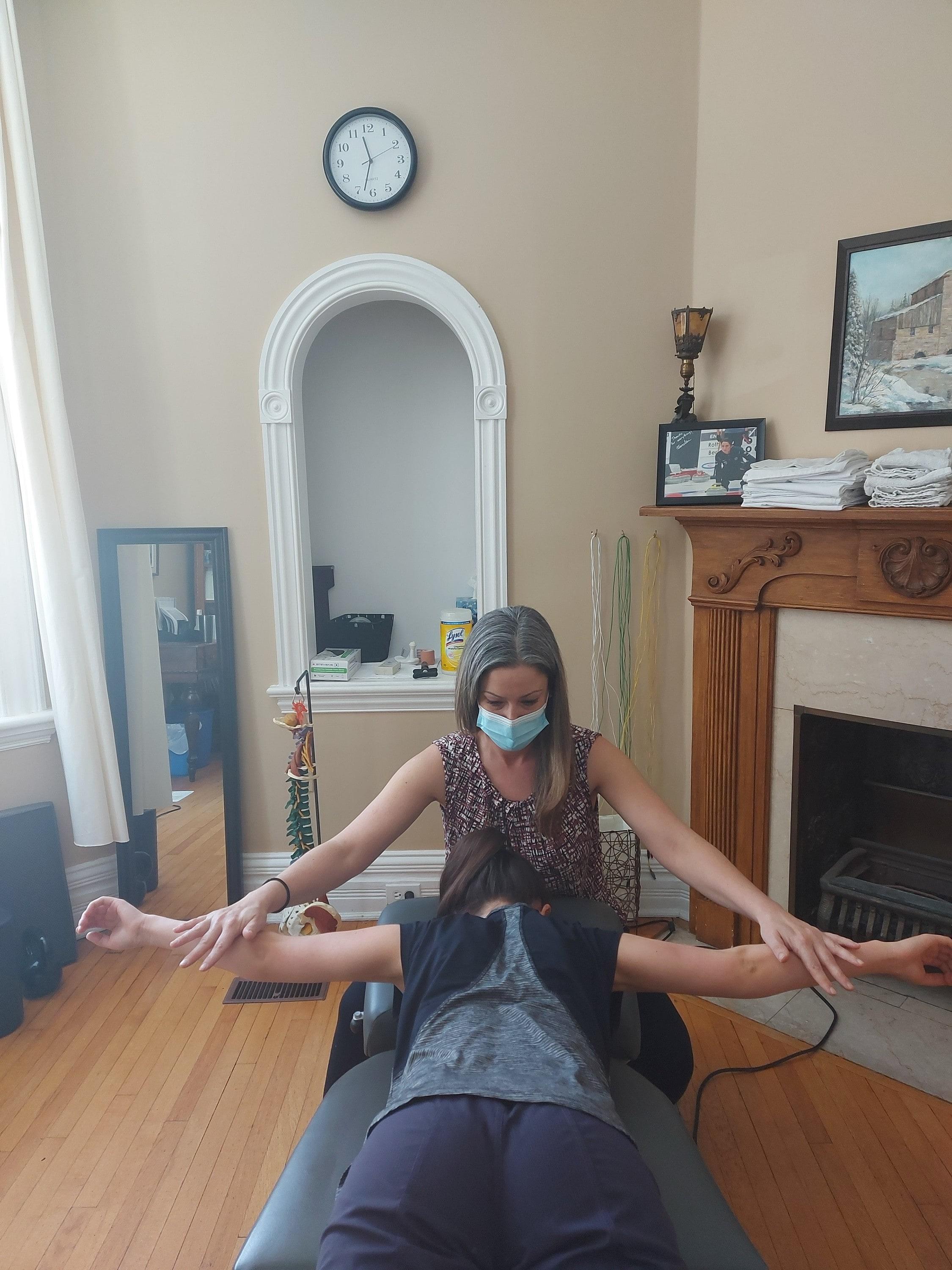
We compare both shoulders as you lift, rotate and reach behind your back, then move the arm for you. A frozen shoulder loses movement both ways. A cuff problem often doesn't. - 3
Strength and specific tests
Each rotator cuff muscle is tested on its own, along with tests that reproduce impingement or point toward a tear. We check your neck and upper back too. - 4
Your plan
We explain what we found in plain terms, agree on goals with you, and talk through the options. If a doctor or imaging fits better, we'll tell you and help you get there.
What Shoulder Treatment Looks Like
Early on, the goal is to calm the shoulder so you can sleep and use the arm. That may mean easing off the movements that provoke it, gentle range-of-motion work and hands-on care around the shoulder blade and upper back.
As pain settles, the focus moves to strength. Loading the rotator cuff and shoulder blade muscles in a graded way may help the tendons tolerate lifting and reaching again. With a frozen shoulder, the work leans toward easing pain and keeping as much movement as the joint allows.
- Home exercises, adjusted at each visit as your shoulder changes
- Hands-on care from chiropractic, massage therapy, acupuncture or dry needling where it suits your shoulder
- Advice on your desk or work set-up, sleep positions and the road back to sport
collaborative team. Our physiotherapists, chiropractors, registered massage therapists and acupuncturist work side by side, so your plan can combine the care your shoulder responds to.
How Long Does a Sore Shoulder Take to Recover?
A mild, recent cuff irritation may settle within a few weeks once the load is adjusted and you start the right exercises. Tendon pain that has hung around for months tends to need a few months of consistent strengthening before lifting and reaching feel normal.
Frozen shoulder takes longer to settle. It moves through a painful stage, a stiff stage and a thawing stage, and the whole course can last well over a year. Treatment can't skip those stages, but it may help ease pain and protect movement along the way.
A few things shift the timeline: how long you've had the pain, health conditions like diabetes, how well you're sleeping, how much your job loads the shoulder and how regularly you do your exercises. You'll get an estimate after your assessment, and we'll check it against your progress at each visit.
Shoulder and Nearby Problems We Treat
Rotator Cuff Tendinopathy
Partial and Full Rotator Cuff Tears
Frozen Shoulder (adhesive Capsulitis)
Shoulder Impingement and Bursitis
Neck Pain Referring into the Shoulder
Elbow Pain
Common Questions About Shoulder Pain
Do I need a referral to book for my shoulder?
Is shoulder treatment covered by insurance?
Should I rest my shoulder or keep moving it?
How long should I wait before booking?
Can shoulder pain come back after it settles?
Book Shoulder Pain Treatment in Ottawa
Tell us what your shoulder is doing and we'll start with a full assessment at one of our Ottawa clinics.