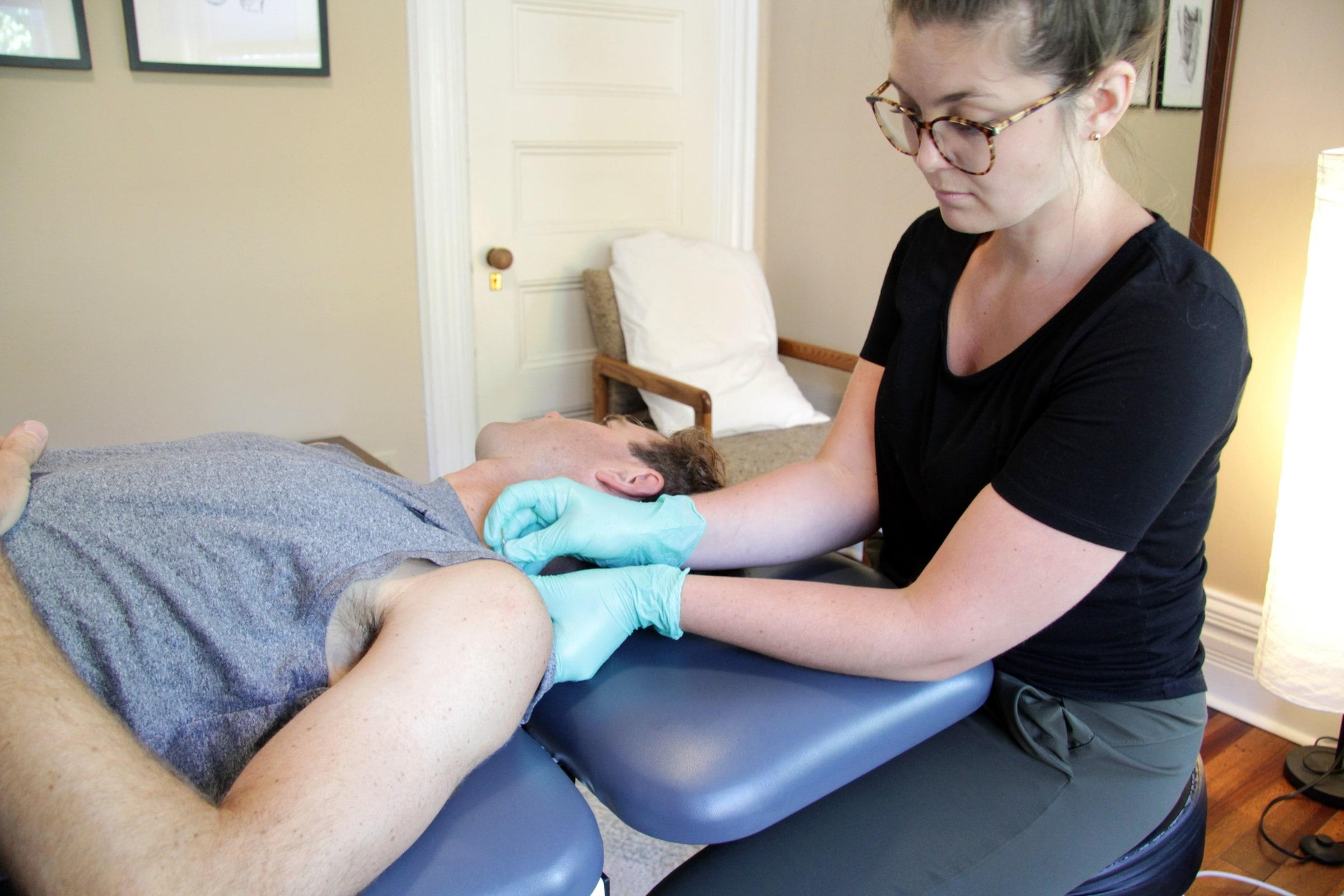
Concussion Management in Ottawa
Rehabilitation and a graded return to work, school, driving and sport after a head injury has been medically assessed.
- 4.9 from 368 Google reviews
- Appointments until 8pm on weekdays
- Weekend appointments
- 3
- Clinic locations offering concussion care
- 5
- Practitioners with concussion training at Centretown
- Multidisciplinary
- Chiropractic, physiotherapy and massage therapy in one team
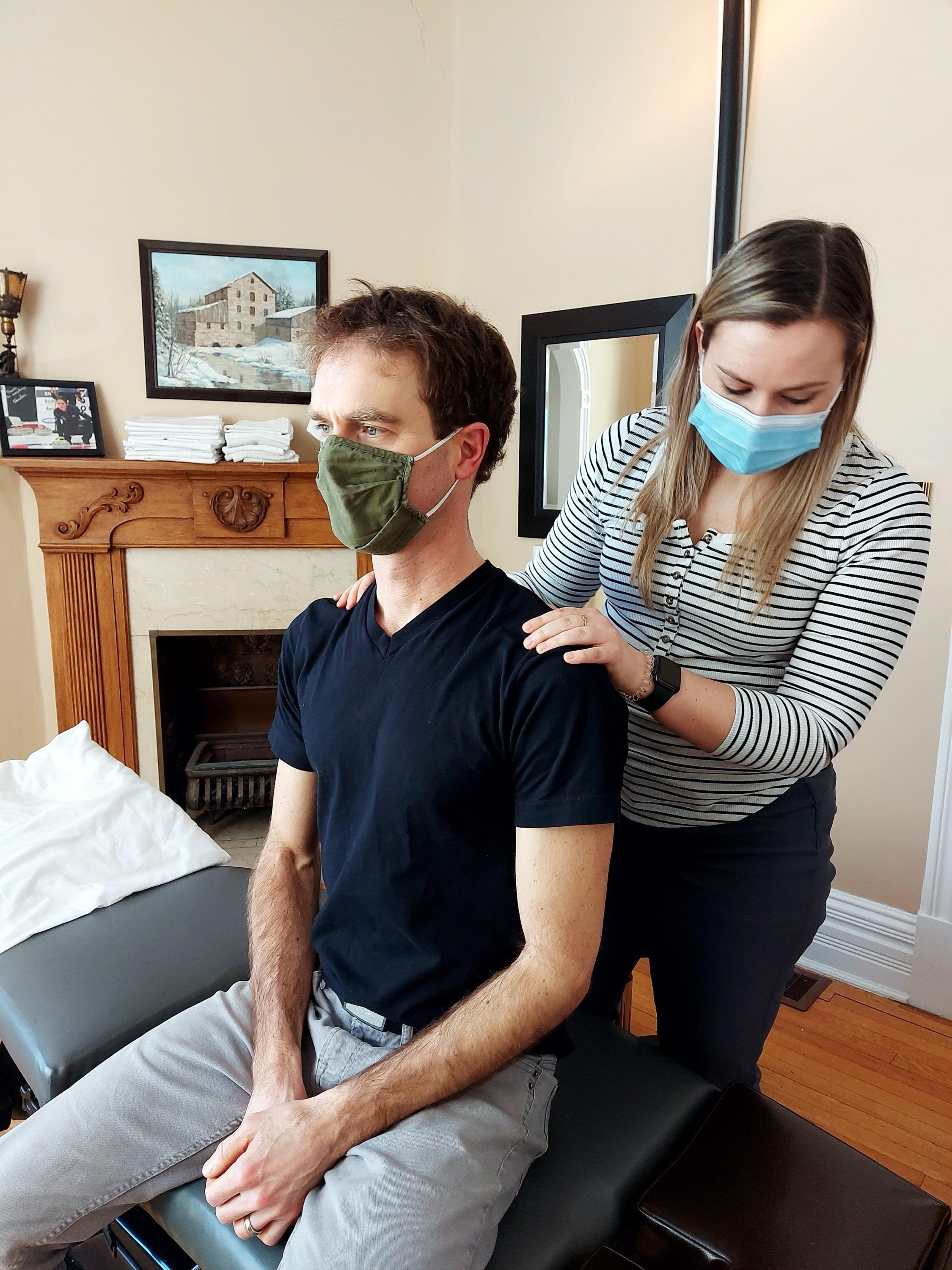
Our Approach to Concussion Management in Ottawa
Concussion management is rehabilitation for what lingers after a head injury: the headache that builds through the afternoon, the dizziness on stairs, the fog that arrives an hour into a workday. A suspected concussion needs medical assessment first. See a physician or nurse practitioner, or go to the emergency department, especially if symptoms are worsening, if there was loss of consciousness, or if you're vomiting or unusually drowsy. Our work starts after that, when you've been assessed and you want help getting back to normal activity.
Concussion symptoms rarely sit in one place, so care here is shared between disciplines. Neck strain from the same impact can keep a headache going. Dizziness often traces back to the vestibular system and may respond to vestibular rehabilitation. Feeling wiped out by light exercise is its own problem, and it's managed with measured activity rather than a dark room.
- We assess the neck, the balance system and eye movement, not only a symptom checklist.
- Your plan is built around graded activity at a level you can tolerate, with symptom limits you understand.
- Chiropractors, physiotherapists and registered massage therapists on the team share notes, so you're not retelling your story at every visit.
Students, office workers, parents and recreational athletes across Ottawa book this, often several weeks after the injury when things haven't settled on their own.
What We Help Manage After a Concussion
Headaches After a Head Injury
Dizziness and Unsteadiness
Neck Pain and Whiplash
Light and Noise Sensitivity
Eye Strain and Trouble with Screens
Symptoms Triggered by Exercise
Fatigue and Disrupted Sleep
Difficulty Concentrating at Work or School
Return to Sport After a Concussion
Symptoms Lasting Longer Than a Few Weeks
What a Concussion Appointment Involves
A first visit is longer than a follow-up, because the history matters as much as the physical testing. Wear clothing you can move in.
- 1
Before You Come In
Get the injury assessed medically if you haven't already. Bring any paperwork from the emergency department, your family doctor or a walk-in clinic, plus a rough timeline of the injury and how symptoms have behaved since. - 2
The Conversation
We go through how the injury happened, what triggers your symptoms, how you're sleeping, and what a typical day looks like now compared with before. Work, school and training demands get mapped out here, because they guide the plan. - 3
The Physical Assessment
Depending on your symptoms, this can include neck movement and strength, balance testing, eye tracking and gaze stability, blood pressure and heart rate with position changes, and a monitored exertion test to find the level of activity you tolerate. - 4
Treatment and a Plan
Hands-on work for the neck, vestibular and visual exercises, and a graded activity plan are the usual components. You'll leave with a small number of things to do at home and clear limits on how much symptom provocation is acceptable. - 5
Between Visits
The home work is the part that moves things along: short daily exercise sessions, paced screen use, and a consistent sleep schedule. We ask you to track symptoms so we can see patterns rather than guess. - 6
Reassessment
We retest what we measured and adjust. As tolerance improves, exercise gets harder and sport-specific or work-specific tasks come back in stages. If something isn't improving as expected, we'll say so and recommend a return to your physician.
What Does Concussion Care Cost, and Is It Covered?
Fees depend on which practitioner you see and how long the appointment lasts. Call (613) 230-7891 or ask when you book and we'll give you the amount before your first visit, along with our cancellation policy.
Concussion care is billed as whichever service you receive, so an appointment with a physiotherapist appears on your receipt as physiotherapy, and one with a chiropractor as chiropractic. Extended health benefit plans commonly include these services up to an annual maximum per discipline. Check your plan for the per-visit limit and whether your insurer wants a physician's referral for reimbursement, since some ask for one even when we don't.
If the concussion happened in a motor vehicle collision, treatment may be funded through your auto insurer under Ontario's accident benefits, which involves a treatment plan submitted on your behalf. If it happened at work, care may be covered through WSIB once your claim is open.
If cost is a barrier, say so when you call. We'd rather plan a realistic schedule of visits with you than have you stop partway through.
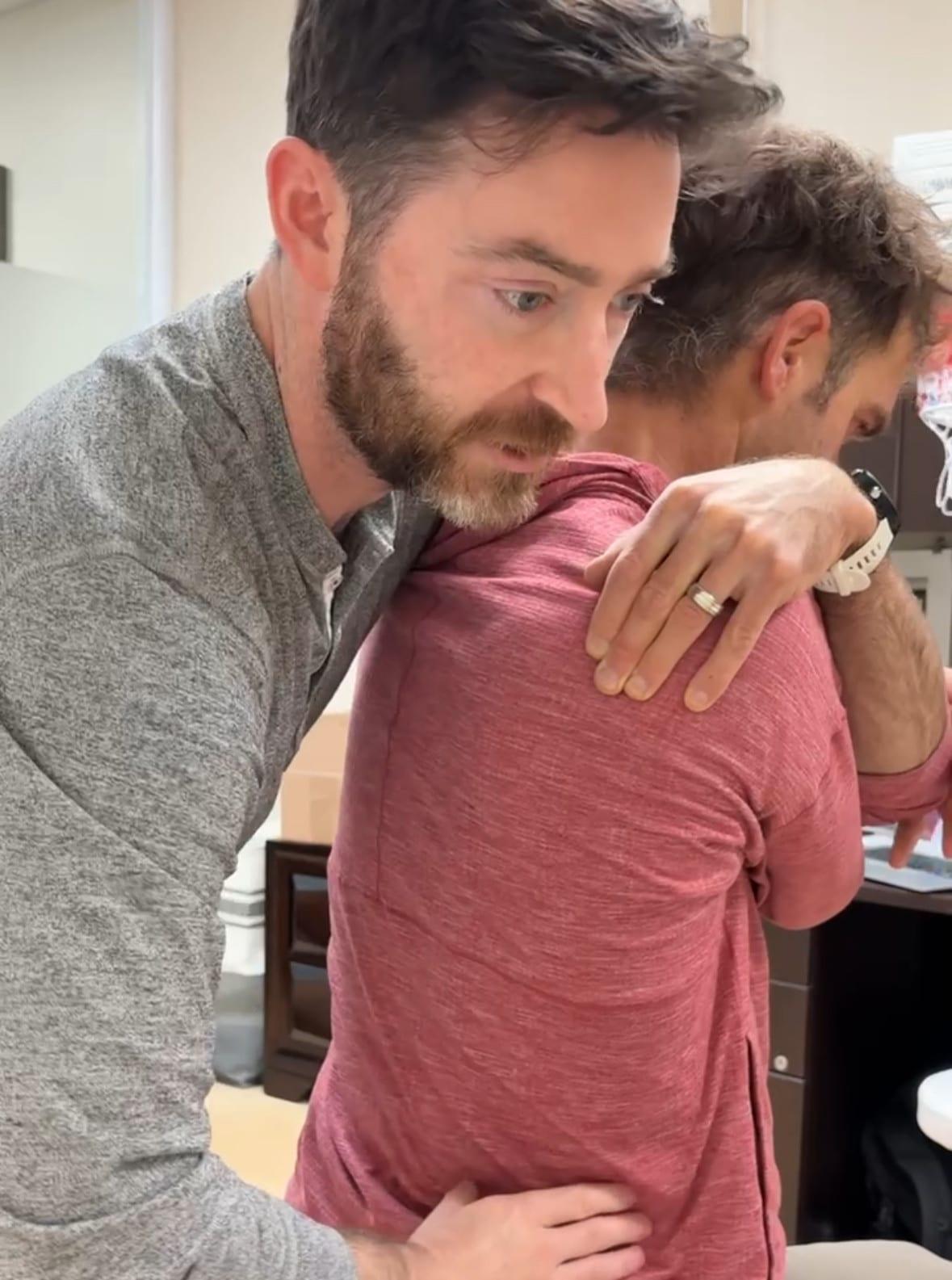
Who You Would See for Concussion Care
Dr. Ben Matheson, a chiropractor, has a particular interest in concussion and sees patients at our Centretown, Lowertown and Carleton Place clinics. Expect time spent on the neck and on how your symptoms track through the day.
At Centretown, several physiotherapists take concussion cases. Ravi Kahlon holds certification in vestibular and concussion rehabilitation. Joanna Nawrotek has completed concussion management coursework, and Riley Burns also works with concussion patients. You can have this care alongside general physiotherapy or chiropractic treatment if you picked up other injuries in the same accident.
Registered massage therapist Jane Marusaik works with whiplash and concussion symptoms after motor vehicle collisions, which tend to arrive together. Massage therapy may help with the neck and jaw tension that feeds post-injury headaches.
Where to Book Concussion Care
Concussion care is offered at three of our clinics, and only these three.
Centretown sits at 102 Lewis Street, a short walk off Elgin Street and easy to reach from downtown offices, Carleton University and the Glebe. This is where the physiotherapy side of the concussion team works.
Lowertown is at 500 Old St. Patrick Street, close to the ByWard Market, Sandy Hill and Vanier.
Carleton Place is at 10 Lake Avenue West, which saves a drive into Ottawa for people in Beckwith, Mississippi Mills and Almonte. When light and motion are still bothering you, a shorter trip matters more than it sounds.
Not sure which location suits you? Call and we'll sort it out, or check our locations page for hours and directions.
Where to Book Concussion Management
Concussion Management is available at 3 of our locations. Each button opens that location's calendar for concussion management.
3 locations
Lowertown (Ste Anne Medical Centre)
500 Old St. Patrick Street, Ottawa, ON K1N 9G4
(613) 852-7769integratelowertown@gmail.com
Common Questions About Concussion Care
How soon after a concussion should I book?
Do I need a referral to be seen?
Do I need a CT scan or an MRI?
Can I treat this at home instead?
My symptoms have lasted months. Is it too late?
Can you clear me to return to play?
Book a Concussion Assessment
If headaches, dizziness or fog are still getting in the way of work, school or training, book a time at one of our three clinics in Ottawa and Carleton Place.