You lean into the back seat to lift your little one out of the car seat. Something low in your back grabs, and by evening you're on the living room floor hugging one knee to your chest. It feels good for a minute. Then you stand up and the ache is still there.
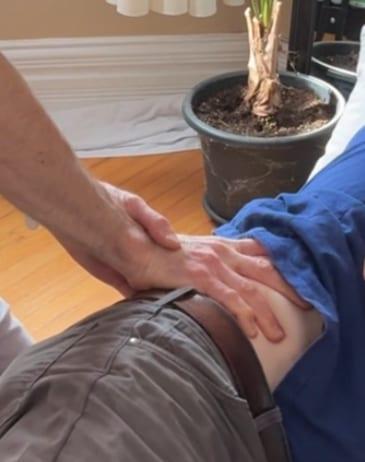
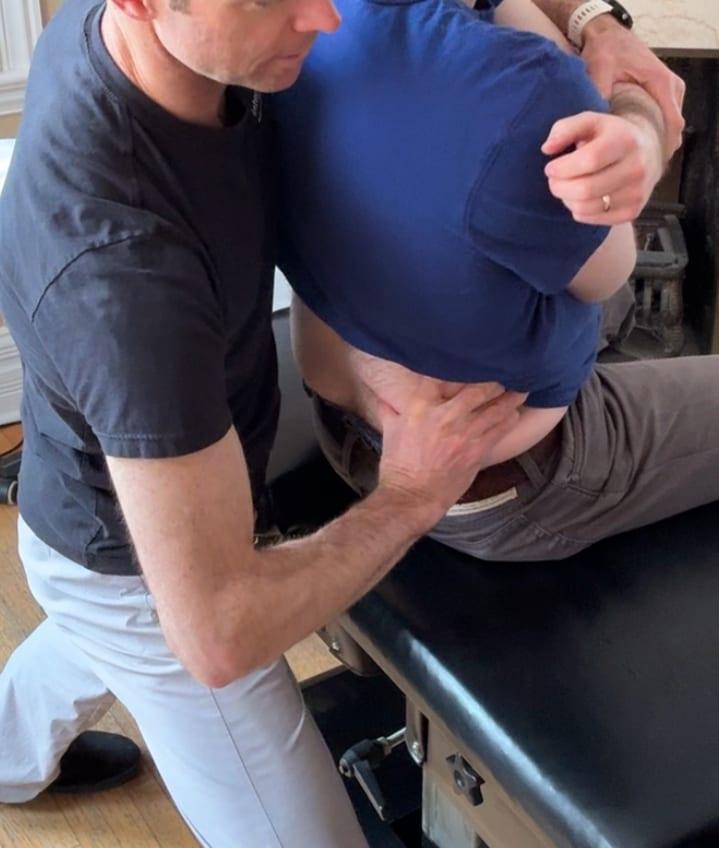
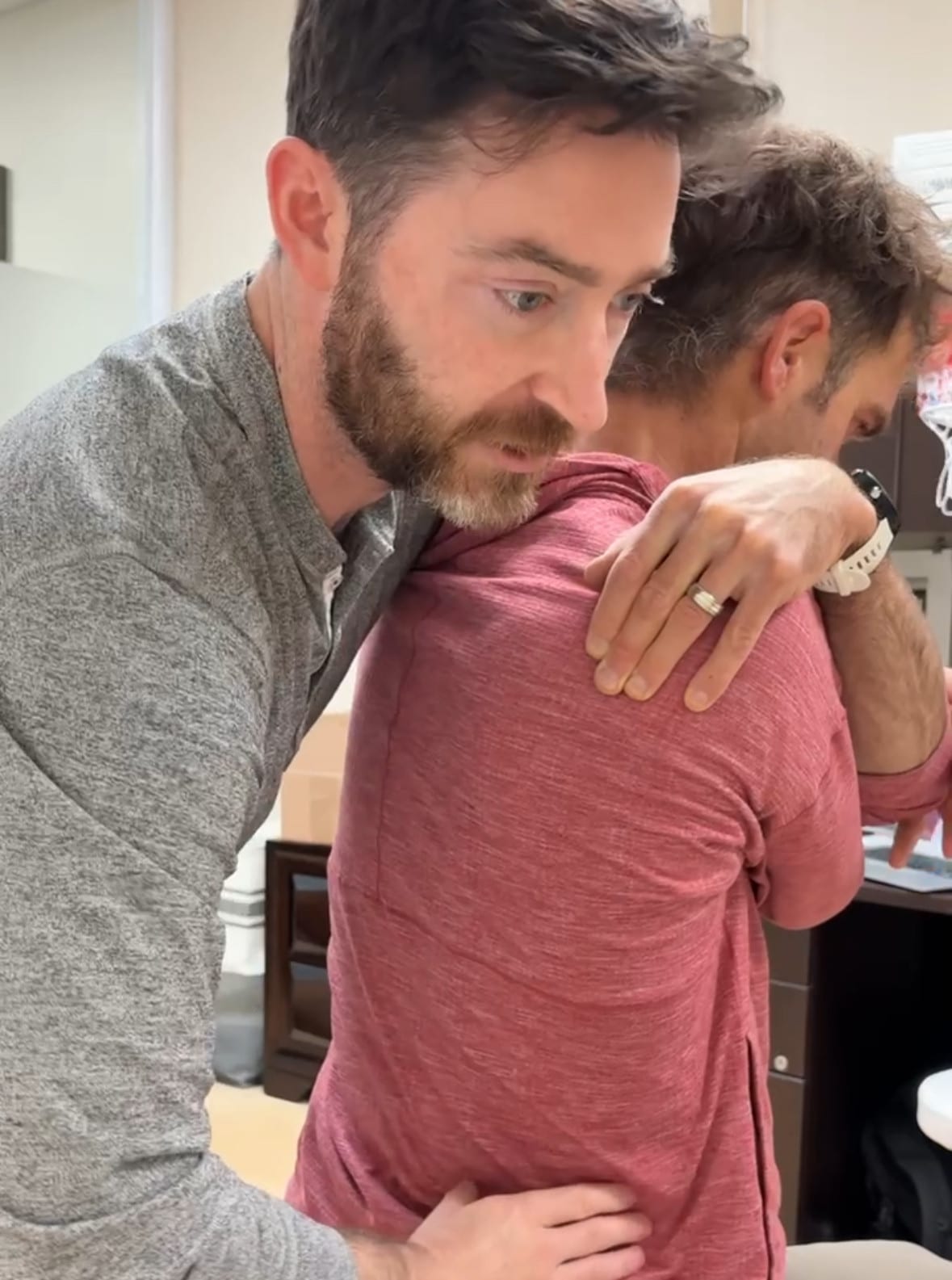
Stretching can be useful for low back pain, mostly as a way to ease tension when the pain is mild. In the plans our team builds, it's rarely the main strategy. We usually lean first on hands-on treatment for short-term relief and a clear explanation of what's going on. From there, the work moves to strength, endurance, mobility, confidence and walking.
Keep the stretches that feel good. They're one small piece, and an irritated back tends to need more than that.
Where Stretching Helps Low Back Pain
When your back hurts, the muscles around it tighten to protect the sore area. That guarding is part of why a strained back feels so stiff. A gentle stretch may take the edge off it. After a desk week, a few easy movements can make getting out of the chair on Thursday feel less creaky.
Capacity is where stretching falls short. Your back has to handle lifting groceries, sitting through a long drive and a winter of shovelling. Pulling on a muscle that feels tight doesn't build the strength or endurance to do those things. That tight feeling often comes from a tired or protective muscle rather than a short one, so stretching it harder may not change much.
Some stretches can also aggravate an irritated back. If a stretch sends pain down your leg, or the ache is sharper afterward, stop and have it looked at.
Why It's Rarely the Main Strategy
Low back pain covers a lot of ground. Two backs can hurt in the same spot for different reasons: an irritated joint, a strained muscle, a sensitive nerve, or a back worn down by a run of sitting and stress. A stretch that suits one of them can do nothing for another.
Pain and damage don't line up neatly, either. A back that hurts a lot isn't necessarily badly injured. If you've had a scan, you may see words like disc bulge, which means the outer edge of a disc sits a little past the bones around it, or degenerative changes, which describes wear in the discs and joints. Those findings can show up on scans of backs that don't hurt. The label matters less than what's driving your pain, and that's what a plan needs to target.
What a Low Back Pain Plan Usually Includes
Every plan is built around the person in front of us, but the order we tend to work in looks like this:
- Short-term relief: manual therapy such as joint mobilizations, adjustments and soft tissue work, plus treatment modalities like acupuncture, or dry needling inside a physiotherapy appointment. These may help calm things down so moving feels possible again.
- Education: understanding what's going on can lower the worry that keeps you still. It also covers behaviour change, like breaking up long hours of sitting or easing back into lifting, because daily habits affect how a back settles.
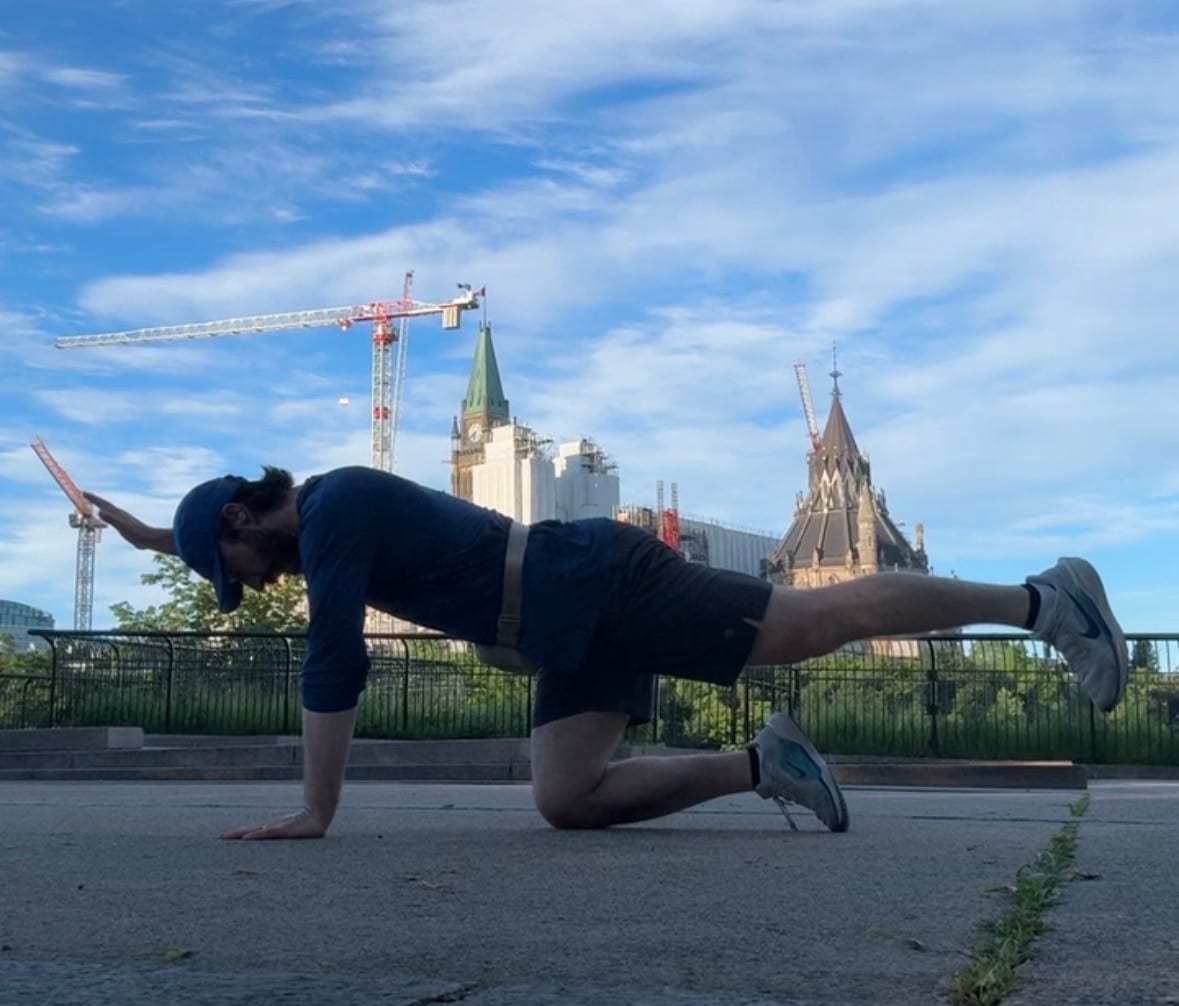
- Strength and endurance: exercises that load the trunk and hips gradually, such as the bird dog exercise, so your back may handle more of your day.
- Mobility and confidence: bending, twisting and lifting again, step by step, so those movements may feel less risky over time.
- Walking: one of the easiest things to build back up. A loop along the canal counts, and there are walking routes in downtown Ottawa that fit into a lunch hour.
Care here comes from one collaborative team. Our chiropractors, physiotherapists, registered massage therapists, osteopathic practitioner and physicians share notes with your consent. The person working on your strength knows what your hands-on care found, and you don't retell your history at every visit.
How We Assess Low Back Pain at Our Ottawa Clinics
The first job starts with working out which part of your back, or what around it, is driving the pain. Before anyone treats anything, we ask how it began, what makes it worse and what eases it. Sitting, bending, coughing and the first steps out of bed each point in slightly different directions.
Then we look at how you move. That means how your lower back and hips bend and rotate, how your trunk and hip muscles hold up under load, and which positions bring the pain on. When pain travels into your leg, we check the nerves too, since sciatica calls for a different plan than a stiff, achy back.
We explain what we find and build a plan around it with you. It's a plan you understand and choose, with exercise you take home between visits. If the assessment suggests you need imaging or a medical opinion, our physicians and nurse practitioners are part of the same team.
Stretches That May Earn a Place Between Visits
When the pain is mild and your practitioner agrees they suit you, a few gentle stretches can sit alongside the rest of your plan:
- Knee to chest: lying on your back, draw one knee up and hold it loosely. This may ease a stiff lower back first thing in the morning.
- Hip flexor stretch: half-kneeling, shift your weight forward until you feel the front of the hip open. It's a good one after long hours at a desk.
- Cat and cow: on hands and knees, slowly round and then arch your back. Think of it as moving rather than stretching hard.
- Glute stretch: lying on your back, cross one ankle over the opposite knee and draw both legs toward you.
Keep each one comfortable. A stretch should feel like gentle tension, never sharp pain. For guided movement in a group, Spine Care PhysioYoga runs at our Centretown clinic.
When Back Pain Needs Medical Assessment First
Stretching and exercise aren't the right starting point for every back. Get medical help promptly if your back pain comes with:
- numbness in the groin or inner thighs, or new trouble controlling your bladder or bowels (go to the emergency department)
- weakness in a leg that's getting worse
- fever, or feeling unwell along with the pain
- pain after a significant fall or accident
- unexplained weight loss, or pain at night that doesn't ease with rest or changing position
These are among the signs your back pain needs prompt attention, and the first one belongs in an emergency department rather than a clinic. For back pain that needs a medical look without that urgency, our physicians offer injury and pain medicine.
At a first visit for low back pain, we start with an assessment of what's going on before anyone decides how to treat it. You'll talk through how the pain started and what changes it, we'll check how you move and where you're strong, and you'll leave with a plan and a few things to do between visits. Integrative care: hands-on treatment, education and exercise in one plan, from one team. Dr. Ben Matheson is a chiropractor registered in Ontario and a member of the College of Chiropractors of Ontario. When you're ready, you can Book an Assessment (opens in a new tab) at whichever of our clinics is easiest for you to reach.
Have a Question About Your Care?
Our team is happy to help. Reach out and we’ll get back to you.
Get in touch